"Let's Distribute It to All Citizens Like Emergency Relief Funds"... 4.6 Trillion Won Comprehensive Property Tax Basic Income Proposal
Major Progressive Parties and Two Largest Labor Unions Hold Forum
"Current Grant System Fails to Build Support"

There has been a proposal to distribute the revenue collected from the Comprehensive Real Estate Holding Tax (commonly known as the “Comprehensive Property Tax”) to all citizens in the form of a basic income.
According to Yonhap News Agency on July 2, Assemblyman Yoon Jong-oh of the Progressive Party, Assemblyman Cha Gyoo-keun of the Innovation Party for the Country, Assemblyman Han Chang-min of the Social Democratic Party, along with civic group People’s Solidarity for Participatory Democracy, the Korean Confederation of Trade Unions (KCTU), and the Federation of Korean Trade Unions (FKTU), held a forum on “Normalizing Asset Taxation” at the National Assembly Members’ Office Building in Yeouido. The event was organized to review the asset taxation system and explore taxation principles covering both income and assets ahead of the government's tax reform announcement.
As a discussant, Lee Taekyung, Deputy Director of the Land Liberty Research Institute, pointed out that last year’s Comprehensive Property Tax revenue amounted to 4.6541 trillion won. He argued that distributing this amount to all citizens could produce effects comparable to emergency relief funds and expand the base of support for the policy.
Last year, approximately 540,000 people were subject to the Comprehensive Property Tax, which accounted for 3.4% of the roughly 15,976,000 total homeowners in 2024.
Deputy Director Lee emphasized, “The current system, where the government distributes Comprehensive Property Tax revenue to local governments as grants, has failed to build political support.” He further explained, “Those who pay the Comprehensive Property Tax harbor significant resentment, while the beneficiaries are not even aware that they are recipients, which is a major issue with the tax.”
Hot Picks Today
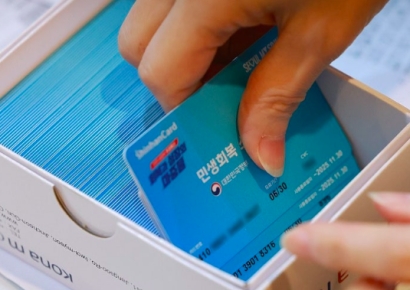 "300,000 Won Grant" Shelved at Chuseok to Go to All Residents After All... This City Says It Will Pay Before Lunar New Year
- "Didn't Save This Money to Leave to Our Kids?"... Retired Couples Spend $10,000 on a Single Trip
- "Make $10 Million by Flipping It Right After Delivery?"... The Market Drawing the World's Ultra-Rich in ‘This Market’
- Friend Who Went Abroad Goes "Silent"... 617 South Koreans Out of Contact, What's Going On?
- "Stockpile 9 Liters of Bottled Water and Three Days' Worth of Food"... UK on Edge as Nationwide Emergency Preparedness Alert Issued
Lee also pointed out that when the real estate market overheats, the negative consequences of the so-called “one smart house” phenomenon—where people prefer to own a single high-priced home—are exacerbated. He stated, “Compared to a single-homeowner with a property worth several billion won, people who own three low-priced homes in the Seoul metropolitan area bear a much greater burden,” and argued, “It is more appropriate to use the combined value of owned properties, rather than the number of properties, as the tax base.”
© The Asia Business Daily. All rights reserved. Unauthorized AI training and use prohibited.