Daegu City Implements Organizational Restructuring... Establishes Director of AI Policy, Social Solidarity Economy Division, and Youth Special Advisor
"Transforming into a Work-Oriented Organization"
Accelerating the Daegu Economic Overhaul
On July 3, Daegu City carried out an organizational restructuring. The first such reorganization since Mayor Choo Kyungho took office, it focused on transforming the city government into a more work-oriented organization to quickly realize the new administrative vision of "Change and Growth, a Better Tomorrow." To improve operational inefficiencies, the city consolidated similar and overlapping departments, minimized the creation of new offices, and removed barriers between departments.
Daegu City explained, "This restructuring aims to proactively respond to both internal and external changes, such as the AI-driven transformation, widening gap with the Seoul metropolitan area, and population decline. The reorganization prioritizes strengthening the economic and industrial sectors to swiftly advance the top priorities of the ninth popularly elected administration: restoring livelihoods, fostering future industries, and attracting large corporations, all under the banner of the 'Daegu Economic Overhaul.'"

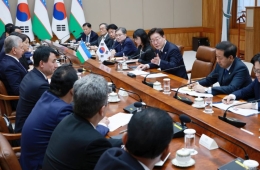
Kim Jungki, Deputy Mayor of Daegu, is explaining the details of the organizational restructuring.
View original imageTo establish Daegu as a core city for future industries—centered on artificial intelligence (AI), robotics, semiconductors, future mobility, and medical and bio industries—the Future Innovation Growth Office will be expanded and reorganized into the AI Innovation Growth Office. AI-related policy functions, previously dispersed across multiple departments, will be consolidated, and a new position of Director of AI Policy will be established.
Additionally, to strengthen academia-industry cooperation from the perspective of fostering future industries and creating jobs, the existing University Policy Bureau will be dissolved. The functions of university cooperation, support, and talent development will be transferred to the AI Innovation Growth Office, with a new University Talent Innovation Division established.
Furthermore, a new Semiconductor Software Division will be created to serve as a dedicated body for developing Daegu into the largest non-capital semiconductor industry hub, advancing the regional semiconductor materials, components, and equipment ecosystem, and promoting the ultra-wide-area semiconductor industry in the Daegu-Gyeongbuk region. The One-Stop Corporate Investment Center, previously consisting of 2 divisions and 6 teams, will be expanded to 3 divisions and 7 teams.
A new Social Solidarity Economy Division will be established to systematically support job creation in the social solidarity economy, including social enterprises, cooperatives, and village enterprises.
To strategically respond to the upcoming trends in the second phase of public institution relocations in the second half of this year, a dedicated Public Institution Relocation Officer will be established within the Planning and Coordination Office.
For the systematic development of relocated military facilities and their sites, the existing Military Facilities Relocation Policy Officer will be dissolved and reorganized as the Military Facilities Relocation Policy Division within the Urban Construction Bureau, which is responsible for urban planning functions.
Daegu City will also actively gather citizens' opinions and reflect them in city policies by creating a Policy Communication Team under the Policy Planning Officer of the Planning and Coordination Office, which will be responsible for roundtable meetings involving citizens, experts, and stakeholders. In addition, a special advisory position for youth, reporting directly to the mayor, will be established.
Daegu City stated, "As a result of this organizational restructuring, the city government will change from 1 Office, 3 Bureaus, 15 Divisions, and 1 Headquarters to 1 Office, 3 Bureaus, 14 Divisions, and 1 Headquarters at the main level, reducing one division. The total workforce will increase by 92 people, bringing it to 6,694: a net increase of 15 for fulfilling ninth-term commitments, 16 additional staff in accordance with central government guidelines and Ministry of the Interior and Safety standards for suicide prevention, integrated care, and emergency medical services, and 61 staff returning from secondment to the Transportation Corporation."
This restructuring proposal will be subject to legislative notice from July 3 to July 6. If it passes the review and resolution at the Daegu City Council's special session on July 21, it will come into effect on August 10.
Hot Picks Today
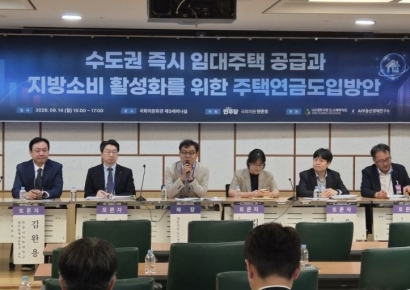 You Can Receive Monthly Payments Like a Pension Without Selling Your Home... The Local Mutual Growth Housing Pension That Provides 1.69 Million Won Each Month
- "Unimaginable in Korea"...Koreans Surprised by Secondhand Smoke in Japan and China Restaurants
- "Special Skill: Admitting Mistakes"... The Unexpected Edge That Helped Job Seekers Tired of AI Resumes Succeed
- "Canceled After Five Days and Lost 770,000 Won"... Hit by Steep Fees After Pressing the Cancel Button
- "I Thought She Was an Ordinary SKT Employee... The Unexpected Identity of Nongshim's Third-Generation Bride"
Mayor Choo Kyungho stated, "This organizational restructuring focused on swiftly activating a work-oriented organization to improve operational inefficiencies and accelerate the recovery of the local economy and the Daegu Economic Overhaul. Going forward, we will reflect voices from the field throughout our administration and concentrate all efforts so that citizens can tangibly feel real change in their daily lives."
© The Asia Business Daily. All rights reserved. Unauthorized AI training and use prohibited.


![How Did Tacos Come to Have Two Shells [Delicious Stories]](https://cwcontent.asiae.co.kr/asiaresize/307/2026091410392626963_1789349966.jpg)