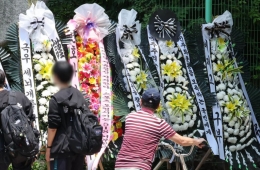
"Life Decided in Your Teens"... 'This' Matters More Than the College Entrance Exam in China [China.zip]
Elementary Students Arrive at School by 7 a.m. and Study Until Evening
Overheated Pursuit of Education Sometimes Leads to Crime
Academic Pressure Begins from the Start of Elementary School
"Leaving home under the stars before dawn and returning under the moon at night"

Because of Zhongkao, which evaluates students based on a single decisive exam that determines their lives, Chinese children are pushed into severe sleep deprivation and intense survival competition as soon as they enter elementary school. AI-generated image.
View original imageThis is the meaning of the four-character Chinese idiom "Pisengdaiyue," which has become popular among parents of elementary and middle school students on Chinese social networking services (SNS) recently. The phrase describes a grueling daily routine, where children head to school early in the morning and study until late at night. In China, the true entrance exam "hell" begins long before the college entrance exam, the Gaokao; it strikes in the mid-teen years with the high school entrance exam known as the Zhongkao. Because the Zhongkao is a single, life-determining exam, Chinese children are pushed into severe sleep deprivation and intense survival competition from the moment they enter elementary school.
The Pressure of Zhongkao: More Crucial than Gaokao
"The Zhongkao determines whether we can fly or not, and the Gaokao decides how high we can fly"

The study pressure on Chinese students approaching the Zhongkao exam is known to be enormous. A photo to help understand the article. Pexels.
View original imageChinese social media is filled with questions about which exam—Zhongkao or Gaokao—is more important in determining one's life trajectory. Although the Zhongkao, held annually from late June to early July, is an entrance exam for high school, it is often considered even more ruthless than the college entrance exam. Only about half of test-takers make it into regular high schools, and although there are regional differences, most students are given only a single chance. Even if students attend vocational high schools, they can still pursue university admission through opportunities such as the vocational Gaokao. However, failing to enter a regular high school means that access to the elite academic track—often leading to prestigious universities—is effectively out of reach, making the Zhongkao the first major crossroads in life.
This system is part of a policy introduced by Chinese authorities to boost the industrial labor force by promoting vocational high schools. The intention is to send students who lack academic motivation or strong grades to vocational schools early so they can learn technical skills and become part of the workforce. However, this has actually increased the burden of private education costs for Chinese parents and heightened students' academic stress.
A student identified as "A," who recently took the Zhongkao, shared on Chinese SNS, "Until yesterday, I was studying and spending time with my friends at school, but after the exam, we all have to go our separate ways." She added, "About half of the class goes to regular high schools, while the rest move on to vocational schools or pursue their own paths."

Because of the Zhongkao, where a person's life is judged by a single exam, Chinese children are driven into severe sleep deprivation and fierce survival competition as soon as they enter elementary school. Xiaohongshu, China.
View original imageAccording to data released this year by China's National Bureau of Statistics, in the previous year, 5.265 million students were enrolled in secondary vocational education, the total number of registered students was 15.378 million, and the number of graduates was 5.219 million. Vocational secondary schools are educational institutions under the Ministry of Education, and graduates receive a diploma upon completion. In contrast, technical schools fall under the Ministry of Human Resources and Social Security and focus on skill training and immediate workforce deployment.
Some students who struggle to enter regular high schools due to their grades turn to private schools, but the astronomical tuition fees make this option unattainable for most ordinary Chinese families. The cost of repeating a year after failing is also substantial, with annual fees exceeding 70,000 yuan, leading some parents to say that sending their child abroad is a better option. Moreover, in major cities like Beijing and Shanghai, the influx of new residents pushes competition to extreme levels, while in some cities, there are even cases where the capacity of regular high schools is exceeded. The imbalance between the number of available spots and population by region is cited as another factor creating inequality in students' futures.
This overheated pursuit of education has sometimes led to crime. On July 1, Chinese news outlet Sina Finance reported a case in Xi'an where a migrant worker who had worked for years without owning a home paid a broker a 200,000 yuan (about 4.58 million won) bribe to secure his child's middle school admission, only to be scammed. This is not merely an issue with the local residency permit (hukou) system restricting school admissions. The high barrier to public education has driven desperate parents to forge documents or pay brokers under the table just to get their children into schools.
Controversy Over Elementary Schoolers Attending School at 7 a.m. and Finishing at 5:30 p.m.

The Zhongkao is known for covering more basic subjects compared to the Gaokao, but the competition is so fierce that academic pressure begins as soon as students start first grade in elementary school.
This is directly linked to the issue of elementary students' school hours. Stories about first graders leaving for school at 7 a.m. and coming home well after 5 p.m. are commonplace on Chinese SNS. The daily routines become even tougher in middle school.
In September of last year, the Chinese Ministry of Education announced that nationwide elementary, middle, and high schools would restrict school start times to 8:20 a.m., 8 a.m., and later, respectively. Nonetheless, practices vary by region and school, and many schools reportedly still require students to arrive by 7 a.m.
Li, who lives in Shanghai, said, "My child is in fourth grade and wakes up at 6 a.m. every day to prepare for school. Her face is getting paler and she is becoming more exhausted." Guo, who lives in Yantai, added, "Since first grade, my daughter has struggled with a 7 a.m. start and a 5:30 p.m. finish every day, but since everyone else does it, we have no other choice."
In fact, in May, a parent sparked controversy by raising the issue of 7 a.m. school attendance on a government complaint platform. The parent stated that the school required students to arrive by 7 a.m., which violated the Ministry of Education's rule that classes must start at 8 a.m. The parent reported that the school holds morning reading at 7:20 a.m. and that the child does not return home until 9 p.m., leading to chronic sleep deprivation and severely impacting the child's development. However, authorities responded that, due to the school's boarding nature, there was no alternative, and since regular classes begin at 8:40 a.m., the school was not violating regulations.
Calls for Education Reform, but the Ultimate Result Is a 'Low Birth Rate' Boomerang

According to a "Youth Sleep Status" report published by the Chinese Sleep Research Association, 85.7% of Chinese primary and secondary students suffer from sleep deprivation, with 43.2% sleeping less than seven hours per night.
Education researchers agree that the adjustment of school start times implemented last year is only "the first step in China's education reform." They emphasize that the focus should not be on the number of hours spent at school, but on reviewing school schedules, curricula, and improving instructional effectiveness. Researchers at the Chinese Academy of Educational Sciences argue, "What matters is improving learning quality and efficiency in the same or even less time."
In particular, this overheated education fervor is closely linked to other major societal issues facing China in recent years, such as declining marriage and birth rates. Chinese demographer Huang Wenzheng pointed out, "The enormous costs of child-rearing and education have ultimately caused decreases in marriage and birth rates."
Hot Picks Today
 “We Have One in Every Home”… Samsung Air Conditioners Become ‘Luxury Items’ Amid Europe’s Heatwave
- "Found the Culprit Behind Wild Swings"... The Truth Behind 'Delta' Shaking the Stock Market [Weekend Money]
- "KOSPI to Hit 12,600"... Top 10 Preferred Stocks in the Bullish Second Half [Weekend Money]
- "Turning Off the Air Conditioner Can Be Dangerous"...Heart Strain Increases When Bedroom Temperature Exceeds 24 Degrees Celsius
- "Once Called a History-Changing Group"... Rise of Cortis Spurs Revaluation of Entertainment Stocks [Weekend Money]
Data released by the National Bureau of Statistics of China in January showed that the country's total population decreased by 3.39 million in the past year, falling to 1.40489 billion, marking the largest decline since 2022. Some analysts say that the number of births has returned to levels seen in the Qing Dynasty in the 1700s. The crude birth rate—the number of births per 1,000 people—was 5.63, the lowest since the founding of the People's Republic of China in 1949. According to recent data from the National Bureau of Statistics, last year's number of births was also the lowest since the country's founding. China's total fertility rate dropped to 1.07 in 2022, and official data for 2023 and beyond has not yet been released. Lu Jiehua, a professor at the School of Population and Health at Renmin University of China, explained that the decrease in the "young" population aged 20–34, the increase in the average age at first marriage and first childbirth, rising child-rearing costs, and uncertainty in the economy and job market have all affected people's willingness to have children. The number of marriage registrations has also been declining for 12 consecutive years since peaking at 13.469 million couples in 2013.
© The Asia Business Daily. All rights reserved. Unauthorized AI training and use prohibited.

![Foreign Investors Sell Off, Yen Plummets... 'Partner' Won Also Faces Greater Downward Pressure [Weekend Money]](https://cwcontent.asiae.co.kr/asiaresize/307/2026070215192532285_1782973165.jpg)