Record-Breaking K-Ramen Exports and Strong Dollar Lead to Diverging Fortunes for Top Three Ramen Makers
Ramyeon Exports Reach USD 930 Million in First Half, Up 28%
"High Exchange Rate" Becomes Key Factor for Second-Half Earnings
As exports of 'K-ramyeon' are expected to surpass USD 1 billion (KRW 1.55 trillion) in the first half of this year, market watchers forecast that the annual performance of Korea’s three leading ramyeon companies will be sharply divided based on their overseas results.
According to the Ministry of Trade, Industry and Energy and the Korea Customs Service on July 6, ramyeon exports in the first half of this year reached USD 935.39 million, a 28% increase compared to the same period last year. This is the highest half-year figure ever. Ramyeon exports, which stood at the USD 300 million level in the first half of 2022, rose to over USD 400 million in 2023, over USD 500 million in 2024, crossed the USD 700 million mark last year, and have now settled at over USD 900 million this year. At this pace, it is likely that half-year exports will surpass USD 1 billion in the second half of this year.

With its signature spiciness, K-ramyeon is leading the global popularity of K-food, driving export growth. Sales are rapidly expanding in major markets, particularly in North America, China, and Europe.
On the other hand, in the first half of this year, ramyeon companies faced profitability challenges due to cost increases. The Middle East war led to a sharp rise in naphtha prices, increasing the cost burden for packaging, plastic containers, and PET materials. In addition, government pressure to control consumer prices forced some companies to lower prices for certain products, further impacting profitability.
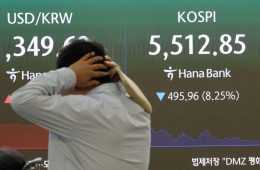
Adding to these challenges, the KRW-USD exchange rate rose to its highest in 28 years, which is expected to affect company earnings. Generally, a higher exchange rate leads to increased raw material costs such as wheat, which negatively affects profitability. However, as K-food exports have rapidly increased in recent years, food companies with a large proportion of export sales can benefit from additional foreign exchange gains from product sales, which serves as a factor for improved profitability and is viewed positively.
As a result, Samyang Foods is benefitting from both the high exchange rate and expanded exports. Led by its flagship Buldak Bokkeum Myeon, Samyang Foods recorded an export share of over 84% of its total sales in the first quarter of this year. On an annual basis, the export ratio, which was 69% in 2023, surpassed 80% for the first time in 2024 and approached 84% at the end of last year.
Samyang Foods currently exports its flagship Buldak Bokkeum Myeon to about 90 countries as of the end of last year. Since all ramyeon is produced domestically for export, the rise in the KRW-USD exchange rate is advantageous for the company, according to industry experts. Financial information provider FnGuide projects that Samyang Foods’ annual sales this year will reach KRW 3.045 trillion and operating profit will reach KRW 727.7 billion, up 29.5% and 38.8%, respectively, compared to last year.

Nongshim, which sells its products in the most countries among domestic ramyeon companies, is carefully crunching the numbers. Nongshim currently sells products such as Shin Ramyeon in about 100 countries. In key markets such as the United States and China, Nongshim produces and sells products locally. In the first quarter of this year, the proportion of overseas sales at Nongshim was 44.4%, up from 39.8% at the end of last year, indicating steady growth.
According to the securities industry, Nongshim’s annual sales this year are projected at KRW 3.7121 trillion, with operating profit at KRW 213 billion, up 5.6% and 15.8%, respectively, compared to last year. Eunju Shim, senior research analyst at Hana Securities, stated, “The key to Nongshim’s overall performance improvement this year will be overseas results,” adding that strong sales growth in major countries such as North America, China, and Japan is expected, with the exchange rate also acting favorably.
Ottogi, which has a relatively low proportion of overseas sales among domestic ramyeon companies, is expected to face significant challenges in the second half of the year. In the first quarter of this year, Ottogi’s overseas sales ratio was 11.5%. While this is a slight increase from 10.8% in the first quarter of last year, it is somewhat lower than the 13.3% recorded at the end of last year. Ottogi currently exports its products to about 70 countries, including China. For now, the high exchange rate, which has exceeded KRW 1,550, is likely to be a burden on profitability.
Ottogi has set a goal of achieving global sales of KRW 1.1 trillion by 2030 and is accelerating its overseas business expansion. Last month, Ottogi completed the Samnam Global Logistics Center in Ulju County, Ulsan, establishing production facilities to meet export demand, and plans to start operations at its local subsidiary in Japan from the second half of the year.
Hot Picks Today
 "I Ate It Often Because It Tasted Good"... This Eating Habit Linked to 40% Higher Odds of Asymptomatic Cerebrovascular Damage
- "She's 7..." President Lee Left Speechless, Posthumously Awards Medal to Firefighter Killed in the Line of Duty
- Buying Demand Spreads Beyond Gangnam... Transaction Values Soar in Gangdong and Nowon [Real Estate A to Z]
- "We've gone this far to save on lunch"... Where office workers are flocking instead of restaurants
- "Can They Really Be This Sweet?"... The Story Behind Convenience Store Honey Sweet Potatoes [Foodie X-Files]

An industry insider commented, “With the unexpected cost increases caused by issues such as the war earlier this year, the exchange rate—which affects both raw material prices and product sales—has become another key variable. Depending on each company’s situation, second-half results are expected to be affected.”
© The Asia Business Daily. All rights reserved. Unauthorized AI training and use prohibited.

!["Please, Just Take Them Off" - They Made It All the Way to Bed... Then Fecal Bacteria Struck [Deep Scroll]](https://cwcontent.asiae.co.kr/asiaresize/307/2026101610053063338_1792112730.png)