[Public Voices] The Success of Mobility Innovation Depends on Trust, Not Speed
![[Public Voices] The Success of Mobility Innovation Depends on Trust, Not Speed](http://www.asiae.co.kr/news/img_view.htm?img=2026070310454033248_1783043141.jpg)
The future of mobility is no longer determined solely within the confines of the automobile. Vehicles are evolving into mobility platforms integrated with batteries, semiconductors, software, artificial intelligence (AI), communications, data, and urban infrastructure. The government's '2030 Mobility Innovation Growth Roadmap' is also based on this transformation. The plan envisions bringing together autonomous vehicles, urban air mobility (UAM), drones, electric vehicles, hydrogen vehicles, AI logistics, and digital twin cities into a single mobility ecosystem as a future growth engine.
The direction is correct. The global automotive industry is already shifting toward electrification and a software-centric paradigm. Battery safety, in-vehicle operating systems, cybersecurity, and data processing capabilities are now considered core competitive factors. When autonomous driving technology and platform services converge, vehicles become not just assets to own, but foundational infrastructure connecting transportation, logistics, and urban operations. A national-level roadmap is necessary to avoid falling behind.
However, it becomes dangerous if the potential of technology is mistaken for society’s readiness. Mobility innovation cannot be achieved by technology alone. It requires accompanying measures such as safety standards, traffic control, accident liability, and public acceptance. The government should focus on the conditions under which these technologies can be safely permitted, rather than simply asking when they will be commercialized.
The core of autonomous driving policy is not the number of vehicles or cumulative driving distance. More important are accident rates, the number of emergency interventions, frequency of remote control interventions, system disengagements, performance under different weather conditions, and the ability to enter minimum-risk states. Citizens trust verifiable safety indicators rather than promotional visions of the future. Even if demonstration cities are built, autonomous driving may be seen as an opaque experiment rather than advanced technology if there are no publicly available indicators. Data must serve as both a learning resource for companies and the foundation for public trust. The same principle applies to UAM, which requires strict safety management, and drones, which must reliably execute their missions.
Everyday mobility is the sector that most directly affects the public’s experience. For citizens, mobility innovation is judged not by grand slogans, but by whether commuting has become more convenient, whether transportation in underprivileged areas has improved, whether transfers and payments have become easier, and whether logistics costs have decreased. Mobility as a Service (MaaS), demand-responsive transportation, personal mobility, and AI logistics are all necessary directions. However, this field is more challenging in terms of operation than technology. Unless issues such as data sharing between platforms, division of roles between the private and public sectors, fare systems, safety management, accident liability, and operating costs are resolved, services will not be sustainable for long.

Interior of an autonomous paid freight transport truck applied for by Ride Flux. Provided by the Ministry of Land, Infrastructure and Transport.
View original imageUrban and spatial transitions must also be approached cautiously. Digital twins, high-precision spatial information, and AI mobility pilot cities could serve as the foundation for future mobility. For autonomous vehicles, drones, and robots to operate in cities, roads, buildings, parking lots, logistics hubs, and charging facilities must be interconnected. However, models that work in pilot cities cannot be assumed to function identically in existing urban areas and rural regions. Most cities in Korea are already established environments. Future city concepts that do not account for narrow roads, limited parking, aging buildings, complex pedestrian environments, and regional transportation disparities risk becoming merely showcase projects.
Ultimately, the direction of mobility innovation should focus not on "novel modes of transportation" but on building "safer and more connected mobility systems." Cars will continue to become electrified, software-driven, and operated based on data. However, as systems become more complex, the risks of malfunctions, cybersecurity threats, maintenance difficulties, and accident liability issues will also increase. Future vehicle policies cannot rely on technology development and distribution alone. Safety standards, inspection regimes, maintenance systems, insurance frameworks, and data governance must be designed together.
The strength of the government’s roadmap lies in its broad perspective, connecting mobility not only to automobiles but also to aviation, logistics, energy, cities, and platforms. Conversely, the greatest risk is that including too many future technologies at once may blur policy priorities. While the comprehensive goal of leading in autonomous driving, UAM, drones, hydrogen, AI logistics, and digital twins simultaneously is ambitious, in reality, budget, personnel, and institutional capacity are limited. Rather than pursuing everything, it is necessary to set priorities on what should be verified first.
Priorities must be clear. First, safety standards for autonomous driving, electric vehicle batteries, and personal mobility—which are directly linked to public safety—should be strengthened. Second, focus should be placed on areas that can achieve both public and economic value, such as autonomous freight transportation on highways, demand-responsive transportation for underserved regions, public drones, and electrification of commercial vehicles.
Third, UAM and long-term future technologies should be validated step by step, without being packaged as short-term achievements. Fourth, data platforms should not be limited to corporate support infrastructure, but should evolve into systems that publicly disclose safety indicators in a manner understandable to the public. Fifth, models should be developed not only for new city demonstrations but also for application in existing urban and rural areas.

At the launch event of the Autonomous Driving Team of the Republic of Korea held in May this year, Yoonduk Kim, Minister of Land, Infrastructure and Transport, along with key public institutions and corporate officials, are taking a commemorative photo. Provided by the Ministry of Land, Infrastructure and Transport
View original imageMobility innovation is an imperative path. However, the term "innovation" must not obscure the issues of safety and responsibility. The success of future mobility will not be determined by how many autonomous vehicles are on the road, when UAM is launched, or how many drones are deployed. It will be measured by whether people can move more safely, whether transportation is more accessible to the mobility disadvantaged, whether the industry creates sustainable business models, and whether the causes and responsibilities for accidents can be clearly identified.
Korea’s mobility policy should now prioritize “validated commercialization” over “rapid commercialization.” More important than slogans about becoming a global leader is building a mobility system that the public can trust. Although technological development is progressing rapidly, traffic safety and public trust cannot be achieved by rushing. For the 2030 Mobility Innovation Growth Roadmap to become a true growth strategy, it must prioritize depth of validation over scale of demonstration, real-world operability over future visions, and institutional reliability over mere technological potential.
Hot Picks Today
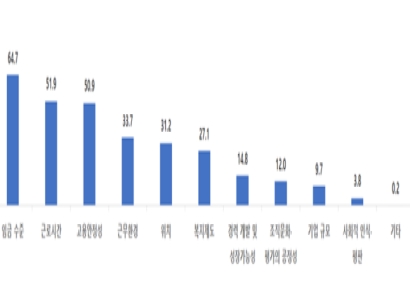 "Please Pay Me at Least 3 Million Won a Month": More Than Half of Young People Today Prioritize "Working Conditions" Over Company Size
- Selling Like Crazy Every Year... 30-Year-Old Hetbahn Takes on a New Challenge: Tastes Better Than "Mom's Home Cooking" [On-Site Report]
- "Is This Really Possible?" The World Is Watching... Could My Car Become a "Mobile ESS"? [Energy Odyssey] 15
- "Hey, Lady, Teach Your Kids to Behave!" ... 300,000 Won in Cash and a Bodily Injury Claim Demanded Over Child's Door Ding
- "Don't Trust This Woman": Documentary on 'Investment Scammer' Earns KRW 22 Billion in One Week
Seongyong Ha, President of the Korea Automobile Mobility Safety Association and Professor, Department of Smart Mobility Engineering, Joongbu University
© The Asia Business Daily. All rights reserved. Unauthorized AI training and use prohibited.






![[Market ING] KOSPI Seeks Rebound in Superweek Packed with Corporate Earnings and FOMC](https://cwcontent.asiae.co.kr/asiaresize/307/2026102514484873155_1792907327.jpg)