Foreign Direct Investment Arrivals Hit Record $10.73 Billion in First Half
Arrival Amount Hits Record High of $10.73 Billion, Up 42.6% Year-on-Year
Declarations Also Rise to $14.28 Billion, Up 9.1%
Manufacturing Inflows Surge 205%... EU Investment More Than Doubles

In the first half of this year, the amount of foreign direct investment (FDI) that actually arrived in South Korea reached 10.73 billion dollars, marking the highest figure ever recorded for a first half. This is attributed to already-attracted investment projects materializing into actual capital inflows, despite global investment sentiment weakening due to the global economic slowdown and instability in the Middle East. With investment declarations also continuing to rise, the momentum of foreign investment—centered on advanced industries—is being sustained.
According to the "Trends in Foreign Direct Investment for the First Half of 2026," released by the Ministry of Trade, Industry and Energy on July 3, FDI declaration amounts in the first half of this year totaled 14.28 billion dollars, a 9.1% increase compared to the same period last year. The amount that actually flowed into the country reached 10.73 billion dollars, up 42.6%. In particular, the arrival amount is the largest ever for a first half.
The Ministry evaluated that this demonstrates not only the smooth execution of projects declared last year, but also continued trust from foreign companies in the supply chains of advanced industries such as semiconductors and displays, as well as in South Korea's innovative ecosystem.
Breaking down the investment declarations, greenfield investments—which refer to the establishment or expansion of factories and business sites—amounted to 10.82 billion dollars, down 1.5% year-on-year. However, compared to the decline in the first quarter of this year (-19.8%), the contraction has eased significantly. In contrast, mergers and acquisitions (M&A) type investments totaled 3.46 billion dollars, up 64.3%, leading overall declaration performance.
By sector, investment declarations in manufacturing recorded 3.81 billion dollars, a 28.4% decrease. The decline was largely due to reduced investment in the chemical and electrical/electronics sectors. However, thanks to the expansion of investment in emerging industries such as autonomous robots and healthcare, the machinery and medical precision sectors surged by 243.1%, and investment in non-metallic mineral products—including displays—also showed an upward trend. In the service sector, investment in finance, insurance, and real estate increased significantly, totaling 9.07 billion dollars, a 27.9% rise.
The data by country showed somewhat mixed results. Investment declarations from the United States (3.05 billion dollars), the European Union (2.05 billion dollars), Japan (1.49 billion dollars), and China (1.48 billion dollars) all decreased. However, declaration amounts from other countries—including Singapore and the United Kingdom—rose sharply to 6.2 billion dollars, up 65.4%, bolstering the overall results.
Looking at the arrival amounts in detail, greenfield investment arrivals totaled 4.45 billion dollars, a 5.6% decrease, while M&A arrivals soared to 6.28 billion dollars, an increase of 123.3%. This is seen as the result of large-scale investment projects declared last year finally being executed in earnest.
By sector, actual arrivals in manufacturing reached 5.0 billion dollars, an astonishing 205.2% increase. In particular, the stable inflow of capital from large-scale chemical projects led to a 916.3% surge in chemical sector arrivals, reaching 4.09 billion dollars. Investment in non-metallic mineral products also rose by 223.2%. Arrivals in the service sector hit 5.6 billion dollars, up 1.4%. While finance, insurance, real estate, research and development, and professional scientific technology sectors saw increases, the distribution and information and communications sectors experienced declines.
By country, inflows from the European Union stood out. The United States saw a 13.3% decrease to 1.28 billion dollars, but inflows from the EU surged by 106.1% to 4.34 billion dollars. Japan also increased by 56.5% to 610 million dollars, and China rose by 36.0% to 170 million dollars. Other countries also showed a 26.4% increase, reaching 4.32 billion dollars.
Hot Picks Today
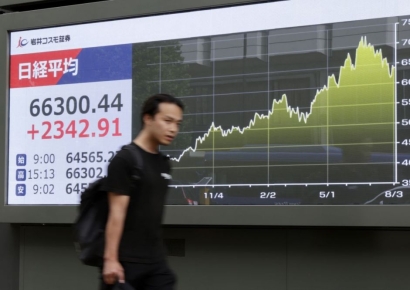 "Ruined Because of Korea" Even with a Sharp Rally, No One Buys... Japanese Market Sways with KOSPI
- Even Sexual Offenders Tremble: "This Is My Story"—Experiencing the Victim’s Perspective Brings Change [Report]
- There Was a Reason Behind the Marriage... "Black Widows" Targeting 200 Million Won Death Compensation
- "Wearing Hot Pants and Off-the-Shoulder Tops to Work?"... Unexpected Office Attire Debate Stirs Controversy
- "I Don’t Go to Restaurants": Foreign Tourists Hooked on 'K-Delivery' as Soon as They Arrive in Korea
The Ministry of Trade, Industry and Energy announced that, following last year's record-high foreign investment performance, it plans to strengthen FDI incentives linked to the "Five Poles Three Special" national industrial policies in order to continue the investment momentum this year. In addition, the Ministry will expand domestic and international investment briefings (IR), listen to corporate concerns through on-site FDI company caravans and roundtables, and continue to work with relevant ministries to create a stable investment environment.
© The Asia Business Daily. All rights reserved. Unauthorized AI training and use prohibited.