Choi Jung Hoon: "Success of Jeonnam-Gwangju's 896 Trillion Won Investment Depends on Talent Development"
Call for Expansion of Educational Infrastructure to Support Advanced Industry Development
With large-scale investments in advanced industries scheduled for Jeonnam and Gwangju, establishing a foundation for cultivating talent to support these initiatives has emerged as a key priority.
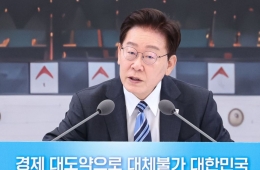
Jung Hoon Choi, Chair of the Education Committee at Jeonnam Gwangju Integrated Metropolitan Council (The Minjoo Party of Korea, Mokpo 4th District), proposed on July 2 the establishment of specialized science high schools focusing on AI, semiconductors, and energy, stating, "Only when investment and talent development go hand in hand can the region achieve a full-scale industrial transformation."
On July 2, Chair Choi issued a statement emphasizing, "The recently announced investment of 896 trillion won marks a historic turning point for Jeonnam and Gwangju to become the central pillars of Korea’s future advanced industries. However, unless a system for nurturing future talent is established in tandem with such large-scale investment, it will be impossible to build a sustainable industrial ecosystem."
In particular, Chair Choi assessed that the current timing, in which advanced industry investment and education policy are being promoted together, is the optimal moment to build future education infrastructure.

Junghoon Choi, Chair of the Education Committee at the Jeonnam Gwangju Integrated Special City Council
View original imageRegarding the fact that, immediately after taking office, Kim Daejung, Superintendent of Jeonnam Gwangju Integrated Metropolitan Office of Education, presented the "Education Based on Local Production and Local Consumption" policy as his first official directive, Chair Choi remarked, "This means nurturing and retaining local talent within the region," and stressed, "With the government’s advanced industry strategy and the local education office’s talent development policy being pursued simultaneously, now is the best time to establish a future-oriented education system."
He added, "The 896 trillion won investment must not end with merely constructing factories. Only when we nurture the core talent to drive this investment locally can we achieve a true industrial transformation."
Chair Choi raised the need to move away from relying on talent inflow from the Seoul metropolitan area and instead build a region-centered talent development ecosystem. He proposed three major tasks: ▲ Promotion of a government-led national project to establish specialized science high schools for AI, semiconductors, and energy; ▲ Formulation of a comprehensive plan for nurturing future industry talent by the Jeonnam Gwangju Integrated Metropolitan Office of Education; and ▲ Establishment of a cooperative system for nurturing future talent involving the metropolitan government, education office, universities, and companies.
Hot Picks Today
 "I Might End Up Paying My Entire Salary Just for Interest"... Annual Per-Person Interest Could Reach 6.73 Million Won, 'Yeongkeul-jok' Lament
- "Will I Really Be Left Out If I Don't Use It?"... The App Used by 23 Million Koreans Monthly, Is Naver Feeling the Pressure?
- Jensen Huang: "SK hynix ADR Is Incredibly Successful"
- "We Will No Longer Teach English"...Chinese University Launches Bold AI-Era Experiment
- "Die from Heat or Starve": Amid Unprecedented Heatwave and Delivery Ban, Italian Riders Go on Strike
He stated, "Rather than bringing in talent from the Seoul metropolitan area, we need to create a virtuous cycle where local students study future industries from the elementary, middle, and high school stages and naturally connect to local universities and companies," adding, "A system where industry and education grow together must be established."
© The Asia Business Daily. All rights reserved. Unauthorized AI training and use prohibited.