"Subway Faces 775.4 Billion Won Losses Due to Free Rides for Seniors"... Operators Seek Legal Basis for Government Support
Six Urban Rail Operators Commission Joint Study
Clear Identification of Deficit Causes... Deriving Rational Alternatives
Four-Month Research Underway... Plans for Public Discussion in Second Half
Every year, six major urban rail operators across the country have been shouldering losses amounting to hundreds of billions of won due to free ride policies. In response, these operators are launching a joint research initiative to establish a legal foundation for government support.

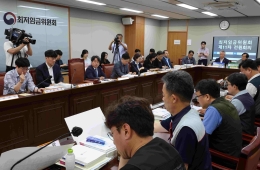
Seoul Metro announced on July 2 that it held a kick-off meeting for the "Study on Sustainable Measures for the Urban Rail Free Ride System," a research project jointly commissioned with urban rail operators nationwide, at its headquarters.
The research funding will be shared through a comprehensive contract by the six urban rail operators: Seoul Metro, Busan Transportation Corporation, Daegu Metropolitan Transit Corporation, Incheon Transit Corporation, Gwangju Metropolitan Rapid Transit Corporation, and Daejeon Metropolitan Express Transit Corporation. The purpose of the study is to develop sophisticated logic and concrete implementation plans to persuade the government regarding national subsidies for free ride losses in urban rail systems.
The main tasks include: ▲ Comparative analysis of public service obligation (PSO) systems for public transportation in Korea and abroad ▲ Objective identification of the financial status and deficit causes of operators ▲ Social value and cost-benefit (B/C) analysis of free ride policies ▲ Simulation and roadmap development for funding allocation among the state, local governments, and operators.
Specifically, the study will clarify the deficit causes by separating losses from free rides and the fare structure that falls short of covering actual costs. Additionally, it will analyze the scope of beneficiaries and cost-benefit aspects of the free ride policy in light of the balanced national development policy (5 Regions 3 Specialized Zones) and the expansion trend of urban rail networks, comparing the scale of losses with the resulting social benefits.
This initiative stems from a May expert meeting held by the National Assembly Research Service, where experts called for a clear identification of deficit causes and the need to secure concrete figures for each alternative. The six operators aim to derive objective and reasonable alternatives through this research.

Seoul Subway Line 2 is passing over Dangsan Railway Bridge. Photo by Hyunmin Kim
View original imageThe Korea Society of Transportation, the organization conducting the research, plans to conduct the study over about four months, starting with the July kick-off report, followed by interim reports in August and September, and a final report in October. The results will be made public through a parliamentary policy forum in the second half of the year, and efforts will be focused on building social consensus and expediting the passage of the pending Urban Rail Act amendment in the National Assembly.
Over the years, amendments to the Urban Rail Act aimed at providing national subsidies for free ride losses have repeatedly been proposed and scrapped since the 17th National Assembly. In November 2025, a national petition calling for legalizing national subsidies for urban rail free ride losses quickly garnered 50,000 signatures, demonstrating strong public support. Currently, an amendment clearly stipulating the basis for mandatory state compensation for free ride losses is pending in the National Assembly’s Land, Infrastructure and Transport Committee.
The urban rail free ride system was introduced in 1980 as a national transportation welfare policy. Based on the Senior Welfare Act and similar regulations, passengers aged 65 or older, persons with disabilities, and national merit awardees are fully exempt from fares. However, due to the lack of a legal basis for compensation, the operating agencies have had to bear these costs. In contrast, free ride losses on Korail-managed lines are covered annually by the national government under the Framework Act on the Development of the Railroad Industry.
With the country entering a super-aged society, the scale of losses from free rides is surging rapidly. The combined free ride losses of the six operators soared from 445.6 billion won in 2020 to 775.4 billion won in 2025, an increase of about 1.7 times over five years. According to population projections from the Ministry of Data and Statistics, the percentage of the population aged 65 or older is expected to rise from 21.2% in 2025 to 25.3% in 2030, meaning one in four citizens will be a senior citizen.
Hot Picks Today
 "ByteDance Employee in His 20s Quits After 'Earning $30 Million from Stocks'... But Here's the Truth"
- What Makes "Chinese Air Conditioners" So Special? Europeans Pay a Premium, Begging for Just One
- "Quitting Delivery Was the Right Move" $30,000 Monthly Windfall... Young Americans Leave Jobs to Start Businesses
- "I Thought My Life Would Change After Getting Hired at SK Hynix, But After Starting Work, My Salary Was..." The Reason Behind the Disappointment
- "Japanese Tourists Once Shouted 'I Want to Go to Korea'... Now They Say 'No Thanks' — Here’s Why"
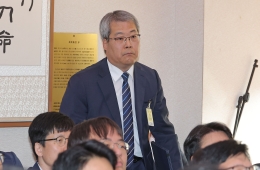
Yanghee Han, Head of Planning at Seoul Metro, stated, "As the cost of the urban rail free ride system is passed on to operators, even the resources for facility investments to ensure public safety are being depleted. Through this research project, we will strive to establish a reasonable funding allocation plan that enables the state, local governments, and operators to work together, thereby ensuring essential national support."
© The Asia Business Daily. All rights reserved. Unauthorized AI training and use prohibited.