'King Dollar' Drives Import Prices to Crisis Levels... Food Companies Hit Hard
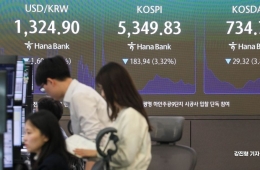
Average Exchange Rate Reaches 1,501.64 Won in Q2
Highest Level Since Q1 1998, Driving Up Import Prices
Import Price Index Up 25% Year-on-Year in May
Tough to Raise Prices Amid Government Price Controls
Profitability Unavoidably Hit...
As the average won-dollar exchange rate has surpassed the 1,500 won mark and soared to its highest level since the foreign exchange crisis, food manufacturers are facing mounting concerns. The strong dollar is driving up import prices, increasing the burden of sourcing raw materials needed for the production of processed foods and other goods. It is also difficult for companies to raise product prices due to the government’s strong commitment to price stability, and the unprecedentedly high exchange rate and resulting uncertainty are making it difficult for companies to determine how much to adjust their business plans.

Since the game situation, companies have raised prices on 53 processed food items, including coffee, bread, frozen foods, and ramen, causing a crisis in "table price inflation." It is widely analyzed that companies, which had refrained from raising prices in cooperation with the government's price stabilization measures, raised product prices in bulk during the national administration's hiatus. The photo shows the ramen sales section at a large supermarket in Seoul on June 10, 2025. Photo by a reporter
View original imageAccording to the Bank of Korea’s Economic Statistics System on July 2, the average weekly closing exchange rate (as of 3:30 p.m.) in the second quarter of this year was 1,501.64 won, the highest since the first quarter of 1998 during the foreign exchange crisis, when it reached 1,596.88 won. Due to the Middle East war triggered by the U.S. and Israel’s airstrikes on Iran, the average exchange rate in the first quarter of this year rose by nearly 35 won from 1,466.90 won. The average exchange rate for the first half of this year was also 1,484.56 won, the highest for a half-year period since the first half of 1998 (1,494.80 won).
This high exchange rate is stimulating import prices, heightening upward pressure on domestic consumer prices, and increasing the burden on manufacturers that import raw materials to produce goods. According to the Bank of Korea, in May this year, the import price index in won terms rose by 24.8% year-on-year, marking the largest increase in 3 years and 10 months since July 2022. The increase in raw material prices accounted for 38.9%. Food companies that import raw sugar and wheat, which are raw materials for products such as sugar and flour, typically set a reference exchange rate based on market conditions and plan their business accordingly. However, as the recent high exchange rate has exceeded previous expectations, profitability has inevitably worsened.

For example, CJ CheilJedang stated in its first-quarter business report filed with the Financial Supervisory Service’s electronic disclosure system that if the exchange rate rises by 10%, net profit after tax is expected to decrease by more than KRW 6.7 billion. The average exchange rate applied to imported raw materials during the period was KRW 1,465.16 per dollar, which is an approximate value considering the first-quarter average exchange rate of KRW 1,466.90. If the exchange rate remains in the 1,500 won range, losses could accumulate in the future.
Other companies with a high reliance on domestic demand, such as Daesang, Ottogi, Dongwon F&B, and Samlip, set their reference exchange rate for this year in the mid to high 1,400 won range when planning their business. However, if the average exchange rate increases by about 10% from this level, it is expected that their current period profit and loss could decrease by up to KRW 14 billion.
An industry insider said, “Apart from the foreign exchange crisis, a 1,500 won exchange rate is unprecedented for companies. Since they have no prior experience of establishing business plans based on a high exchange rate as the new normal, it is difficult to reexamine their cost structure.” The source added, “Companies that operate overseas businesses and exports, or that source raw materials through related associations or partner firms and pay in won, are in a relatively better situation. However, companies with a high share of domestic sales and that import raw materials directly will face a much greater burden from the strong dollar.”

In March and April, manufacturers of products such as ramen, snacks, bread, and cooking oil reduced the prices of some products by up to double-digit percentages. This was intended to support the government’s drive for stabilizing the cost of living. Since it is difficult to reverse this policy within just a few months, the prevailing view is that, despite the recent burden from the high exchange rate, it will be hard for companies to raise prices any time soon.
Hot Picks Today
 He Left It in the Car and Forgot... "I Nearly Collapsed with Joy": Man Wins $1.48 Million Lottery
- Goldman Sachs Cuts KOSPI Target by 25%... "Excessive Pessimism, Still Attractive"
- "'Nodding Off' on the Subway? Here's Why Koreans Are Getting Even Less Sleep"
- FSS Uses AI to Track Illegal Loan-Sharking Rings' "Scapegoating" Tactics
- Beachgoer Finds 'Plastic' That Turns Out to Be Perfume Ingredient Worth More Than Twice as Much as Gold
Another industry official said, “Food products are highly price-sensitive for consumers. In the current environment, with the government’s strong stance, unless there is a clear justification such as a severe deterioration in profitability, it is difficult to raise prices. Companies will have no choice but to diversify their sources of raw materials and maximize cost reductions to endure the burden caused by the rising exchange rate.”

© The Asia Business Daily. All rights reserved. Unauthorized AI training and use prohibited.