Gap Investment Demand Shifts from Dongtan and Giheung to Namyangju and Gunpo... "Metropolitan Area May Face Widespread Regulation" [Real Estate AtoZ]
"After-the-Fact Regulations Fuel the Balloon Effect"
Recently designated as new regulated areas, Dongtan, Giheung, and Guri saw a surge in home purchases using rental deposits immediately following the October 15 measures last year. In November of last year, 28.1% of all fund procurement plan submissions in these three regions reported the use of rental deposits. This figure rose to 35.5% in December and 33.7% in January this year. This means that in one out of every three home purchases, the buyer used the tenant’s deposit to acquire the property. However, starting in February, this ratio dropped to 23.1% and fell further to 18.6% in March. In April (19.1%) and May (19.3%), the proportion remained in the high teens. This shows that, even before these areas were officially designated as regulated zones, the demand for gap investments—purchasing homes with existing tenants—significantly subsided in the first half of this year.

Given that speculative gap investing has already swept through the newly regulated zones, some are questioning whether the criteria for designating regulated areas need to be revised. Under the current Housing Act Enforcement Decree, an area can be designated as a price control zone if the rate of home price increase over the past three months is at least 1.3 times the inflation rate, and as a speculative zone if it is at least 1.5 times higher. However, these rules tend to take effect only after speculative demand has already dominated the market, making them essentially reactive. The time required for a comprehensive review of fund procurement plans, interdepartmental vetting, and deliberation and announcement processes creates a lag between market changes and regulatory action. As a result, speculative buying often leads and regulations follow, a pattern that continues to repeat itself.
In contrast, land transaction permit zones can be designated even before property prices surge, if there is significant concern over speculation due to positive development prospects. Nevertheless, the government once again only designated areas after the price increases had already been largely reflected in the market. There are growing criticisms that, compared to the policy goal of curbing speculation, the system is being implemented too slowly.
Given these circumstances, signs of renewed gap investing are becoming clear in areas adjacent to these regulated zones. From March to May of this year, the average proportion of rental deposits relative to total home purchase prices was even higher in regions excluded from regulation—such as Manan-gu in Anyang (12.1%), Namyangju-si (13.1%), and Gunpo-si (12.0%)—than in Dongtan, Guri, or Giheung.
Ko Jongwan, President of the Korea Asset Management Institute, stated, "When Dongtan rises, prices spread to the outskirts of Hwaseong; when Guri rises, they move to Namyangju; and when Dongan-gu in Anyang rises, the effect spreads to Manan-gu, Gunpo, and Uiwang. This pattern is entirely predictable. Previous administrations also chased rising areas with piecemeal regulations, which eventually resulted in blanket regulation of the entire Seoul metropolitan area—a case of closing the stable door after the horse has bolted." He added, "For example, when Hanam was rising, Guri should have been included at the same time. To block the balloon effect, potentially rising areas must be designated preemptively and broadly."
There is also criticism that regulation itself leads to the concentration of capital. A real estate expert who requested anonymity pointed out, "Regulated areas, due to stricter loan limits, push out genuine homebuyers and allow only wealthy individuals with ample cash to dominate the market. As a result, only outside capital keeps pouring in to support home prices, and policymakers need to objectively reassess the effectiveness of the regulated area system."

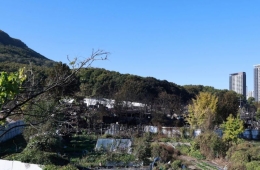
Apartment complex view in Dasan-dong, Namyangju-si, Gyeonggi Province. Photo by SeoYoon Choi
View original imageThe Korea Real Estate Board’s home price statistics, which serve as the basis for designating regulated areas, have also come under scrutiny. The "Weekly Apartment Price Statistics" released by the Korea Real Estate Board is a unique system found only in Korea. While it has the advantage of being an authoritative national statistic, the sample size is limited, making it overly sensitive to price fluctuations. According to a representative from the Citizens' Coalition for Economic Justice (CCEJ), "Publishing real estate statistics weekly—like reporting horse races—on properties that are not frequently traded creates anxiety among buyers, who feel left behind if they do not buy immediately." Ko Jongwan also remarked, "To improve accuracy, the statistics should be released monthly rather than weekly, as the current system relies on a small sample size and short intervals."
The government has also acknowledged the need for improvements. Kim Yun-deok, Minister of Land, Infrastructure and Transport, stated at last year’s parliamentary audit in October that, in response to calls to abolish weekly statistics, "Measures will be taken to reduce the negative side effects of weekly reports." Lee Heonwook, President of the Korea Real Estate Board, also said at a recent press briefing, "There have been many internal and external questions about the significance of weekly statistics. If there is a policy change at the government level, we will adjust accordingly." However, some warn that if the Real Estate Board stops publishing these statistics, buyers may become even more reliant on real estate agencies, online communities, and private platform data, making market assessments more volatile.
Given the precedent of gap investment concentrating in regions that escaped previous regulations, there are concerns that the new restrictions will also cause investment capital to flow into adjacent deregulated areas—a so-called balloon effect. Ham Youngjin, head of Woori Bank’s Real Estate Research Lab, commented, "Rather than seeing liquidity disappear entirely from the market, we have always observed the balloon effect where activity shifts to neighboring deregulated regions. When the Seoul metropolitan area’s regulations were previously expanded, investors moved to nearby deregulated areas, boosting both transaction volume and prices. Similarly, after these new measures, we may see capital flowing into places like Namyangju or Gwonseon-gu in Suwon."
Hot Picks Today
 "Three times Lee Jaeyong's fortune?"... Meet China's richest man, who amassed 134 trillion won at 43.
- "What Happened to Mighty Tesla?"... "Cut Your Exposure," Analysts Warn [Click eStock]
- "I Made an Extra 6 Million Won a Month"... "This Can Actually Make Money?" The Twist Behind a Few Pieces of Junk
- "27,000 Won for an Hour of Walking?"... Robot Dog-Walking Jobs in the U.S. Now Pay by the Hour
- "If You See It, Avoid It"... 'Superfood' Fruit Kills 12-Day-Old Baby

© The Asia Business Daily. All rights reserved. Unauthorized AI training and use prohibited.