Governor Wi Seongon Launches First Administrative Order: "Civil Economy Situation Room" in Operation
First Executive Meeting Broadcast Live
Governor Orders Real-Time Situation Dashboard in Office
Standardizing to One-Page Core Report Format
On July 2, Seongon Wi, Governor of Jeju Special Self-Governing Province, presided over his first expanded executive meeting since taking office. At this meeting, he issued his very first administrative order, establishing the "Governor’s Direct Civil Economy Situation Room." For the first time in the province’s history, the meeting was broadcast live to residents, marking the start of a rigorous governance innovation initiative that shifts away from supply-centered administration and instead uses the actual improvement in residents’ lives as the ultimate measure of performance.

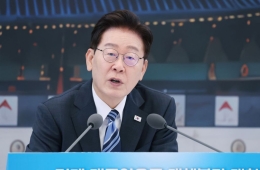
Seongon Wi, Governor of Jeju Special Self-Governing Province, presided over the first expanded executive meeting since his inauguration on the 2nd. Provided by Jeju Special Self-Governing Province.
View original imageThat afternoon, Jeju Special Self-Governing Province held the first expanded executive meeting of the ninth popularly elected administration in Tamna Hall at the provincial government building, presided over by Governor Wi. The meeting included in-depth discussions on measures to revitalize the local economy and the direction for advancing the Jeju AX (Artificial Intelligence Transformation) initiative.
Breaking with previous closed-door formats, the meeting was broadcast live in real-time to residents via the official Jeju Province website and YouTube channel, and was simultaneously streamed to all employees through the provincial government’s media system.
Governor Wi stated, “If we wait for statistics to emerge before drafting countermeasures in the era of high inflation, high interest rates, and high oil prices, it will already be too late.” He pledged to install an economic situation dashboard in his office to personally monitor daily indicators such as consumer prices, small business sales, and employment trends.
Accordingly, a real-time response system will be established: The vice governor will lead, the two administrative cities will provide field data within their jurisdictions, and each department and division will link core indicators to the situation room dashboard in real time.
A full-scale overhaul of the meeting and reporting culture will also be implemented. Governor Wi specified that “meetings are for making decisions, not for listening to lengthy reports,” and ordered the discontinuation of verbose, narrative-style work reports. Instead, he instructed standardization to a "one-page core report" format, which must include seven key elements such as the current situation, main issues, and solutions.
In addition, each division, department, and administrative city must promptly draft the "100-Day Action Plan for the Ninth Administration," specifying the task, person in charge, and indicators reflecting residents’ perceptions. Furthermore, an "Early Warning System for Key Policy Issues" will be rapidly established to proactively manage risks across the administration, including those related to civil affairs, disasters, and conflicts.
Governor Wi made it clear that he will personally take responsibility for and protect reasonable trial-and-error arising from proactive administration, but will firmly correct complacency and passive work attitudes.
As concrete measures to support the livelihood of residents, the Economic Vitality Bureau announced plans to provide an additional 45 billion won in special guarantees for small businesses in the second half of the year, facilitate the transition from high-interest loans, and promote the use of public delivery apps. The Innovation Industry Bureau subsequently presented the direction for Jeju’s AI Transformation (AX), focusing on building a Jeju-style AI administrative assistant and establishing a foundation for an AI data center.
During the subsequent policy discussion, it was decided to improve the night tourism and commercial district environments to better channel tourist spending into local neighborhoods, and to operate a "Jeju Brand Officer" to integrate management of Jeju as a single brand. In the AI field, participants agreed to revise administrative documents and data into AI-readable formats and to expand Seogwipo City’s use of AI in welfare work throughout the entire provincial government.
Governor Wi’s issuance of his first administrative order and the full live broadcast of the executive meeting are seen as strong signals of innovation in the ninth administration, signaling a shift from provider-centered bureaucratic practices to digital, accountable governance based on real-time field data.
In particular, the use of a situation dashboard in the governor’s office demonstrates a pragmatic commitment to minimizing policy time lag, while the transparent broadcast of meetings is expected to both guarantee residents’ right to know and act as a catalyst for heightened vigilance among public officials.
However, in a real-time broadcast environment, there are concerns about the “formalization of meetings,” with public officials delivering only excessively polished remarks out of fear of criticism. Additionally, the core indicators for the success of the administration will be the post-execution effectiveness—specifically, rigorous management of distribution channels to ensure that the 45 billion won injected into small business finances is immediately and tangibly felt by local commercial districts.
Hot Picks Today
 30 Beluga Whales Dramatically Rescued After Two Years Trapped in Shuttered Theme Park
- "A Friend Saying 'I Actually Made 200 Million Won with SK hynix' Feels Like Four Weeks' Worth of Pain?"
- "Yesterday Looked Cheap" SK hynix Surges Over 10% as Price Gap with US ADR Widens to 51%
- "Selected, Then Re-selected?... GH’s U-turn on Public Rental Housing Selection Leaves Applicants Confused"
- 'What's Going On with Daiso Sunscreen?' YouTube Uproar over "30 Million Won Clinical Trial"—The Truth Behind the 'SPF Shortfall' Controversy [Why&Next]
In his closing remarks, Governor Wi urged, “Let us, as public officials, work together to create a responsible administration in which residents can always recognize the outcomes and predictability of policy.”
© The Asia Business Daily. All rights reserved. Unauthorized AI training and use prohibited.