Foreign Investors Sell Off, Yen Plummets... 'Partner' Won Also Faces Greater Downward Pressure [Weekend Money]
Rising Concerns Over Japan's Fiscal Soundness
Commitment to Monetary Easing and Tepid Official Response
U.S. and Japan's Potential Currency Market Intervention in Focus
As foreign investors continue to expand their net selling of domestic stocks, concerns over market instability persist. In addition, the sharp depreciation of the yen, known as the "super weak yen," is intensifying downward pressure on the won.

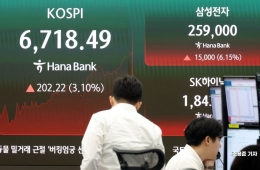
On the 2nd, the USD/KRW exchange rate is displayed on the status board in the dealing room of Hana Bank in Jung-gu, Seoul. Photo by Yonhap News
View original imageAccording to iM Investment & Securities on July 4, the dollar-yen exchange rate recently surpassed 162 yen for the first time in 40 years, accelerating the weakening of the yen. While the strength of the dollar is partly due to the uncertainty surrounding the U.S. Federal Reserve's interest rate policy, it is assessed that factors within Japan have played a greater role in the rapid depreciation of the yen.
In particular, the Takaichi administration has announced a large-scale expansionary fiscal policy roadmap, committing more than 370 trillion yen to strategic areas such as artificial intelligence (AI) and semiconductors by the fiscal year 2040. This has heightened concerns over fiscal burden. With government bond yields already surging and debt burdens mounting, the massive planned fiscal expenditure has further exacerbated concerns about Japan's fiscal soundness, which in turn has been analyzed as a driver accelerating the yen's depreciation.
Moreover, the perception that Prime Minister Sanae Takaichi favors monetary easing has led markets to believe that the Bank of Japan is unlikely to raise rates further, contributing to the persistence of the super weak yen phenomenon.
The continuation of the super weak yen is driving the upper ceiling of the dollar-won exchange rate even higher in Korea's foreign exchange market. Although authorities may engage in fine-tuning operations (smoothing operations), it is difficult to control external variables.
Hot Picks Today
 "I Thought Only Korea Was Struggling, but Japan Is Worse": Yen-Dollar Exchange Rate Hits 40-Year Low... What’s Happening to the Yen?
- "Waiting for the Right Time to Invest in Stocks, Won't Buy Even Under Pressure"... Advice from Comedian-Turned-Investment Expert Hwang Hyunhee
- "The Most Important Issue in the Korean Stock Market"... Foreign Investors Assess the Amended Commercial Act [One Year of the Commercial Act Amendment] ③
- "Can't Hold On Any Longer" 80,000 Stores Shut Down... The Fall of China’s Bakeries That Relied on SNS Buzz
- "Printing Ghost Stories on Receipts..." Mega MGC Coffee Sells 1 Million Summer Menu Items in Just Two Weeks
Park Sanghyun, a researcher at iM Investment & Securities, stated, "In the end, the key question is whether the Japanese government or the United States will intervene aggressively in the foreign exchange market to curb the super weak yen phenomenon." He added, "Domestically, the planned listing of SK hynix's American Depositary Receipts (ADR) in mid-July could temporarily improve the dollar supply, providing some relief to the recent deterioration in dollar liquidity."
© The Asia Business Daily. All rights reserved. Unauthorized AI training and use prohibited.