"If Pension Investing Is Stressful and Returns Disappoint...Consider a TDF"
Interview with Youngsoo Kang, Head of Global Operations at KCGI Asset Management
Decide by Comparing Your Investment Returns with TDF Performance
TDFs Are a Safer Asset Than Bond-Mixed ETFs
The Key Is to "Start Investing Now"
"If, over the course of a year, the return on the pension I personally managed is lower than that of a TDF, it's better to choose a TDF."
Youngsoo Kang, Head of Global Operations at KCGI Asset Management, made this statement in a recent interview with The Asia Business Daily. With personally managed pensions such as defined contribution retirement pensions (DC-type) and private pensions becoming the mainstream, Kang explained that a TDF can be an excellent alternative for investors whose returns over the investment period have been lackluster or who find it difficult to rebalance their portfolios. The one-year return for the 2045 vintage of the "KCGI Freedom Qualified TDF Series," which Kang oversees, stands at 55.2%, ranking first among TDFs managed in Korea.

Youngsoo Kang, Head of Global Operations at Korea Corporate Governance Improvement Fund (KCGI) Management. KCGI Management
View original imageKang commented, "Of course, if investing actively suits you, it's good to do so." He added, "However, by investing in a TDF, you don't need to constantly monitor the market or decide between investing in Korea or the U.S. You can focus on your main work, and the TDF automatically rebalances the proportion of stocks in line with your retirement timing, providing diversified investment. That's why I believe TDFs are a good option." For aggressive investors, Kang suggested choosing a higher vintage, such as 2050, even if your retirement target is 2045, while more conservative investors might opt for a lower vintage, like 2040. TDFs with higher vintages have a higher proportion of equities and a lower proportion of bonds.
Although ETFs that allocate up to 50% to individual stocks or thematic stocks and 50% to bonds are emerging as safe assets within pensions, Kang opined that TDFs are even better suited to serve as safe assets. He explained, "Bond-mixed ETFs perform well when the included stocks are doing well, but if you look at the overseas equity-bond mixed ETFs that were launched in large numbers two years ago, their returns haven't increased much compared to then, and there are large discrepancies among the underlying stocks." He added, "Compared to bond-mixed ETFs, TDFs can more reliably fulfill the role of a safe asset, offering greater peace of mind."
Above all, Kang emphasized that the most important factor in pension investing is the 'investment period.' He said, "The most important thing is to start investing 'now,'" and continued, "Market timing is impossible to get exactly right, so it's best to start steadily and as soon as possible." He added, "You don't need to invest large sums; the key is to save on delivery food or dining out and consistently invest even 100,000 won at a time."
KCGI Freedom Qualified TDF Achieves KRW 1 Trillion in Net Assets..."Driven by High Returns"
The KCGI Freedom Qualified TDF Series surpassed KRW 1 trillion in net assets on July 2, becoming the first independent and non-retirement plan provider asset management company in Korea to achieve this milestone. While the overall TDF market grew by about 39% compared to the end of last year, the net assets of the KCGI Freedom TDF soared by 200%, reflecting rapid growth.
Kang cited 'high returns' as the driving force behind this growth. He said, "Investors chose the KCGI Freedom Qualified TDF because of its high returns and differentiated risk profile. Our TDF invests in our in-house actively managed funds, which track a variety of asset classes such as global growth, global equities, and Korea, so it can achieve higher returns than passive TDF products."
Because the fund invests in its own actively managed products, it is also easier to quickly identify problems when performance lags. Kang explained, "We can swiftly determine which sector or country is underperforming and why, and respond promptly. In contrast, when collaborating with global asset managers and investing in their funds, it is difficult to understand in real time why performance is lacking."

Youngsoo Kang, Head of Global Operations at Korea Corporate Governance Improvement (KCGI) Operations. KCGI Operations
View original imageAnother key feature is that the TDF invests mainly in growth stocks to enhance long-term returns. Kang said, "To build wealth, you need to allocate a certain portion to growth stocks for long-term returns, but we also invest in value stocks and dividend stocks. The core of growth stock investing is to focus on industries that benefit from long-term structural trends." He added, "Even among TDFs, the asset classes and investment philosophies differ by asset manager, so it's important for investors to choose what matches their own investment profile."
Addressing the risks associated with investing in growth stocks, Kang remarked, "There are phases, such as stagflation, when growth stocks underperform, and we monitor for such situations in real time. However, in the current environment, oil prices are falling, and the economy is growing rapidly, so I don't believe this is a negative phase for growth stocks."
Hot Picks Today
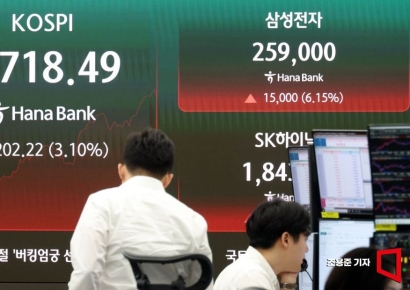 Retail Investors Regain Hope: "Leverage Unwinding Nears End, KOSPI 12,500 Target Intact," Says J.P. Morgan
- "$300 Gone in One Date"...U.S. Gen Z Ditches Restaurants for Parks
- Seoul Apartment Monthly Rent Share Surpasses 54%... Shift Toward 'Monthly Rent-Centered' Market Accelerates
- "There Are Rules About Fines!" Even Presidential Rebuke as Turkey's Anti-Smoking Crackdown Imposes 21.8 Billion Won in Penalties
- Zara 'Death Pants' Too Stylish to Give Up: "I Almost Died Just 30 Minutes After Putting Them On"
Finally, Kang set his next goal as achieving a 'double-digit market share' in the TDF market. He said, "Our current market share is about 3%, but I hope we can achieve a meaningful double-digit share. Fundamentally, I would like our company to be recognized as one that manages differentiated TDF products."
© The Asia Business Daily. All rights reserved. Unauthorized AI training and use prohibited.