"From Talent Outflow to Talent Circulation: 1,000 Korean Scientists Worldwide Seek AI Cooperation Solutions"
2026 World Korean Scientists and Engineers Convention to Be Held July 7-8
AI, Quantum, and Robotics Experts Gather
"It is now time to design a global talent circulation system, rather than worry about brain drain."
The Korean Federation of Science and Technology Societies (KoFST) is taking concrete steps to promote "global talent circulation," connecting Korean scientists and engineers working around the world into a single research network. The goal is not just to attract outstanding researchers from abroad to Korea, but to build a sustainable cooperative ecosystem that encompasses joint research, international collaboration, and the fostering of next-generation researchers.

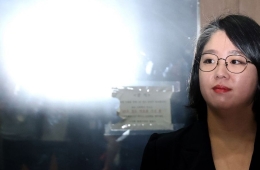
On the 2nd, Onam Kwon, President of the Korean Federation of Science and Technology Societies (KoFST) (left), is answering reporters' questions at a press conference for the "2026 World Korean Scientists and Engineers Convention" held at the Korea Science and Technology Center in Gangnam-gu, Seoul. Photo by Kim Joungho
View original imageOn July 2, KoFST announced that, together with the Ministry of Science and ICT, it will hold the "2026 World Korean Scientists and Engineers Convention" at the Korea Science and Technology Center in Gangnam-gu, Seoul, from July 7 to 8. Co-hosted by KoFST and 20 overseas Korean scientists and engineers associations worldwide, this year's convention will be held under the theme "A New Paradigm of Science and Technology Cooperation in the Global AI Era."
This year’s convention has registered approximately 1,000 participants, the largest number ever. Marking the 60th anniversary of KoFST's founding, the event will serve as a venue to explore international joint research and global cooperation strategies in the AI era, based on the global network of Korean scientists and engineers.
Onam Kwon, President of KoFST and professor at Seoul National University, stated at a press conference that "Korean scientists and engineers worldwide represent Korea’s most powerful global research network," adding, "I hope this convention will be the starting point for a virtuous cycle of talent, where knowledge and experience from overseas scholars flow into Korea, and the challenges of young Korean researchers reach the world."
AI and Quantum Experts Gather…"A Showcase of Talent Circulation in Action"
This convention will feature leading domestic and international experts in future strategic technologies such as AI, quantum, and robotics. In the keynote speech, Professor Cha Mi-Young, head of the Max Planck Institute for Security and Privacy in Germany, will present on "Data Science to Benefit Humanity," highlighting the role of data science in the AI era. Professor Cha, who completed her undergraduate, master's, and doctoral studies in Korea before becoming a world-leading AI data scientist in Germany, is a representative example of an overseas Korean researcher.
Following the keynote, a talk concert will feature discussions on "The Scientific and Technological Agenda as Viewed by Global Experts in the Age of AI Transformation," with panelists including Hyewon Seo, Principal Researcher at the French National Centre for Scientific Research (CNRS); Byungtak Jang, Professor of Computer Engineering at Seoul National University; Kihwan Kim, founding director of the Trapped Ion Quantum Science Group at the Institute for Basic Science (IBS); and Sunmin Bae, Executive Director at Samsung SDS.
In particular, Director Kihwan Kim is a world-renowned authority on ion trap quantum computers who gave up a tenured professorship at Tsinghua University in China to return to Korea and strengthen its quantum technology competitiveness. He stands as a representative example of the "global talent circulation" that this convention emphasizes.

2026 World Korean Scientists and Engineers Convention Poster. Provided by the Korean Federation of Science and Technology Societies
View original imageThe welcome dinner will feature the "2026 Korea Top Scientist and Engineer Award" ceremony and a special lecture by National Assembly member Jiho Cha.
"Networking is the Start of Science Diplomacy"…Evolving into an International Cooperation Platform
This year’s convention will operate not just as an academic event, but as a platform to expand the global research network. Unlike previous events that were limited to presentations and discussions, KoFST has prepared a dedicated social networking program for the first time, allowing participants to freely discuss joint research and international cooperation strategies after each session. Presidents of overseas Korean scientists and engineers associations will also serve as co-chairs for each session, discussing cooperation strategies with domestic researchers.
President Kwon emphasized, "Science diplomacy does not happen simply because the government declares it; it starts with trust and personal relationships among researchers. Successful joint research ultimately depends on mutual trust among researchers, so expanding organic networking is more important than anything else."
An international cooperation exhibition will also be operated at the venue, featuring seven government ministries: the Ministry of Science and ICT, the Ministry of Trade, Industry and Energy, the Ministry of SMEs and Startups, the Ministry of Land, Infrastructure and Transport, the Ministry of Agriculture, Food and Rural Affairs, the Ministry of Health and Welfare, and the Ministry of Oceans and Fisheries.
Each ministry will introduce international joint research and global cooperation programs, as well as support programs for overseas researchers, aiming to expand opportunities for collaboration between overseas Korean scientists and engineers and domestic research institutions.
During the convention, 10 breakout sessions will be held on topics including AI, science diplomacy, overseas talent, research and development (R&D) policy, and regional innovation. In particular, the latest research trends and international cooperation strategies will be discussed in fields such as AI-based basic research and advanced engineering, smart agriculture, and global health cooperation. The results of each session’s discussions will be compiled into issue papers and delivered to the government and National Assembly as policy proposals.
President Kwon stated, "We will not let this convention end as a one-off event, but will create a pathway for the discussions to be reflected in actual science and technology policy in Korea."
Fostering Next-Generation Researchers…First-Time Public Lectures Open to All
The exchange of next-generation scientists and engineers is also a major focus of this year’s convention. In the Young Generation Forum (YGF) session, Korean university students and young researchers active overseas will share their experiences on growing as global researchers and participate in mentoring activities. Discussions will also be held on building a sustainable global research network and establishing a foundation for joint research among next-generation researchers at home and abroad.

Kwon Onam, President of the Korean Federation of Science and Technology Societies (the leftmost), and other officials from the Federation are answering reporters' questions at a press briefing for the "2026 World Korean Scientists and Engineers Convention" held on the 2nd at the Korea Science and Technology Center in Gangnam-gu, Seoul. Provided by the Federation
View original imageAt the Women in Science and Technology Forum, domestic women’s science and technology organizations and overseas researchers will discuss ways to expand global leadership and promote international joint research among women researchers.
For the first time this year, a public lecture open to all will be held. Under the theme "Turning Imagination into Reality: Physics Intelligence-Based Robots," Professors Kyu-Jin Cho (Seoul National University), Je-Seong Ko (POSTECH), and Daeyoung Lee (KAIST) will introduce the latest research cases on wearable robots, biomimetic robots, and space robots.
Particularly, Professor Cho and his students, Professors Ko and Lee, will take the stage together to demonstrate not only their research achievements but also the process by which scientific and technological talent grows and is passed on. The "Human-Centered Physical AI Robotics Lab" led by Professor Cho was recently selected as a national research institute and will receive a total of 95 billion won in funding over the next 10 years.
Hot Picks Today
 You Can Receive Monthly Payments Like a Pension Without Selling Your Home... The Local Mutual Growth Housing Pension That Provides 1.69 Million Won Each Month
- "Unimaginable in Korea"...Koreans Surprised by Secondhand Smoke in Japan and China Restaurants
- "Special Skill: Admitting Mistakes"... The Unexpected Edge That Helped Job Seekers Tired of AI Resumes Succeed
- "Canceled After Five Days and Lost 770,000 Won"... Hit by Steep Fees After Pressing the Cancel Button
- "I Thought She Was an Ordinary SKT Employee... The Unexpected Identity of Nongshim's Third-Generation Bride"
President Kwon stated, "Scientific and technological innovation is not completed solely in the laboratory; it is only when we imagine the future together with the public that true innovation is achieved. I hope this convention will serve as the starting point for preparing the next 60 years of science and technology in Korea."
© The Asia Business Daily. All rights reserved. Unauthorized AI training and use prohibited.

![How Did Tacos Come to Have Two Shells [Delicious Stories]](https://cwcontent.asiae.co.kr/asiaresize/307/2026091410392626963_1789349966.jpg)