Believed Daughter's Crocodile Photo Was Real, but It Was 'AI-Generated Fake'... Vietnamese Woman Fined 440,000 Won
Vietnamese Authorities Impose Fine of Approximately 440,000 Won
Incidents of Confusion Caused by AI-Generated Images Continue to Rise
A Vietnamese woman received a fine after reporting to authorities what she believed to be a real crocodile sighting, only to discover the photo was a fake image created with artificial intelligence (AI) by her daughter.
On June 26, 2026 (local time), Vietnamese media outlet VN Express reported that Tran Thi Thanh Nan, 38, a resident of Nui Cam in An Giang Province, Vietnam, was fined 7.5 million dong (approximately 440,000 won) for providing and spreading false information to authorities after mistakenly believing an AI-generated photo was real.

The crocodile image in the photo was created using generative AI. The daughter made the crocodile photo with AI and shared it in the family messenger group chat, and the mother, mistaking it for a real situation, reported it to the authorities. VNExpress
View original imageThe incident occurred on June 10. Ms. Tran reported to local authorities that she had discovered a large crocodile weighing about 80 kilograms near the Vinh Tre canal close to her home. To bolster the credibility of her report, she even submitted a crocodile photo, which appeared to have been taken with a mobile phone. Upon receiving the report, authorities promptly issued safety warnings, urging residents to refrain from walking or fishing near the canal. Police and related agencies were also dispatched to conduct an on-site search and investigation.
However, despite the search, no trace of a crocodile was found. Nearby residents also stated they had not seen any crocodiles recently, casting doubt on the report. The truth came to light the following day when Tran's 17-year-old daughter voluntarily went to the police station and confessed that there was no crocodile in the canal and the photo had been created using AI. Investigations revealed that the daughter had used a generative AI service to create the crocodile image, shared it in the family group chat, and that the mother, mistakenly believing it to be real, reported it to the authorities. Following additional investigation, officials concluded that both the eyewitness account and the photo were false, and fined Ms. Tran for spreading false information.
This incident is seen as an example of how fake images created by generative AI can lead to a waste of administrative resources and social confusion. In fact, the Organisation for Economic Co-operation and Development (OECD)'s AI Incident Database (AIM) has classified this case as an example where AI-generated disinformation triggered public agency responses and community disruption.
Hot Picks Today
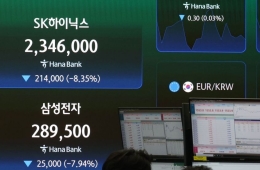
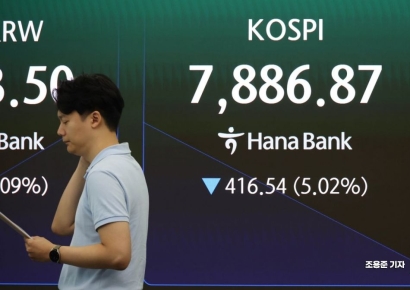 "Semiconductor Peak-Out Theory Resurfaces: Foreign Investors' KRW 3.2 Trillion Net Sell Pushes KOSPI Below 8,000"
- "Now Is Not the Time to Sell, Buy More on Sharp Declines"... Advice Amid Market Volatility
- Exchange Projects Around 50 KOSDAQ Delistings Due to Insufficient Market Capitalization
- "Why Did You Call Me to the World Cup!" Jens-Hong Myung-bo Assault Video Surpasses 10 Million Views... Revealed as AI
- Suspicious Achievements of Famous 'Beauty' Policewoman Revealed to Be Handed Over by Male Colleagues... Taiwan in Shock
Globally, incidents involving fake images or videos made with AI have been on the rise. Last year in the United States, a challenge involving sending family members AI-edited photos of homeless people at their homes went viral, leading to police responses after some recipients reported the images. Additionally, deepfake videos of celebrities and fabricated disaster photos have spread on social media, emerging as significant social problems. Experts point out that as AI-generated content becomes increasingly sophisticated, it is essential to check the source and context rather than judging the authenticity of photos or videos alone.
© The Asia Business Daily. All rights reserved. Unauthorized AI training and use prohibited.