Kim Seong-hwan: "Sufficient Water and Power for Southwestern Semiconductor Cluster... New Nuclear Plants Possible for Additional Demand"
The government has stated that the water and electricity required for the 800 trillion won-scale memory semiconductor cluster planned for the southwestern region can be supplied with the current infrastructure. Furthermore, if additional electricity demand arises in the future, the construction of new nuclear power plants may also be considered.
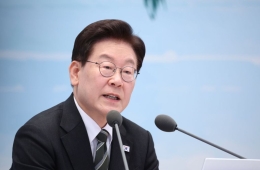
On July 2, Kim Seong-hwan, Minister of Climate, Energy and Environment, appeared on SBS's 'Kim Taehyun's Political Show' and said, "The four semiconductor fabs currently planned will require about 650,000 tons of water per day," adding, "By utilizing surplus water and electricity in the Honam region, we can sufficiently meet this demand."

Regarding water supply, Minister Kim explained, "There are seven dams in the Yeongsan River and Seomjin River water systems, with a combined storage capacity of approximately 1.5 billion tons. Currently, there is already some surplus water available, which can be utilized. To ensure a more stable supply, we are also considering the option of raising the height of the existing Dongbok Dam." He further stated, "While the construction of new dams often faces strong environmental concerns and local opposition, increasing the height of existing dams can boost reservoir capacity while minimizing environmental impact. If we raise the Dongbok Dam, it should be possible to supply water for semiconductor manufacturing in addition to the current daily supply of 300,000 tons of drinking water to Gwangju city."
Addressing concerns about a shortage of agricultural water, he emphasized, "It is out of the question to halt farming in order to supply water to semiconductor factories. If it becomes necessary to use agricultural water, this must be done in consultation with farmers, and we believe a comprehensive review will ensure that supply remains possible."
On electricity supply, he explained, "The Honam region currently has six Hanbit nuclear reactors and abundant renewable energy sources, resulting in a surplus of 3 to 5 GW (gigawatts) of electricity. The additional power required for the semiconductor cluster is estimated at around 6.3 GW, which can be sufficiently supplied with some supplementation." He also noted, "Honam is the region with the most abundant carbon-free power sources, including nuclear and renewables, rather than coal. If semiconductor plants are established locally, the electricity that was previously transmitted to the Seoul metropolitan area can be used on-site, which will also ease the burden on the power grid."
However, he noted that if additional semiconductor plant expansions or large-scale AI data centers are established in the future, securing new power sources will also be necessary. Minister Kim said, "The four fabs currently planned are feasible, but if a semiconductor complex on the scale of Yongin or large AI data centers are added, constructing additional nuclear power plants will have to be considered. However, this must be predicated on fully reflecting the opinions of local residents."
On the direction of energy policy, he stated, "We need an energy mix, not a nuclear phase-out nor a nuclear-centric approach. We should use nuclear as a base load power source while expanding renewables and energy storage systems (ESS) together to transition to a decarbonized system." He also pointed out that the growing demand from global companies for increased use of renewable energy is a major factor in semiconductor site selection. Minister Kim noted, "Global companies are expanding renewable energy use as part of ESG management. Failing to meet these requirements may affect future business deals. The Honam region has abundant electricity, and with the introduction of regional electricity pricing, companies will be able to use electricity at lower rates than in the Seoul metropolitan area, making the region more competitive."
Hot Picks Today
 "I Thought It Was Middle-Aged Men's Hiking Wear"... 20- and 30-Somethings Open Their Wallets for "This Padded Jacket"
- "Didn't Save This Money to Leave to Our Kids?"... Retired Couples Spend $10,000 on a Single Trip
- "The Cards I Put in the Attic After My Son Lost Interest"... 15 Years Later, a £1.56 Million Windfall
- "We'll Give You 8 Million Won" ... Passengers Still Didn't Budge: Why No One Gave Up Their Seat
- "Stockpile 9 Liters of Bottled Water and Three Days' Worth of Food"... UK on Edge as Nationwide Emergency Preparedness Alert Issued
Regarding the speed of semiconductor cluster development, the government has emphasized its commitment to rapid support. Minister Kim said, "In the past, dam construction and power grid projects took around 10 years, but now we must resolve these issues within two to five years. The four semiconductor fabs can be supplied with the current surplus water and electricity, and we are preparing infrastructure in advance to meet any additional demand that may arise." He added, in reference to environmental impact assessments, "While it is not possible to skip all procedures, we must focus and streamline the process for efficient implementation."
© The Asia Business Daily. All rights reserved. Unauthorized AI training and use prohibited.