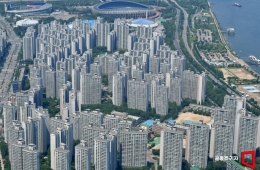
"Regulatory Easing Is the 'Kingpin' in the AI Era... 'Mega Special Zones' Needed for National Transformation"
KCCI, Office for Government Policy Coordination, and POSTECH Hold Joint Forum
"Improving Living Conditions Is More Important Than Jobs to Prevent 'Nominal Relocation'"
Representatives from both the business and academic sectors have voiced a unified opinion that bold regulatory innovation is essential in order to overcome the looming crisis of regional extinction and achieve balanced national development, especially by leveraging advanced industries such as artificial intelligence (AI). They suggest that, beyond the simple relocation of factories, a "mega special zone" should be created, bringing together regulatory exemptions, data, talent, and living conditions as an integrated package.
On July 2, the Korea Chamber of Commerce and Industry, together with the Office for Government Policy Coordination and Pohang University of Science and Technology, held a forum at the chamber’s headquarters in Jung-gu, Seoul, titled "Solutions for Regional Balanced Development × AI Growth," focusing on the direction of mega project implementation.

Choi Tae-won, Chairman of SK Group, is announcing investment plans at the National Report Meeting on the Three Major Mega Projects held at the Blue House on the 29th, presided over by President Lee Jae-myung. Photo by Yonhap News
View original imageLee Jeonghee, a professor at Chung-Ang University and the keynote speaker at the event, emphasized the need to establish an organic corporate environment in which various startup experiments can emerge around anchor (leading) companies. He identified regulatory innovation as the key "kingpin" solution.
Professor Lee argued, "For the government’s three major mega projects—semiconductors, AI data centers, and physical AI—to take root in regional areas, it is imperative to establish demonstration special zones (mega special zones) that integrate six major elements: regulatory exemptions, public demand, computing, data, talent, and living conditions, serving as a vessel for innovation."
Citing data from the U.S. Bureau of Economic Analysis (BEA), Professor Lee presented Austin, Texas as a successful case of a quiet city reborn as "Silicon Hills." After attracting a high-tech research consortium in the 1980s, Austin’s real GDP nearly tripled over about 20 years, and in 2021, Tesla relocated its headquarters there, cementing the city’s status as a global startup hub.
Professor Lee explained, "Austin’s miracle resulted from an exceptional tax environment with virtually no personal or corporate income tax, as well as education and research investments centered on the University of Texas at Austin, which attracted global competitors and startups. This is a case where a virtuous cycle—where the business environment attracts companies, companies create jobs, jobs attract talent, talent leads to settlement, and settlements attract more companies—was proven by market principles." He also noted that the Semiconductor Innovation Fund, based on the Texas Semiconductor Act, is further accelerating this growth, making it a valuable model for designing Korea’s own mega special zones.
Lee Hyunghee, Vice Chairman of the Seoul Chamber of Commerce and Industry, also stressed, "We are now in an era where AI determines the survival of companies, and in order to foster growth through AI, we need a well-equipped 'laboratory' where numerous experiments can be conducted." He added, "To achieve this, bold regulatory rationalization by the government and exceptional infrastructure support must be provided in a timely manner."
Representing the industrial sector, Shin Seungkyu, Executive Vice President of Hyundai Motor Group, shared the blueprint for the group’s ongoing "Saemangeum Project" and called for substantial government support. The Saemangeum Project of Hyundai Motor Group is a comprehensive future energy and advanced industry initiative that includes clean hydrogen production through solar power generation and water electrolysis plants, the establishment of next-generation AI data centers, and the manufacturing of robots designed to operate in physical spaces.
Shin emphasized, "The top priority for the successful settlement of the Saemangeum complex project and revitalization of private investment is the designation of a mega special zone to eliminate regulations that hinder progress on the ground." He also urged, "At the same time, large-scale industrial infrastructure must be developed, such as designating an RE100 (100% renewable energy) industrial complex for eco-friendly power supply and building a robot cluster where related parts and equipment companies can gather."
There were also concerns raised that improving living conditions is essential in order to prevent the so-called "nominal relocation" phenomenon, where employees only move their workplaces to regional areas but commute to the capital region on weekends.
Hot Picks Today
 "Bought It Cheaper in Japan Than Korea"... Improper Use Leads to Vomiting and Abdominal Pain, Official Warning Issued
- [Breaking] Lee Eogwon: "AI Hacking Possible... No Sensitive Information Confirmed Leaked"
- "Why Are They Selling So Much?" Has Korean Stock Lost Its Appeal?... Foreign Investors Unload 20 Trillion Won in a Month
- "In My Eyes, I'm Still 28"... Chinese Woman Gives Birth to Son at 58 and Daughter at 60
- "Boss, What Is This?" The 2,000 Won 'Pizza-Like Rice Cake' Causes a Sensation at Local Shops [Flavor File X]
Bae Young, a professor at Pohang University of Science and Technology, pointed out, "Without thorough consideration of fundamental living conditions, attracting talent is impossible." He added, "Even within the same region, the living condition requirements differ greatly between the younger and older generations. Therefore, a 'youth settlement probability prediction model' should be established so that tailored policies can be precisely developed for each generation and region."
© The Asia Business Daily. All rights reserved. Unauthorized AI training and use prohibited.



![[Breaking] Lee Eogwon: "AI Hacking Possible... No Sensitive Information Confirmed Leaked"](https://cwcontent.asiae.co.kr/asiaresize/307/2026100108312546638_1790811086.jpg)