Hyun Song Shin: "Korea's Real-World Tokenization Test Two Years Ahead of Europe... Next Challenge Is Government Bond Tokenization"
ECB Central Bank Session Presentation in Sintra, Portugal
Sharing South Korea's Digital Currency Pilot: "Project Han-Gang" Experience
"Money is evolving... Tokenization based on an integrated ledger is the future"
"Innovation should be an
Hyun Song Shin, Governor of the Bank of Korea, shared South Korea's experience with the real-world test of its digital currency (CBDC), known as 'Project Han-gang', on the international stage, expressing pride that the country is "two years ahead of Europe."
Governor Shin emphasized that 'tokenization' should be at the center of future money, suggesting that its function should be expanded beyond deposits to include the tokenization of assets such as government bonds. He also presented a vision that innovation in the monetary system should be driven by trust in central bank money as an anchor, rather than by decentralized blockchains.

On July 1 (local time), Governor Shin made these remarks during a session presentation at the Central Bank Forum hosted by the European Central Bank (ECB) in Sintra, Portugal.
This forum is a high-level policy dialogue held annually by the ECB, where central bank governors from major countries, academics, and market experts gather to discuss financial and economic issues. On this day, Governor Shin presented a paper on the theme of "Tokenization of Money, Payments, and Financial Transactions," sharing the experience and implications of South Korea's 'Project Han-gang.'
Regarding 'Project Han-gang,' Governor Shin stated, "It is a leading case of materializing the next evolutionary stage of money—tokenization—not as an abstract idea, but as an actual operating system," adding, "We have brought this to reality two years ahead of 'Appia,' the blueprint set by the ECB for 2028."
'Project Han-gang' is a real-world test of digital currency led by the Bank of Korea. It is a project in which banks tokenize digital currency (CBDC) issued by the Bank of Korea to verify its feasibility in actual transactions. The first phase of testing was completed at the end of last year. In the second half of the year, the number of participating banks will be increased, and the scope will be expanded to include government fiscal execution, as part of the second phase of testing.
Governor Shin explained, "In the second phase, the number of participating banks will increase to nine, and we will add convenience features such as biometric authentication and automatic conversion between deposits and deposit tokens." He added, "Above all, we plan to actively utilize the system for government fiscal execution, including subsidies for building electric vehicle charging infrastructure and public sector business expenses."
Governor Shin stated that the next stage of 'Project Han-gang' is the tokenization of assets such as government bonds. He said, "Government bonds are a prime example: if issued and circulated within a unified ledger, ownership transfers and payment settlements can be processed simultaneously, and everything from real-time verification of collateral assets to maturity redemption can be automated." He added, "This will also contribute to the central bank's core responsibilities of monetary policy and financial stability."
He further said, "We should also explore connecting digital currency systems with 'Project Agora'—where eight central banks from the United States, Europe, and others, along with over 40 financial institutions, participate to exchange tokenized money from multiple countries on a single platform." He continued, "If we can process foreign exchange—and even securities settlement—in a single transaction through this, it will reduce costs and expand the international use of the Korean won."
Governor Shin reiterated that central banks must take the lead in innovating the monetary system. He said, "Now that money stands at the turning point of tokenization, the remaining challenge is how to create a 'new stage' where smart money and assets can come together," presenting a unified ledger centered on the central bank as his blueprint.
Governor Shin criticized, "Decentralized blockchains, which anyone can participate in, require continuous rewards for validators. The more rigorous the verification to enhance security, the higher the costs and fees rise." He added, "Money gains power when pooled together, but people will scatter in search of lower costs, ending up isolated on separate islands, making it difficult to interact."
He further emphasized, "Central bank money has been the 'anchor of trust' sustaining the monetary system for a long time." He continued, "By leveraging this trust, we can enjoy the benefits of tokenization while building a system that operates stably without costly consensus competition."
Hot Picks Today
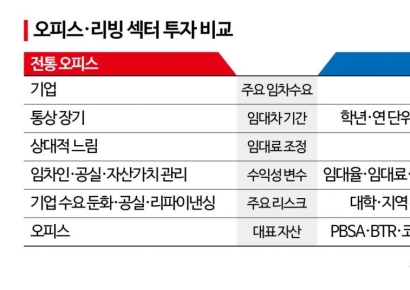 "New Freshmen Arrive Every Year, Ensuring Robust Demand" National Pension Service Invests as Major Players Pour KRW 1 Trillion into Student Dormitories
- 'Pikachu' Invades the Crypto World... Pokémon Card Tokens Now Bought, Sold, and Used as Loan Collateral [Bitcoin Now]
- "It's Not Property Tax, It's a Seoul Citizen Tax"... If Apartment Prices Continue, "All of Seoul Will Be Taxed by 2030"
- "That's Made from Skinned-Alive Leather"... 'Million-Dollar Bra' Gold Medalist Faces Criticism over Luxury Bag
- "Baseball Stadium's 'Chimaek Rule' Overturned: New Clean-Eating Food Trends Replace Greasy Classics"
He stated, "The Bank of Korea, in close cooperation with the government, will take the lead in shaping the future monetary system through thorough preparation and proactive innovation."
© The Asia Business Daily. All rights reserved. Unauthorized AI training and use prohibited.