Cutting Out Dumping and Lottery Bids... Government Abolishes 'Simplified Comprehensive Evaluation System' for 10-30 Billion Won Public Construction Projects After 6 Years
Reforming the Simplified Comprehensive Evaluation System into a Technical Qualification Evaluation System
Eliminating Gaps in the Contract System and Protecting Rights
Review of Over 30,000 In-House Bid Announcements, 1,252 Corrections Requested
The government has decided to abolish the "simplified comprehensive evaluation bidding system" (simplified comprehensive evaluation system) for public construction contracts worth between 10 billion and 30 billion won, which was introduced in 2020 to strengthen the technological capabilities of small and medium-sized construction firms, after six years. The move aims to address long-standing loopholes that have distorted the public procurement market—such as bid agencies encouraging mass identical price bidding—and to overhaul the market landscape by shifting to a competency-based "technical qualification evaluation system."

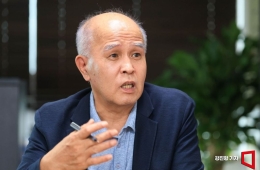
Jang Heo, Second Vice Minister of the Ministry of Finance and Economy. Ministry of Finance and Economy.
View original imageOn the 1st, Jang Heo, Second Vice Minister of the Ministry of Finance and Economy, presided over the '2nd Procurement Policy Review Committee of 2026' and reviewed and approved a plan to rationalize public construction bidding systems and measures to improve the national contract dispute resolution system, with these key points at its core.
Identical Price Bidding Rate Soars to 68.9%... The End of the Distorting 'Comprehensive Evaluation System'
The reason why the Ministry of Finance and Economy decided to abolish the simplified comprehensive evaluation system is because, as quantitative data shows, it has reached a critical point of losing its ability to discriminate. Under the current system, bidders score higher the closer their bid is to the average bid price (the equilibrium price) of all bidders, resulting in a severe "bid concentration" phenomenon reliant on bid agencies. The identical price bidding rate in simplified comprehensive evaluation tenders ordered by the Public Procurement Service was just 0.90% in the first year of implementation in 2020, but soared to 3.26% in 2024, 38.97% last year, and an astonishing 68.96% as of March this year, leading to a market paralysis.
Accordingly, starting January next year, the government will move away from the high-score equilibrium price method and shift to a "technical qualification evaluation system" that rigorously evaluates the technical and execution capabilities of bidders starting from the lowest price. To prevent dumping, the system of submitting both price and detailed estimates (itemized bidding) will be maintained, but "standard market price item" categories will be excluded from the successful bid rate calculation to prevent destructive price competition among small and medium-sized construction firms. In addition, evaluation of "safety and quality engineers" will be made mandatory in the personnel qualification criteria, significantly strengthening site-based construction management.
Furthermore, the Public Procurement Service's "bid qualification verification"—which weeds out paper companies and other unqualified bidders—will be expanded to cover the technical qualification evaluation range (contracts worth 10 billion won or more but less than 30 billion won). Pilot projects proved the effect: the average number of bidders dropped by 37%, from 457 to 285. For companies disqualified through verification, a legal amendment is planned within the year to require upfront cash deposits for future bids, with forfeited deposits reverting to the national treasury.
Unit Price Adjustment Guaranteed for SW·Goods Mixed Contracts... Dispute Adjustment Requests Surge to 60 Cases
Another core aspect of these measures is the significant expansion of authority and scope for the "National Contract Dispute Mediation Committee." With lower costs and a much shorter resolution period (three to four months) compared to litigation, the number of dispute mediation requests by procurement companies has risen from 25 in 2020 to 60 last year, and already surpassed 59 as of June this year, expected to exceed 100 by the end of the year.
The Ministry of Finance and Economy analyzed on-site dispute cases and introduced a host of measures to bridge regulatory gaps. In the case of software (SW) contracts, which often saw disputes over unit price adjustments, the national contract law will be revised to specify "changes in specifications and scope of work" as part of design changes, and suppliers will be granted the right to request changes in the scope of work. For mixed contracts involving equipment purchases and installation work, issuing a bill of quantities will be made mandatory to guarantee payment adjustments.
Measures to prevent abuse by prime contractors (ordering agencies) will also be introduced. If a delay in performance is partially caused by the ordering agency, a clear basis for reducing liquidated damages has been established. Furthermore, if the ordering agency arbitrarily sets unit prices below the standard price (such as standard production cost), it will be mandatory to disclose the reason when bidding. To prevent cash flow problems for small and medium-sized enterprises, payments for partial deliveries must be made within five days of claim submission.
Procurement Portal Overhaul... 1,252 Violations Detected in In-House Orders, AI Monitoring to Launch Within the Year
Meanwhile, the government has also reviewed and developed improvement plans for in-house bidding conducted by demand agencies outside of the Public Procurement Service. As of the end of May this year, all 30,017 in-house bid announcements were reviewed, resulting in the detection of 1,252 violations and demands for correction. By type, failure to comply with the legally mandated announcement period accounted for 649 cases (51.8%), the most common, followed by excessive qualification requirements for bidders and other violations at 488 cases (39.0%). The government plans to improve the procurement portal system so that registrations will be restricted if the legal announcement period is not met, and to introduce an artificial intelligence (AI)-based monitoring system by the end of the year to detect violations of relevant laws in bid announcements, in parallel with other institutional improvements.
Hot Picks Today
 "Investors Should Stop Even Now"... Asset Manager CEO Warns Against 'Samjeonnix' Leveraged ETF Investments
- "Even the 'Caffeine Boost' Is Getting Pricier... Famed 'Coffee Republic' Korea Bows Down for the First Time in Six Years"
- "Who Are Those Royal Beauties Holding the World Cup Trophy?"...Crown Princess Sisters Steal the Spotlight Among Players
- "Why Didn't He Stay in the US?"... The Choice of the 34-Year-Old Chinese AI Prodigy Who Shocked Wall Street
- Chinese Group Tourists Abandoned from Noon to Evening After Refusing Shopping... Korea Embarrassed by ‘Low-Quality Tours Focused Only on Headcount’
Vice Minister Heo stated, "Through these improvement measures, we hope to normalize the public construction bidding environment into a fair and healthy ecosystem centered on capabilities. In particular, linking unreasonable practices identified in the field of contract disputes to systematic improvements in the contract system will not only enhance convenience for public procurement participants but will also be highly meaningful for building a fair contract environment."
© The Asia Business Daily. All rights reserved. Unauthorized AI training and use prohibited.