Met Again in Qatar... U.S.-Iran High-Level Talks Fall Through (Comprehensive)
Iran Insists "Strait of Hormuz Is Our Territorial Waters"
U.S. Blocks Iran's Frozen Funds and Hezbollah's Financial Networks

The delegations representing the United States and Iran in the ceasefire negotiations arrived in Doha, Qatar, but no high-level talks were held. As the Iranian side insists that the Strait of Hormuz is its territorial waters and refuses to relinquish control, significant hurdles are expected before talks can resume.
Al Ansari, spokesperson for the Qatari Ministry of Foreign Affairs, stated at a press conference on June 30 (local time), "The U.S. negotiation team, including Special Envoy Steve Witkoff and Jared Kushner, has arrived in Doha. However, no schedule has been set for a high-level meeting with Iran, and they will instead meet with our mediators." He added, "This week, working-level discussions with Iran are planned, including issues of regional security. These talks may be elevated to high-level meetings at a later stage."
The Iranian side also drew a clear line, stating there are no plans for high-level meetings with the U.S. Esmail Baghaei, spokesperson for the Iranian Ministry of Foreign Affairs, said at a press briefing on the same day, "The meeting expected to be held in Doha tomorrow will focus on the implementation of the provisions of the ceasefire memorandum of understanding (MOU), specifically the release of Iran's frozen assets, and will be discussions with the Qatari side only." He emphasized, "As there are no plans to meet with U.S. officials, there are no talks to cancel."

As the Iranian side remains firm on not relinquishing control over the Strait of Hormuz, the resumption of talks is becoming increasingly difficult. Mohammad Bagher Ghalibaf, Speaker of the Iranian Parliament, said in a nationwide address that, "According to the ceasefire MOU, free passage through the Strait of Hormuz will be permitted for only 60 days." He continued, "The Strait of Hormuz is Iranian territorial waters, and Iran will never give up its rights to the strait under any circumstances." He also stressed, "No further negotiations will be held until the conditions of the MOU are met," and warned, "We will respond firmly, considering the recent incidents in the Persian Gulf as violations of the ceasefire agreement."
The U.S. government is pushing back against Iran's claims by tightening financial restrictions again. The New York Post, citing a U.S. government official, reported that "the $6 billion (approximately 9.3 trillion won) in frozen funds that were to be released for Iran's purchase of humanitarian supplies have been frozen again," and "the funds will not be released until Iran fulfills its MOU obligations."
Along with other major Middle Eastern countries, the U.S. has also imposed sanctions on Hezbollah, a pro-Iranian militant group in Lebanon, targeting its financial networks. The U.S. Department of the Treasury announced, "The United States and members of the Terrorist Financing Targeting Center (TFTC) are imposing sanctions on key elements of a financial network that includes five institutions under Hezbollah and 16 individuals." The TFTC was established in 2017 to track and block the funding of terrorist organizations in the Middle East, with member countries including the United States, Saudi Arabia, United Arab Emirates (UAE), Bahrain, Kuwait, Oman, and Qatar.
Hot Picks Today
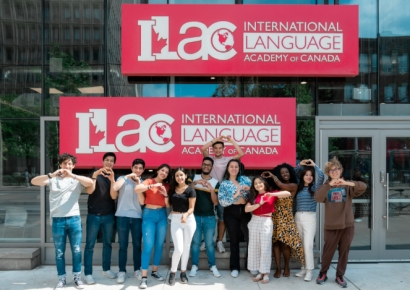 "Quit Job to Start Life in Canada, Now Forced to Return Home"… Language School Closure Leaves Korean Students Stranded
- 'Japan in Chaos' as Unprecedented Outbreak Spreads ... "Four Days Is Too Short," Yet Japan Remains Top Travel Pick
- [Exclusive] "Oh, Oh! Why Is the Seatback Like This?" Hyundai Ioniq 9 Recalled in Korea: 15,000 Units Due to Power Seat Entrapment Risk
- Fed Officials Warn "Inflation Risks Remain"... AI and Manufacturing Drive Price Pressures
- Hanwoo Can't Even Dream of This... "Melts in Your Mouth" as Wagyu Hits It Big in U.S. Supermarkets and Fast-Food Chains
The friction between the two sides is expected to continue for some time. Mostafa Pakzad, chairman of Pakzad & Company, an Iranian geopolitical consulting firm, told the Wall Street Journal (WSJ), "The Iranian government and moderates argue that a swift agreement with the U.S. is needed to first secure the release of frozen funds and address domestic economic issues, but the Iranian military and hardliners oppose this." He pointed out, "The Iranian military believes that maintaining control over the Strait of Hormuz is essential for holding leverage both in relations with the U.S. and in domestic affairs, so future follow-up negotiations are likely to face greater difficulties."
© The Asia Business Daily. All rights reserved. Unauthorized AI training and use prohibited.