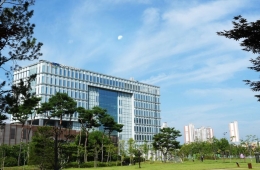
Gwanghallu Pavilion in Namwon, With 400 Years of History, Designated as National Treasure (Comprehensive)
Elevated to National Treasure After 63 Years as a Treasure
Recognized for the Value of Late Joseon Wooden Architecture
Gwanghallu Pavilion in Namwon, a representative pavilion of the Honam region from the late Joseon Dynasty and located in Jeollabuk-do, has been designated as a National Treasure. This architectural heritage, with approximately 400 years of history, is widely known as the setting for pansori and the classic novel "Chunhyangjeon." Gwanghallu showcases both the splendid ornamentation and the practical structure characteristic of late Joseon wooden architecture. It has also been recognized for its value as a space where local administration, culture, and art coexisted during the time, firmly establishing itself as a nationally significant cultural heritage. After being designated as a Treasure in 1963, it has now been elevated to National Treasure status after about 63 years.

The Cultural Heritage Administration announced on July 1 that Gwanghallu Pavilion in Namwon has been designated as a National Treasure, a state-designated cultural heritage. Traditionally called "Honam Jeilnu" (the finest pavilion in Honam), it is the most prominent government-run pavilion of the Honam region from the late Joseon era. Its origins can be traced back to the early Joseon Dynasty. It is said to have begun as Gwangtongru, built by Hwang Hee (1363–1452) while he was exiled in Namwon. Later, Jeong Cheol (1536–1593), the governor of Jeolla-do, and Jang Uiguk, the magistrate of Namwon, created the surrounding lake, three islands representing the Three Divine Mountains of Bongrae, Bangjang, and Yeongju, and the Ojakgyo Bridge, thus forming the foundation of today's Gwanghallu Garden.
Gwanghallu suffered destruction in 1597 during the Japanese invasion of Korea (Jeongyujaeran). In 1626, Shin Gam (1570–1631), the magistrate of Namwon, rebuilt it to its present scale, and it has maintained its original form through several rounds of repairs and restoration. There are relatively detailed records available—such as ridge beam inscriptions, commemorative writings, local gazetteers, and even modern newspaper articles—that document the construction, reconstruction, and repair processes, giving Gwanghallu significant historical value as a source for studying the evolution of architecture.
Gwanghallu was not merely a pavilion for enjoying scenery. During the Joseon Dynasty, it served as a venue for official banquets and discussions of local affairs by government officials, as well as a center for cultural exchange, where scholars composed poetry, pursued academic studies, and enjoyed music and art. The pavilion, harmonizing with beautiful natural surroundings, inspired countless writers and functioned as a stage for the flourishing of local culture.
Its cultural and historical significance is exceptional. Gwanghallu is widely recognized as the setting for Korea's representative pansori and the classic novel Chunhyangjeon. As the place where the love story of Chunhyang and Lee Mongryong unfolds, it has become more than just an architectural heritage—it is a cultural symbol shared across generations. Even today, it serves as a central venue for traditional culture, hosting various cultural events such as the Chunhyang Festival.

Architectural excellence is also cited as a key factor for its elevation to National Treasure status. Gwanghallu consists of the main pavilion (Bonru), the auxiliary pavilion (Yoseongak), and Wollang. The main pavilion is a building with a hipped-and-gabled roof, five bays across the front and four bays along the side, designed to maximize the use of interior space. The bracket arms connecting the column heads and beams are adorned with a variety of auspicious motifs, including blue and yellow dragons and turtles, showcasing the ornate decorative style typical of late Joseon wooden architecture.
The structure’s practical considerations are also notable. The auxiliary pavilion features an ondol (underfloor heating) system, enabling year-round use, and Wollang, built in 1881, was designed not only to prevent the main pavilion from tilting backward but also to function as a staircase. The harmonious combination of decoration and functionality is considered a prime example of the sophistication of late Joseon wooden architecture.
Gwanghallu is also highly valued for its spatial composition, which blends seamlessly with the surrounding landscape. The Gwanghallu Garden, centered around the pavilion, organically connects the lake, three islands, and Ojakgyo Bridge, embodying the characteristics of a traditional garden that represents an idealized world of immortals. The integration and preservation of architecture and garden as a single landscape over a long period distinguishes Gwanghallu from other pavilion structures.
Hot Picks Today
 Prices Jump Overnight on July 1: "My Morning Soft-Boiled Eggs Now 3,000 Won for 2" — Convenience Store Price Hikes Make Summer Hotter
- [Exclusive] "Lifeline for Semiconductors" Juam Dam Rated Grade 5, Highest Drought Vulnerability, Three Years Ago
- NPS: "'74 Trillion Won Sell-Off Bomb' Is Absurd"... Easing Fears Over Domestic Equity Rebalancing
- [Exclusive] Kim Eo-jun Opens Restaurant in Paris: First Guest Shares "How Was the Food..." Experience
- 'Suspect Still at Large' on 21st Day of Tongyeong Murder... Identity of 'Man's Face' Circulating on SNS
The Cultural Heritage Administration stated, "Gwanghallu is an architectural heritage that harmoniously combines the splendid ornamentation and practical elements of late Joseon wooden architecture," adding, "It is outstanding in both historical and artistic value, particularly when considered together with the garden heritage of Scenic Site Gwanghallu Garden."
© The Asia Business Daily. All rights reserved. Unauthorized AI training and use prohibited.