Five Offshore Wind Operators Selected in Auction... Hanbit, Haesong, and Gulupdo Included
Announcement of Results for the First-Half 2026 Offshore Wind Power Auction
Five Project Operators Selected; Average Competition Ratio 2:1
Foreign Turbines Chosen Under 'Technology Transfer and Domestic Production' Conditions
Government Pol

In the offshore wind fixed-price contract bidding competition for the first half of this year, a total of five project operators were selected. Notably, Hanbit Offshore Wind Power, which effectively uses Chinese turbines, was included in the final list. The wind power industry interprets this as a shift in government policy towards promoting lower power generation costs and expanding adoption, even if Chinese-made equipment is used.
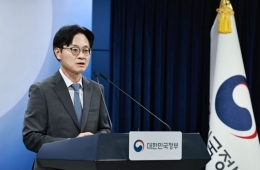
On June 30, the Ministry of Climate, Energy and Environment and the Korea Energy Agency announced that for the fixed-price contract competitive bidding for the first half of 2026, a total of 3,656 megawatts (MW) and nine projects were submitted, with 1,786 MW and five project operators ultimately selected.
This round of bidding is considered a success, as it achieved a competition ratio exceeding two-to-one for the first time since the introduction of offshore wind competitive bidding in 2022, with the amount bid more than doubling the amount selected.
In the fixed offshore wind power bidding, where four operators (1,598 MW) participated, three operators—Gureopdo Offshore Wind Power (250MW), Hanbit Offshore Wind Power (340MW), and Haesong 3 Offshore Wind Power (504MW)—were selected, totaling 1,094 MW. This far exceeds the previous year's annual total selection of 689 MW.
Particular attention in this fixed offshore wind bidding was focused on whether Hanbit Offshore Wind Power, led by Myungwoon Industrial Development and Thailand's B.Grimm Power, would be selected. Hanbit Offshore Wind Power had previously failed in two prior bidding rounds, primarily due to its use of Chinese-made turbines, which was seen as conflicting with government policy emphasizing national security and the development of a domestic supply chain.
This time, Hanbit Offshore Wind Power announced plans to install 13.6MW turbines assembled and produced at its Sacheon plant in Korea, through a licensing agreement between Unison—which was incorporated as a subsidiary of Myungwoon Industrial Development—and Vensys. While Vensys is nominally a German company, it was acquired by Chinese wind turbine manufacturer Goldwind in 2008, which holds a 70% stake. The wind power industry largely considers it a Chinese company.
By employing this approach, Hanbit Offshore Wind Power expects to significantly reduce costs compared to European wind turbines from companies such as Vestas and Siemens. This is expected to promote the adoption of offshore wind power by lowering the cost of electricity generation and improving profitability. However, it has a negative impact on the cultivation of the domestic supply chain. Some have also raised security concerns regarding the use of Chinese turbines.
With Hanbit Offshore Wind Power being selected in this round, it is likely that more operators will participate using the same approach in future bidding rounds. In this case, the government will find it difficult to exclude them on grounds of fairness. Effectively, this bidding round has opened the door for Chinese turbines to enter the domestic market. Until now, Chinese turbine manufacturers such as Shanghai Electric have been seeking entry into the Korean market.

Among the other selected fixed offshore wind operators, Gureopdo Offshore Wind Power involves CN Leisure Industry, SK Eturnics, and Daewoo Engineering & Construction, and plans to use Doosan Enerbility's 10MW turbines. Haesong 3 Offshore Wind Power, led by Danish renewable energy developer CIP, plans to install Siemens Gamesa's 14MW turbines from Germany. These turbines will be assembled and manufactured at Doosan Enerbility's Changwon plant in Korea.
In the general floating offshore wind competitive bidding, three operators (1,498MW) participated, with only one, Haeuli 2 Floating Offshore Wind Power (532MW), ultimately selected. As a result, CIP succeeded in being selected as an operator for both fixed and floating offshore wind projects. Haeuli 2 Floating Offshore Wind Power plans to install domestically produced 14MW-class Siemens Gamesa turbines. CIP expects that producing the same model of Siemens Gamesa turbines entirely domestically will help lower the supply cost.
No operator was selected for floating offshore wind power last year. As many operators that had entered floating offshore wind development have been withdrawing due to excessive investment costs and uncertain business prospects, the selection of Haeuli 2 Floating Offshore Wind Power as an operator draws attention to future developments.
In the public-led offshore wind bidding, two operators (560MW) participated, but only one, Geumodo Offshore Wind Power (160MW), was selected. Geumodo Offshore Wind Power involves DL Energy and Korea Midland Power and plans to install Doosan Enerbility's 10MW-class turbines.
The government assessed that this bidding achieved three objectives: price reduction, expanded adoption, and lowering the costs of the domestic supply chain. The Ministry of Climate stated, "Despite the price ceiling being about 3% lower than last year, strong industry participation led to more than 1.2GW of fixed offshore wind capacity being selected in the first half alone, far exceeding last year’s total annual selection. Through this, the foundation was laid for both price reduction and expanded adoption, while also increasing domestic supply chain participation."
According to the ministry, the selected projects presented plans for domestic supply chain participation in all major sectors except for the turbines themselves, including substructures, power cables, installation and construction, and operations. All projects utilizing 15MW-class turbines, for which there is currently no independent domestic technology, have at minimum submitted plans for domestic production, as well as technology transfer plans rather than just simple assembly or contract manufacturing.
Hot Picks Today
 "From 20s to 60s, Everyone Rushed In"...The 'Top License' Also Obtained by Actors Yoo Yeon-seok and Sung Hoon Revealed
- "Unbelievable Event" in Tokyo Leaves Japan Stunned...Even 'Weather-Related Illnesses' Emerge
- [Exclusive] Korea's Low Birthrate Solution Backfires: Foreigners Receive More National Pension for Overseas Births
- [Breaking] President Lee: "My heart aches for the soldiers injured in the unexpected DMZ accident"
- "Nothing Left to Buy, Feeling Indifferent"... 'Rich Daughter' Vibe in Department Stores with 'Hyunbaek Core'
The ministry emphasized, "We plan to strengthen post-selection monitoring to ensure that the proposed domestic production, technology transfer, certification acquisition, and supply chain participation plans are actually implemented. For areas where security is critical, such as turbines and control systems, we will work with relevant agencies to verify security."
© The Asia Business Daily. All rights reserved. Unauthorized AI training and use prohibited.