Chairman Eunbo Chung of the Korea Exchange: "Only a Few Global Exchanges Will Survive... Fierce Unlimited Competition" [KOSPI Era of 10,000 Points]
Overseas Retail Investors and Stock Tokenization...
The Traditional Exchange Model Is Disappearing
Mandatory English Disclosures and Longer Trading Hours as Countermeasures
Too Many Listed Companies Compared to the U.S....
Delisting 300 Insolvent Firms

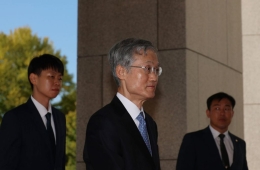
Jung Eunbo, Chairperson of Korea Exchange, is being interviewed by The Asia Business Daily at Korea Exchange in Yeouido, Seoul. Photo by Kang Jinhyung
View original imageEunbo Chung, Chairman of the Korea Exchange, has warned that in the era of unlimited global competition, most traditional exchanges that simply broker securities transactions will soon disappear. He emphasized that, in order to survive in the global era, the Korea Exchange will push for fundamental reforms, including rapid digital innovation, improving domestic capital market accessibility for foreign investors, and expelling insolvent companies (so-called zombie companies).
Only Fundamental Reform Driven by Rapid Digital Innovation Can Ensure Survival
In an interview with The Asia Business Daily on June 25, Chairman Chung stated, "As global liquidity becomes more concentrated and digital financial innovation advances, a harsh survival-of-the-fittest competition will unfold, with only a handful of exchanges surviving worldwide in the future."
He noted, "Eighty percent of investors in the U.S. Nasdaq pre-market and after-hours sessions are from overseas, and half of those are Korean. Korean investors have already crossed borders in search of returns, investing globally." He added, "The traditional concept of a country's companies listing only on their home exchange, and only domestic investors participating in the market, is rapidly collapsing."
He further expressed concern by stating, "If 'digitalization,' combining blockchain-based tokenization of overseas stocks like Tesla and Nvidia and 24-hour real-time trading via stablecoins, becomes reality, the concept of a traditional exchange could vanish in an instant."
Chung cited the example, "In 1981, when color TV broadcasting began, there were seven to eight domestic manufacturers, but now only a few, such as Samsung and LG, survive globally." He insisted, "We, too, must overhaul trading hours and settlement cycles, and scale up our stablecoin and asset tokenization businesses faster than other countries in order to survive."
![Chairman Eunbo Chung of the Korea Exchange: "Only a Few Global Exchanges Will Survive... Fierce Unlimited Competition" [KOSPI Era of 10,000 Points]](http://www.asiae.co.kr/news/img_view.htm?img=2026063014104228545_1782796242.jpg)
To globalize the exchange, plans are in place to expand the base of foreign investment in the Korean market. Chairman Chung explained, "First, to lower the entry barriers for overseas retail investors, from next year, all listed companies on the KOSPI will be required to provide disclosures in English." Major listed companies are also significantly expanding their own investor relations (IR) teams in response, so it is expected that information accessibility issues arising from market globalization will naturally be resolved.
He added, "As a result of extending derivatives market trading hours to 19 hours, the proportion of foreign investors' trading value in KOSPI 200 options rose from 70% in 2023 to 75% this year, making the return of foreign investors increasingly visible."
"We Will Strive for Korea's Stock Market to Escape Undervaluation and Advance to Developed Market Status"
Chairman Chung assessed that the Korean stock market has escaped the so-called discount (undervaluation) zone thanks to the government's efforts to increase corporate value and improve business performance. He emphasized that various policy efforts will continue, such as delisting underperforming companies, improving access for foreign investors, and regulating duplicate listings, to advance the market beyond undervaluation and into the ranks of developed capital markets.
Chung stated, "Our stock market has surged this year, rising to sixth in the world by market capitalization. The price-to-book ratio (PBR) has surpassed 3 times, which is on par with developed countries, and the 'Buffett Index'—the ratio of market capitalization to GDP—has climbed to 270%, the same as the U.S., meaning we have moved beyond the Korea discount zone."
![Chairman Eunbo Chung of the Korea Exchange: "Only a Few Global Exchanges Will Survive... Fierce Unlimited Competition" [KOSPI Era of 10,000 Points]](http://www.asiae.co.kr/news/img_view.htm?img=2026063016084628812_1782803326.png)
He explained that the renaissance of the Korean stock market has been underpinned by all-out efforts from both the government and the exchange to enhance capital market credibility. He cited the "Value-Up Program," introduced in May 2024, as a turning point. "At that time, management complained that stock prices were too low compared to performance, while investors were frustrated by a lack of information about companies' future growth strategies. To resolve this serious 'information asymmetry,' we benchmarked Japan's case and aggressively pushed the value-up policy," Chairman Chung emphasized.
He noted that three amendments to the Commercial Act under the Lee Jaemyung administration have provided legal reinforcement for improving the structure of the capital market. Chung explained, "On the principle that one share of a major shareholder and one share of a minority shareholder should have equal value, legal protections were established. In addition, tax measures such as separate taxation of dividend income have encouraged companies to increase dividends." He added, "These efforts by the government and the exchange have given foreign investors confidence in the transparency of the Korean market." He further analyzed that, with semiconductors leading the way, the international competitiveness of key industries such as shipbuilding, defense, K-culture, and biotech has strengthened, accelerating stock price growth.
Chung views the current stock market boom not as a simple technical rebound, but as the result of a major shift in Korea's asset structure toward 'productive finance.' He remarked, "When the Japanese bubble burst in 1990, 65% of household assets in Japan were in real estate and 35% in financial assets. By the 2020s, this had completely reversed. Currently, the composition of Korean household assets closely resembles Japan's in the 1990s. I expect that, in the medium to long term, Korean assets will also shift from being real estate-centric to being focused on financial assets."

Jung Eunbo, Chairman of Korea Exchange, is giving an interview to The Asia Business Daily at Korea Exchange in Yeouido, Seoul. Photo by Kang Jinhyung
View original imageDelisting '300 Insolvent Companies' and the Principle of Prohibiting Duplicate Listings
As the market grows quantitatively, the 'sharp edge' of qualitative management will also become more pronounced. Chairman Chung identified expelling insolvent companies and establishing fair trading order as top priorities. He stated, "There are 5,500 listed companies on the U.S. stock market, while Korea—despite having a much smaller market—has over 2,700. Zombie companies that have lost business opportunities can easily become hotbeds of unfair trading, so we will delist 300 insolvent companies by next year."
He also took a firm stance on the issue of duplicate listings. He pointed out that in the U.S., companies like Meta and Google have many subsidiaries but only one listed entity, and in Japan, duplicate listings have been curbed through the value-up policy. Chung said, "Statistics show that the rate of duplicate listings in our market is 18%. While there is demand from industry to consider the institutional factors arising from conversion to a holding company structure, in principle, duplicate listings will be prohibited. However, we will discuss detailed standards with the Financial Services Commission, taking into account the practical needs of the business community."
![Chairman Eunbo Chung of the Korea Exchange: "Only a Few Global Exchanges Will Survive... Fierce Unlimited Competition" [KOSPI Era of 10,000 Points]](http://www.asiae.co.kr/news/img_view.htm?img=2026063015384128723_1782801521.jpg)
Regarding the so-called 'black box' criticism of the technology-special listing system, Chung stated, "To ensure consistency in evaluation, we have significantly reduced the number of technology evaluation agencies." He emphasized, "We will no longer tolerate insolvent companies that fail to prove their revenue model for over 10 years after listing or that abuse backdoor listing routes."
Taking a cautious stance on semiconductor leverage products, which are often cited as the main cause of market concentration, Chairman Chung diagnosed, "Korea's memory semiconductors have highly volatile profit margins depending on market conditions, so the risks of leverage products are amplified." However, he added, "If we only tighten domestic regulations, investors will simply turn to high-leverage products overseas, creating a balloon effect. Therefore, we will consider institutional improvements with the realities of the global market in mind."
Interview by: Jo Siyoung, Head of Securities and Capital Markets Department
Hot Picks Today
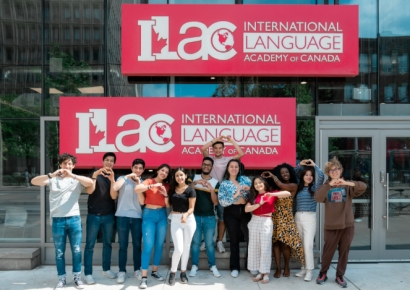 "Quit Job to Start Life in Canada, Now Forced to Return Home"… Language School Closure Leaves Korean Students Stranded
- [Exclusive] "Oh, Oh! Why Is the Seatback Like This?" Hyundai Ioniq 9 Recalled in Korea: 15,000 Units Due to Power Seat Entrapment Risk
- "When Was the Last Time I Went?" With Fewer Visitors, 80% of Japan’s Neighborhood Bathhouses Disappear in 50 Years
- "Typical Italy? This Tour Package Sold 300% More"...Destinations Chosen by Koreans
- Hanwoo Can't Even Dream of This... "Melts in Your Mouth" as Wagyu Hits It Big in U.S. Supermarkets and Fast-Food Chains
Compiled by: Lee Changhwan, Reporter
© The Asia Business Daily. All rights reserved. Unauthorized AI training and use prohibited.