"Speeding Cars Beware"... EU Considers Forcibly Reducing Speed with Satellite Technology
Mandatory for All EU Vehicles by 2030
Growing Opposition Over Accident Risks and Hacking Concerns
The European Union (EU) is considering measures to forcibly reduce the speed of vehicles using satellite technology.
On the 29th, Yonhap News Agency reported, citing the British daily The Telegraph, that according to the road safety reform proposal under review by the European Commission, this technology will be mandated for all vehicles in the EU by 2030. Automakers will be required to equip every new vehicle with devices capable of remote speed control without exception.

The photo is for illustrative purposes and is not related to any specific content. Pixabay
View original imageWith the introduction of this technology, satellites would track the location of vehicles and, when entering areas with lower speed limits, intervene in real time to automatically reduce the vehicle's speed. Drivers will be able to temporarily override the system and accelerate to avoid accidents, but only for a very brief moment.
There has been significant backlash against these measures. Critics argue that such excessive interference in driving could actually threaten vehicle safety. Brian Gregory, policy chief at the UK Alliance of British Drivers, told The Telegraph that the EU's proposal is "ridiculous" and "has the potential to cause accidents rather than solve them."
Richard Holden, the UK Conservative Party’s Shadow Secretary of State for Transport, warned that "criminals or hostile nations could hack this technology and cause chaos on the roads," adding, "Increasingly powerful external forces armed with artificial intelligence (AI) could hack our daily lives and create disruption."
Since July 2024, all new cars sold in Europe have been equipped with Intelligent Speed Assistance (ISA) systems that warn drivers through sounds or steering wheel vibrations if they exceed the speed limit. However, UK automotive research institute Thatcham Research recently pointed out that these systems failed to detect changes in speed limits once every four times.
Hot Picks Today
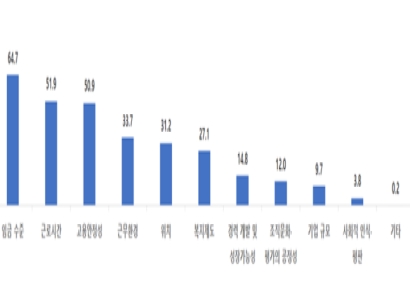 "Please Pay Me at Least 3 Million Won a Month": More Than Half of Young People Today Prioritize "Working Conditions" Over Company Size
- Selling Like Crazy Every Year... 30-Year-Old Hetbahn Takes on a New Challenge: Tastes Better Than "Mom's Home Cooking" [On-Site Report]
- Sleep Is Koreans' 'No. 1' Health Interest, but They Averaged Under 7 Hours a Night This Year
- "Hey, Lady, Teach Your Kids to Behave!" ... 300,000 Won in Cash and a Bodily Injury Claim Demanded Over Child's Door Ding
- "Don't Trust This Woman": Documentary on 'Investment Scammer' Earns KRW 22 Billion in One Week
A spokesperson for the European Commission emphasized that discussions on safety measures to reduce vehicle speed via satellite are "purely exploratory." A spokesperson for the UK Department for Transport, which is not subject to EU regulations following Brexit, also stated that "there are no plans to introduce control technology in the UK," adding, "We will continue to work with European and international partners to enhance safety standards for all vehicles."
© The Asia Business Daily. All rights reserved. Unauthorized AI training and use prohibited.






![[Market ING] KOSPI Seeks Rebound in Superweek Packed with Corporate Earnings and FOMC](https://cwcontent.asiae.co.kr/asiaresize/307/2026102514484873155_1792907327.jpg)