[Issue Interview] From Low-Interest Semiconductor Loans to a 150 Trillion Won Fund... Kim Kitae, Architect of the National Growth Fund
From Low-Interest Loans for Semiconductors to the Advanced Strategic Industry Fund
Designing the Blueprint for Financial Support of National Strategic Industries
Addressing Policy Fund Limitations Through Direct and Infrastructure Investments <
"We gave serious thought to ways to overcome the limitations of conventional government-led policy funds. In order to significantly foster national strategic industries, I believed that the National Growth Fund should be structured not just for loan support but also to enable large-scale direct investments and ultra-long-term infrastructure investments."

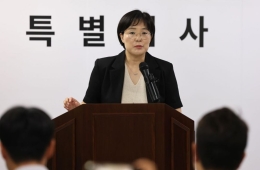
Paik Kimoo, Chief Secretary of the Financial Services Commission's National Growth Fund Promotion Team, is conducting an interview with The Asia Business Daily on June 28. Photo by Eunju Lee.
View original imageKim Ki-tae, Chief Secretary of the National Growth Fund Promotion Team at the Financial Services Commission, stated this in an interview with The Asia Business Daily on June 28. He emphasized, "The National Growth Fund is the result of extensive deliberation by the government to expand support for the entire advanced strategic industry sector, starting with the low-interest semiconductor loan program in 2024."
Even before the official launch of the National Growth Fund, Kim was the practitioner who laid the groundwork for the support system for national strategic industries, including semiconductors. Starting with his participation in designing the low-interest semiconductor loan program at the Industrial Finance Division of the Financial Services Commission in 2024, he took charge of the practical design work for the National Growth Fund, which combines advanced strategic industry funds and private capital.
In recognition of these contributions, Kim received the highest honor, the "Geummungyi Award," at the "2nd Financial Services Commission People Award" ceremony hosted by the Commission on June 18. "Mungyi" is the name of the mascot symbolizing the Financial Services Commission. The Commission highly praised his leadership in launching the National Growth Fund, overseeing its initial execution, and ensuring the fund’s early settlement.
The government's strong support measures for the semiconductor industry were formulated in 2024. At that time, the government introduced a low-interest semiconductor loan program through Korea Development Bank, supplying 17 trillion won over three years at the lowest rates in the market. Kim was responsible for designing this program at the Industrial Finance Division of the Financial Services Commission. Expectations for the semiconductor industry were low at the time, and there were growing concerns about the competitiveness of domestic semiconductor companies, including Samsung Electronics.
He explained, "There were opinions that direct subsidies should be given to companies, but given the fiscal situation, there were limits to providing large-scale subsidies. Low-interest loans, by significantly lowering companies' financial costs with relatively small government spending, proved even more effective than subsidies."
As the program was activated in the second half of 2024 and fully implemented in 2025 through fiscal linkages, positive feedback from the field increased. This led to discussions about expanding support targets to cover the entire advanced industry sector. The government established an Advanced Strategic Industry Fund at Korea Development Bank, backed by government guarantees, and developed measures to provide not only loans but also direct investments and infrastructure financing. Subsequently, following the revision of the Korea Development Bank Act and the passage of the government guarantee motion in the National Assembly, the initiative expanded into the National Growth Fund, combining the Advanced Strategic Industry Fund and private capital.
Kim said, "I was involved in everything from the low-interest semiconductor loan to the naming and structuring of the Advanced Strategic Industry Fund and the National Growth Fund. I have a deep attachment to the work, as I am now executing the policy I personally designed through the promotion team."
Beyond Simple Loan Support: Complementing with Direct Equity Investments
The main focus during the design process was to differentiate from existing policy funds. In the past, New Deal Funds and Innovation Growth Funds used an indirect investment method: the government and Korea Development Bank provided seed funding, and private asset managers raised the remaining funds for investments. However, after the selection of asset managers, it was difficult for the government to influence investment direction, and as asset managers prioritized returns and recoverability, investment sizes shrank and periods shortened.
Kim noted, "With existing funds, individual investment sizes were split into about 5 to 6 billion won on average, preventing sufficient funding for large-scale projects that could reshape the industry. I also saw this as a structural limitation that encouraged a focus on profitability."
The National Growth Fund focused on differentiating itself from the conventional structure. Starting from the need to foster national strategic industries, the fund is structured to make direct equity investments of several hundred billion won in advanced technology companies such as FuriosaAI and Rebellions, and to provide funding for large-scale infrastructure projects like the Shinan Ui offshore wind power project, which require trillions of won.
To avoid being tied to short-term profitability, a super long-term investment league was established for investments of 10 years or more. Direct and indirect investments, infrastructure investment and lending, and ultra-low interest loans are all tied into a single system, allowing support methods to be tailored to the characteristics of each company and project. The National Growth Fund aims to provide, out of a total of 150 trillion won, 15 trillion won for direct investments, 35 trillion won for indirect investments, 50 trillion won for infrastructure investment and lending, and 50 trillion won for ultra-low interest loans.
Institutional improvements were also made to encourage participation from commercial banks. The Financial Services Commission revised the standards to lower the risk weight applied to policy purpose funds that meet certain requirements from the existing 400% to 100%. Exemption criteria were also established to reduce the liability burden for financial institutions participating in direct investments, project fund contributions, infrastructure investment and lending, and ultra-low interest loans.
Kim said, "From a bank’s perspective, mortgage loans with clear collateral are the easiest, but investing in companies based on future growth potential and technology is much more difficult. The banking sector is now in the process of moving away from a collateral-centered approach and developing its capabilities in corporate finance and investment."
The National Growth Fund Promotion Team is supplemented by officials seconded from 10 ministries to enhance expertise by sector. Experts in defense, bio, artificial intelligence (AI), drones, and other fields are invited to hold seminars and study potential investment industries. Kim commented, "Unlike the previous approach to work, we are an organization that meets and communicates directly with the industrial field."
Since large amounts of funding are invested in specific companies and projects, external criticism is not uncommon. Issues raised include concerns about support being concentrated in the Seoul metropolitan area or specific regions, as well as debates about the growth potential of individual companies. Intense competition also arises among rival companies during the process of making large-scale investments. He said, "This is not a domestic contest but a national competition, so instead of wasting energy fighting internally, we need to work together to strengthen global competitiveness."
The National Growth Fund also aims to allocate at least 60 trillion won, which is more than 40% of total funds, to regions outside the Seoul metropolitan area. Kim noted, "Given that the advanced industry ecosystem is concentrated in the Seoul area, achieving the 40% target for non-capital regions is a very challenging task. Nevertheless, together with Korea Development Bank, we are constantly seeking ways to achieve the policy goal of balanced national development."
Hot Picks Today
 Trump Made 1,000 Stock Trades in a Month... Here Are the Stocks He Bought and Sold
- "I Thought I Could Receive Both"... Over 90% Choose This: Old-Age Pension or Survivor's Pension?
- "Is This Even Possible for One Car?... GV90 Inspected with Six Times Human Vision and Exposed to 160km Wind"
- "E-Land Secures Hoka Amid 'Second Round' Heat in Running Shoes: 'Raised New Balance to 1 Trillion, But Now What?... This Is What Today's Runners Wear'"
- "Why Were They So Fresh for So Long?"... Shock Over Liquid Soaked on Cabbage
He stated that his goal is to establish the National Growth Fund as a long-term platform supporting industrial transformation. Kim said, "Korea is a rare country with world-class competitiveness in a wide range of industries, including semiconductors, shipbuilding, and chemicals. I want to create a system that properly supports companies from behind so that their accumulated competitiveness is not undermined by a lack of financial support."
© The Asia Business Daily. All rights reserved. Unauthorized AI training and use prohibited.



!["August Rate Hike or Hold? Unprecedented Split in Forecasts, Experts Evenly Divided [MPC Poll]①"](https://cwcontent.asiae.co.kr/asiaresize/307/2026071609371448140_1784162234.jpg)
![Apartment Prices Jump... Seoul's Top Villa Transaction District Faces 'Listing Drought' [Real Estate AtoZ]](https://cwcontent.asiae.co.kr/asiaresize/307/2026082309403689173_1787445636.png)