K-Beauty Exports Hit Record Highs... Why Are Cosmetics Stocks Underperforming?
While KOSPI Doubled in the First Half,
Average Gain for Seven Cosmetics Stocks Was Just 18%
K-beauty Optimism Already Priced In as Capital Flows to Semiconductors
Although K-beauty exports are continuing to hit record highs this year, they are falling short of expectations among cosmetics companies. Analysts point out that much of the optimism surrounding the "K-beauty rally" has already been reflected in share prices since last year, and that investors are now increasingly focused on distinguishing between companies within the sector, rather than viewing the industry as a whole.
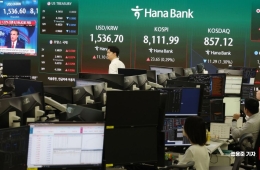
According to the Korea Exchange on July 3, while the KOSPI index doubled (100% increase) during the first half of this year (January 2 to June 30), the average share price increase for seven KOSPI-listed cosmetics companies (APR, Amorepacific, Amorepacific Group, LG Household & Health Care, Kolmar Korea, Cosmax, and d'Alba Global) was just 18%. This figure is less than one-fifth of the KOSPI's rise; despite the index surging past the 9,000 mark, cosmetics stocks have significantly underperformed the market average.

Nevertheless, fundamentals are actually improving based on earnings forecasts. According to the Ministry of Trade, Industry and Energy's "June Export and Import Trends," cosmetics exports reached a record high of $1.34 billion in June, up 42.5% year-on-year. Cumulative exports from January to June also surpassed $6.98 billion, a 27.2% increase from the same period last year, setting a new record. With growing global demand for K-beauty, exports of basic cosmetics and beauty devices have increased, and export destinations have expanded to include the United States, Japan, Southeast Asia, and Europe. As a result, most analysts expect major cosmetics companies to report solid second-quarter earnings.
Analysts attribute this disconnect to the fact that the K-beauty boom that began last year has already been largely priced in. The expansion of the U.S. market, the growth of indie brands, and strong earnings expectations for ODM companies have all driven share prices up since last year, meaning that this year's export growth is unlikely to drive further share price gains.
In addition, there are remarks that the domestic stock market has recently seen a massive inflow of capital into AI-related semiconductor stocks, which has led these stocks to drive the index higher, pushing cosmetics stocks down the priority list for investors and weakening their demand.

Kim Myungjoo, a researcher at Korea Investment & Securities, stated, "Exports to the United States and Europe remain strong, and even exports to China, which had previously disappointed the market, have rebounded. So, despite the sluggish share prices in the cosmetics sector, Korean cosmetics exports are performing well." He added, "The reason for the continued weakness in share prices, despite robust export performance, is the concentrated inflow of funds into semiconductors—the market's leading sector—as well as the lack of a new narrative for cosmetics stocks, with stories such as expansion into offline channels in the U.S. and entry into Europe already being well-known."
In fact, there is a clear polarization even within cosmetics stocks. Of the seven KOSPI-listed cosmetics companies, only APR, Kolmar Korea, and d'Alba Global have seen their share prices rise. APR recorded a remarkable 63.4% increase during the period, leading all cosmetics stocks, followed by Kolmar Korea at 57.8%, and d'Alba Global at 56.8%. By contrast, Amorepacific, Amorepacific Group, LG Household & Health Care, and Cosmax all saw their share prices decline, even in the face of a strong KOSPI market.
This divergence in share price performance within the cosmetics sector is attributed to an increasingly selective market focused on company-specific competitiveness rather than the sector as a whole. APR is sustaining high growth, not only through beauty devices but also by expanding both its online and offline presence in the U.S. Kolmar Korea is also performing strongly, buoyed by expectations for global orders and a competitive edge in sun care, a core area of K-beauty. d'Alba Global has seen a clear improvement in both scale and profitability, particularly in the U.S. and Europe, resulting in a strong share price performance.
Hot Picks Today
 "Everyone Who Hasn't Boarded Yet Will Gather"...SK hynix's Long-Awaited Nasdaq Listing on the 10th
- "Homebodies, Take Note: Just One Day Alone Dramatically Alters the Brain [Reading Science]"
- "Who Wants to Be a Public Servant These Days?" Japan on High Alert as Technical Positions See Zero Applicants
- Fearing for Their Lives, Europeans Rush to Buy Chinese Products... Chinese Factories Overwhelmed
- "Can't Even Pay the Freezer Electricity Bill"... Ice Cream Company Sees 99% Plunge in Brand Value

On the other hand, Cosmax, LG Household & Health Care, and Amorepacific are all experiencing sluggish performance. Park Jongdae, a researcher at Hana Securities, analyzed, "At one point, color cosmetics accounted for more than 50% of Cosmax's sales, but in the first quarter this year, that figure fell to 30%. Despite strong first-quarter earnings, this explains the stock's weakness." Orin-na, a researcher at LS Securities, commented, "Although Dr. Groot, LG Household & Health Care's brand, is performing well in the less-competitive hair care category, its scale is too limited to meaningfully boost overall earnings. It will take some time before the company regains earnings visibility."
© The Asia Business Daily. All rights reserved. Unauthorized AI training and use prohibited.