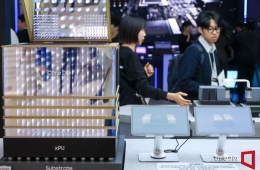
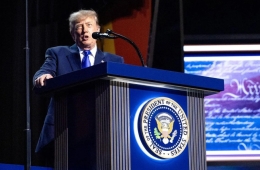
Government Designates Jeonnam-Gwangju as 'Second Semiconductor Production Hub'... 800 Trillion Won Investment Confirmed
Construction of Four Memory Fabs by Samsung Electronics and SK hynix
President Lee: "The Southwest Region, Rich in Renewable Energy, Is the Optimal Location"
Jeonnam-Gwangju Integrated Special City has been designated as a core hub for the government’s national semiconductor strategy. On June 29, the government announced an investment plan totaling 800 trillion won, which includes four memory fabs by Samsung Electronics and SK hynix, and revealed plans to establish a second semiconductor production base in the southwestern region, following the Seoul metropolitan area. President Lee Jae-myung stated, "The southwest coastal area, with its abundant water, electricity, and especially renewable energy, is the ideal location for a new semiconductor and AI hub," adding, "I will directly oversee the three major mega projects by appointing a special officer under the direct control of the President within the Blue House."
The Ministry of Trade, Industry and Energy and other related ministries announced large-scale investment plans in three key areas—semiconductors, physical AI, and AI data centers—at the ‘Korea’s Great Leap Forward: National Report Meeting on the Three Major Mega Projects’ held at the Blue House’s State Guest House that day.

President Lee Jae-myung is performing the national salute at the National Report Meeting on the Three Major Mega Projects held at Cheong Wa Dae on the 29th. From the right, Lee Jae-yong, Chairman of Samsung Electronics; President Lee; and Chey Tae-won, Chairman of SK Group. Photo by Yonhap News Agency
View original imageTo expand the semiconductor production base, which has been concentrated in the Seoul metropolitan area, to other regions, the government is pursuing the ‘Semiconductor Growth Stronghold’ strategy. After a comprehensive review of infrastructure, living environment, and workforce to meet companies’ demands for new semiconductor production sites, Jeonnam-Gwangju Integrated Special City was selected as the new production hub.
The government plans to invest a total of 800 trillion won in Jeonnam-Gwangju Integrated Special City to build four production facilities: two Samsung Electronics memory fabs and two SK hynix memory fabs. Alongside these production facilities, the plan includes establishing a network of partner companies, research and development, and a professional talent training system, thereby completing the nation’s second semiconductor production base after the Seoul metropolitan area.
A public-private cooperation system will be applied throughout the permitting, site development, and construction processes. The government will introduce a fast-track approach that allows permitting, compensation, and design to proceed simultaneously, aiming to reduce the time required to create industrial complexes—which previously took more than 10 years—by more than half so that land can be supplied to companies when needed.
The state will directly support the essential infrastructure required for semiconductor production. The government will provide stable electricity supplies by utilizing renewable energy and nuclear power, and will quickly build transmission networks and connection lines. For water resources, the plan is to utilize multipurpose dams and alternative water sources, as well as to construct water conveyance pipelines.

Kim Jongkwan, Minister of Trade, Industry and Energy, is announcing policies at the National Report Meeting on Three Major Mega Projects hosted by President Lee Jae-myung at the Blue House on the 29th. Photo by Yonhap News Agency
View original imageThe government is also promoting the creation of company-driven advanced cities that combine industrial complexes with research facilities, as well as residential, educational, medical, and cultural functions. Transportation infrastructure will be established to enable travel from industrial complexes to residential areas within 30 minutes and to airports and seaports within one hour, along with improvements to the living environment.
In his opening remarks, President Lee defined the global AI race as a "nation-against-nation competition," stating, "Only a speed race to secure core AI elements faster than any other country can ensure our survival." He presented semiconductors, AI data centers, and physical AI as the three pillars of Korea’s great leap forward and emphasized the need to rapidly build a Korean-style AI ecosystem.
He also stated, "The existing semiconductor production centers focused on Yongin and Pyeongtaek have reached their limits in terms of electricity and water supply," adding, "It is time to move beyond metropolitan area concentration and restructure industrial deployment." He further explained, "The Honam region is equipped with strategic water resources, stable sites, and abundant renewable energy, which is why Samsung and SK have chosen it as the base for the three major mega projects."
Addressing concerns about pressuring companies, President Lee said, "We are not forcing losses and risks on companies, but will enable them to invest with a better outlook by providing every possible support, including infrastructure building and tax benefits." He went on to say, "Cooperation with local governments is essential to create large-scale industrial belts, and with Gwangju and Jeonnam expressing intentions to invest anywhere from 5 trillion to as much as 20 trillion won, we have significant room for judgment and action." He added, "The blueprint we announced today will shape the next 20 to 30 years for Korea, and I will personally oversee and execute the necessary innovations with a special officer under direct presidential control within the Blue House."
Hot Picks Today
!["Let's Hit It Big in Korea"... Foreigners Flock to 'This Place' [Weekend Money]](https://cwcontent.asiae.co.kr/asiaresize/93/2026101613053663640_1792123535.jpg) "Let's Hit It Big in Korea"... Foreigners Flock to 'This Place' [Weekend Money]
"Let's Hit It Big in Korea"... Foreigners Flock to 'This Place' [Weekend Money]
- “What Now for Samsung and SK hynix?” ... Could News from China Rattle the KOSPI? Shareholders Anxious
- "I Had Just Lain Down to Sleep..." Woman in Her 30s Sets Fire to Songpa Villa Parking Lot, Destroying 3 Cars
- Telecom Stocks Diverge... AI Data Center Investment Strategies Set Them Apart [Weekend Money]
- 'Little BoA,' They Said... Apology Over Unpaid Wages Fails to Quell Fury: "Do They Have Money to Debut Their Daughter?"
The government aims to make this project a representative initiative to expand the semiconductor industry structure from being metropolitan area-centered to nationwide, achieving both balanced regional development and an AI industrial revolution. To this end, support will be provided through a Presidential Special Committee, a semiconductor special fund, and an innovation support team, with a goal of doubling the nation’s memory semiconductor production capacity within the next five years.
© The Asia Business Daily. All rights reserved. Unauthorized AI training and use prohibited.

!["Please, Just Take Them Off" - They Made It All the Way to Bed... Then Fecal Bacteria Struck [Deep Scroll]](https://cwcontent.asiae.co.kr/asiaresize/307/2026101610053063338_1792112730.png)