Mega Special Zone Special Act to Be Enacted Within the Year... Launching the Semiconductor and AI "Overwhelming Advantage Package"
From Mega Special Zones to Semiconductors, AI, and Infrastructure
Full-Scale Follow-Up Measures by Each Ministry

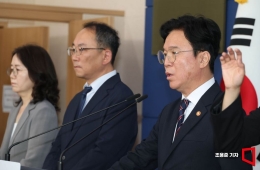
On June 29, the government announced at the "Korea Grand Leap Three Major Mega Projects National Briefing" that it will formally launch the "Five Core, Three Specialized Growth Engines" strategy to secure overwhelming competitive advantages not only in semiconductors but also across advanced industries such as physical artificial intelligence (AI), AI data centers, and green energy.
"Mega Special Zone Special Act" to be Enacted Within the Year... Regulatory Innovation and Bold Incentives Included
The government plans to enact the "Mega Special Zone Special Act" within this year through consultations with the National Assembly, and to swiftly designate the mega special zones after the law is established. These zones will offer three types of regulatory exemptions: menu-based regulatory exceptions, demand-responsive regulatory deferral, and an upgraded regulatory sandbox. In addition, the government will provide a comprehensive support package across seven areas: fiscal, financial, tax, talent, infrastructure, technology startups, and systems, thereby creating strong investment incentives and a robust foundation for corporate activities.
For example, a special growth engine subsidy will be newly established and provided for large-scale investments, while funds such as the National Growth Fund and Regional Growth Fund will invest, and policy finance will offer preferential loan rates. The government will also provide tax benefits by utilizing opportunity advancement zones and integrated tax credits for investments, employment, and research and development (R&D).
The procedure for designating mega special zones will proceed as follows: companies or local governments formulate a mega special zone plan, local governments submit a designation application, the Regulatory Rationalization Committee reviews and approves the plan, and finally, the Minister of Trade, Industry and Energy makes the designation. So far, support measures for mega special zones have been discussed in four fields: robotics, renewable energy, bio, and AI autonomous vehicles. Recently, Minister of Trade, Industry and Energy Kim Jeongkwan appeared in the media and explained that "it is helpful to understand a mega special zone as a zone that provides mega-level support for strategic industries," adding that the semiconductor clusters of Samsung Electronics and SK hynix are also targets for mega special zone support.

Support Based on the Semiconductor Special Act... Three Pillars: Clusters, Investment, and Talent
The Ministry of Trade, Industry and Energy is expected to present comprehensive support measures for the semiconductor industry, covering everything from the creation of clusters and support for corporate investment to supply chain development and talent cultivation, based on the Semiconductor Special Act. This act stipulates that the Minister can designate and foster national semiconductor clusters and formulate development plans. The Honam mega project is also expected to focus policy efforts on creating clusters linked to the existing industrial base to build a semiconductor ecosystem where R&D, production, and materials, parts, and equipment companies are concentrated together.
Improving regulations and supporting investment to encourage corporate investment are also core roles of the Ministry. The Semiconductor Special Act allows for necessary administrative and financial support through inter-ministerial coordination to promote business investment. Accordingly, measures such as shortening approval processes for large investment companies, providing regulatory exemptions, and supporting the development of industrial complexes and infrastructure are being considered for this project. The Ministry has already coordinated with relevant ministries to shorten approval periods and resolve corporate difficulties in the process of establishing the Yongin Semiconductor Cluster and national high-tech strategic industry specialized complexes. Therefore, a "one-stop support" system to further boost investment execution is also expected to be presented this time.
Establishing supply chains and cultivating specialized talent are also major tasks. The Ministry is expected to pursue initiatives to attract not only large corporations but also materials, parts, and equipment companies, fabless firms, and post-processing companies in order to build local supply chains and concentrate R&D functions. Additionally, since the Semiconductor Special Act designates the cultivation of specialized talent and expansion of educational infrastructure as national responsibilities, it is highly likely that a talent development system linking regional universities and research institutes, as well as company-tailored training programs, will be included among the main support measures.
Accelerating the Enforcement of the AI Data Center Special Act
The Ministry of Science and ICT is expected to unveil a national strategy focused on semiconductors, physical AI, and data centers. The enforcement of the AI Data Center (AIDC) Special Act is already underway, streamlining the approval process.
The government will primarily focus on relocating or establishing new data centers outside the capital region, concentrating AI data centers in areas with sufficient power and land. This initiative aims to bridge the growing digital divide between regions and resolve the issue of data center concentration in the capital area. The National AI Computing Center, a key hub for the AI Highway project, will be built in Solaseado, Haenam, South Jeolla Province. In May, the Ministry selected a Samsung SDS consortium as the project operator and is pushing forward with plans to establish the center, which will require a total investment of 2.5 trillion won.
The Ministry is also accelerating the establishment of AI innovation hubs across different regions. As part of efforts to build AI ecosystems tailored to regional industrial characteristics, a total of 3.1 trillion won will be invested in four regions: Honam, Daegyeong, Dongnam, and Jeonbuk. The strategy is to foster AI as a new growth engine in tandem with balanced regional development, especially in areas with strong manufacturing sectors.
The government is also accelerating efforts in the physical AI sector. On June 19, the Ministry launched the second phase of the Physical AI Alliance, announcing that the collaboration framework will shift to the implementation stage and that it will operate as an execution-oriented platform for real projects going forward. The Ministry is also considering establishing "data training centers" for collecting and processing physical AI training data, linked with regional AI-X hubs.

Water and Power Supply Fully Secured
The Ministry of Climate, Energy and Environment is expected to emphasize that there will be no issues with water and power supply, which are crucial in the process of building semiconductor industrial complexes. The ministry has reportedly already pre-assessed the feasibility of water supply based on private sector investment plans and the anticipated scale of semiconductor production facilities.
A senior official at the ministry stated, "We have already thoroughly reviewed the possibility of securing sufficient water supply. However, as the number of fabs (factories) to be constructed is still being adjusted, it is not possible to confirm the exact demand yet." He added, "Once today's investment plans are announced and the scale of the fabs is finalized, we expect to also release detailed plans to secure the necessary water supply."
Internally, the ministry believes that actual water demand may be lower than the 1 million tons per day figure currently being discussed in some quarters. The final amount of water usage will depend on the announced scale of the fabs. Regarding energy supply, the ministry stated, "Private investment decisions come first," and added, "If renewable energy is supplied, there may be the additional benefit of supporting RE100 compliance."
Improving Transportation Infrastructure and Living Conditions Remain Challenges
The Ministry of Land, Infrastructure and Transport plans to shorten related procedures and expand transportation infrastructure such as railways, roads, and airports to quickly establish industrial complexes that meet corporate demand.
Previously, during the process of launching the Yongin Advanced System Semiconductor National Industrial Complex project, the Ministry formed an inter-ministerial support team and conducted prior consultations even before the application for the industrial complex plan, thereby reducing approval times. The Ministry also formed a public-private consultative body to accelerate environmental impact assessments and implemented a fast-track system involving prior consulting and evaluation to expedite compensation work. These experiences with pre-administrative procedures are expected to be applied to the ongoing construction of the Honam semiconductor industrial complex.
Plans to expand transportation infrastructure that had already been under consideration are also expected to accelerate, focusing on regional areas. It is highly likely that the fifth National Railway Network Construction Plan, which has already missed its originally scheduled announcement date, will include numerous projects connecting regional metropolitan railways or major urban areas. The revised second National Road Network Master Plan and the seventh Comprehensive Airport Development Plan, both of which are expected in the second half of this year, are also reportedly being finalized with balanced regional development in mind.
There is growing interest in how the government will address challenges such as the Saemangeum Airport project, which has been stalled by court injunctions, or the funding difficulties facing the Daegu-Gyeongbuk Integrated New Airport and the relocation of Gwangju Airport.
Hot Picks Today
 24-Year-Old Wins Sleep Contest, Takes Home 19 Million Won After Sleeping Soundly Alongside Strangers
- "Should've Bought This Instead of Samsung and SK hynix"... One Stock Gained 32% as KOSPI Plunged 17%
- "Even Underwear Has to Be Cut Up with Scissors"... China Hit by Rise of "Trash Hunters" in an "If You're Slow, You're Out" Scramble
- "Please Make More," They Said: Orion Custard Expands Production Lines After Hits in China and Vietnam
- "Photos of Kim Jong Un Released by North Korea Are a Deception"... Debate Over Death Rumors Continues
Improving living conditions to accommodate future population inflows remains a challenge to be addressed. Typically, the general approach is to create new cities based on large-scale residential land development. During the establishment of the Yongin national industrial complex, a residential complex accommodating 16,000 households was created as a supporting community. In the case of the Hyundai Motor Group's investment project in the Saemangeum area, there have been plans to construct public rental housing and expand eligibility for special housing allocations.
© The Asia Business Daily. All rights reserved. Unauthorized AI training and use prohibited.