[Good Morning Market] Unstable Domestic and Global Issues... KOSPI Expected to Face Volatile Trading
![[Good Morning Market] Unstable Domestic and Global Issues... KOSPI Expected to Face Volatile Trading](http://www.asiae.co.kr/news/img_view.htm?img=2025021302054530239_1739379946.jpg)
On June 29, the KOSPI is expected to experience a volatile trading session amid lingering domestic and international uncertainties.
Last Friday in the New York stock market, the Dow Jones Industrial Average closed at 51,876.11, down 44.51 points (0.09%) from the previous session. The S&P 500 Index ended at 7,354.02, down 3.47 points (0.05%), while the tech-heavy Nasdaq Composite finished at 25,297.62, down 60.99 points (0.24%) compared to the previous session.
In New York, semiconductor stocks—including Micron (-7.0%)—plunged on the back of lingering negative sentiment following Apple’s product price hikes and rumors of a delay in the OpenAI IPO. However, the decline was limited as weaker oil prices and falling interest rates spurred rotation into other sectors.
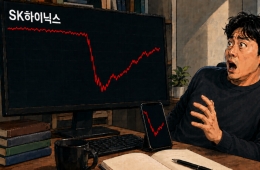
Last week, Korea’s domestic market saw high volatility as supply and demand repeatedly shifted to and from leading semiconductor stocks such as Samsung Electronics and SK hynix. After concentrated buying in the leading stocks, a wave of profit-taking followed, increasing investor fatigue.
Uncertainty in the market has also intensified due to negative factors stemming from Apple. Concerns about potential Apple product price increases and the U.S. government’s demands related to the use of Chinese CXMT memory have unsettled investor sentiment, fueling debates about a possible peak in the semiconductor industry and raising fears over a slowdown in memory price increases.
Geopolitical risks have reemerged as well. Over the weekend, news of retaliatory airstrikes and counterattacks between the U.S. and Iran heightened tensions in the Middle East. However, according to foreign media reports, the two countries have agreed to halt mutual attacks and are expected to discuss disputes related to the Strait of Hormuz on June 30.
![[Good Morning Market] Unstable Domestic and Global Issues... KOSPI Expected to Face Volatile Trading](http://www.asiae.co.kr/news/img_view.htm?img=2026062909145526167_1782692095.png)
Amid these developments, increased volatility appears inevitable. However, it is important to note that the recent volatility has not resulted solely in declines, making it a key variable whether future volatility will fuel a rebound or lead to further corrections.
The market is closely watching June’s export data, especially whether the growth in semiconductor exports will continue. Compared to the same period last year, semiconductor export growth rates stood at 151% in March, 174% in April, and 169% in May, maintaining strong momentum. Analysts suggest that if June’s semiconductor export growth rate remains in the mid-to-high 100% range, it could help ease recent concerns over a slowdown in memory price increases and worries about a peak in the industry cycle.
The direction of the KOSDAQ market is also a key variable this week. KOSDAQ plunged 11.9% last week, far outpacing the KOSPI’s 7.1% decline. The maximum drawdown (MDD) from the yearly high has expanded to around 31%, and compared to the KOSPI’s 7.8% drop from its peak, market sentiment has become significantly more subdued.
Hot Picks Today
![[Test Drive] The Sealion 7 Transformed by a 2 Million Won Upgrade: "Base Model Buyers Might Feel Shortchanged"](https://cwcontent.asiae.co.kr/asiaresize/93/2026080417033869589_1785830618.jpg) [Test Drive] The Sealion 7 Transformed by a 2 Million Won Upgrade: "Base Model Buyers Might Feel Shortchanged"
[Test Drive] The Sealion 7 Transformed by a 2 Million Won Upgrade: "Base Model Buyers Might Feel Shortchanged"
- 'Single-Stock Leveraged ETF Blow' Crippled KOSDAQ in July... Hopes Rise for a Turnaround in August with 11.38% Surge [Weekend Money]
- Chinese Buyers Retreat from Seoul’s Real Estate Market? Foreign Purchases Plummet by 2,000 [Real Estate AtoZ]
- "If We Don't Get Married, Let's Live Together"... Gen Z Chooses 'Co-Buying Homes with Friends' Over Romantic Partners [Gen Z Around the World]
- Kim Seontae Appears Gaunt After Leaving 'Don Seontae'... 3,000 Thumbs Up for Chungju Mayor's "Come Back" Offer
Han Ji-young, a researcher at Kiwoom Securities, commented, “A decline of more than 30% from the peak in KOSDAQ is unusual, except in cases of major external shocks such as the COVID-19 pandemic or the collapse of the secondary battery boom. Therefore, there is a possibility of a technical rebound this week due to the excessive decline.” He added, “Given that the KOSDAQ market is highly sensitive to policy changes, expectations for measures to boost the market—such as the introduction of a promotion and relegation system—could increase during the 30th anniversary event for KOSDAQ scheduled from July 1 to 3, potentially strengthening the rebound momentum.”
© The Asia Business Daily. All rights reserved. Unauthorized AI training and use prohibited.



!["Even a 500 Million Won Jump Is Fine, Self-Residence Buyers Flock to Billion-Won Units"...High Winning Bids Continue for Mid- and Low-Priced Reconstruction Complexes [Real Estate AtoZ]](https://cwcontent.asiae.co.kr/asiaresize/307/2026042709001641074_1777248016.jpg)