President Lee: "Honam Semiconductor Plan Is a National Survival Strategy, Not Preferential Treatment"...Urges Opposition to Refrain from Fueling Regional Conflict
"Southwest Coast, the Optimal Site with Land, Water, and Renewable Energy"
"Accelerate Capital Region Cluster, but a Second Major Hub Is Needed"
Balanced Development Reaffirmed Ahead of Mega Project Announcement on the 29th
President Lee Jae-myung has repeatedly emphasized that his plan to foster the semiconductor industry ecosystem in the Honam region is not a special favor to a particular area, but rather a "national cause for balanced regional development and alleviating regional discrimination." As the opposition raised concerns over regional favoritism and pressure on corporations regarding the idea of developing the southwestern coast as a new hub for future high-tech industries such as semiconductors and Artificial Intelligence Data Centers (AIDC), President Lee directly asked that political motivations aimed at dividing or fueling regional conflicts be curbed.

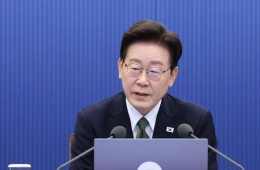
President Lee Jae-myung is speaking at the 'Future New Security Innovation Company Development Strategy' meeting held at the Blue House on June 26, 2026. Photo by Yonhap News Agency
View original imageOn June 28, through a post on X (formerly Twitter), President Lee stated, "Engage in vigorous debate over the semiconductor site in Honam, but if there are rational grounds, please cooperate, and I ask that political efforts to divide or stoke regional conflict be restrained."
President Lee addressed both the achievements of Korea’s industrialization and the accumulation of regional imbalances. He pointed out, "The history of Korea’s development is not only one of remarkable achievements but also a process of accumulating serious imbalances and discrimination. The 'selection and concentration' strategy centered on the capital region and Yeongnam during the Park Chung-hee administration produced world-renowned industrialization results, but on the other hand, it led to the massive side effect of extreme concentration in the capital area."
In particular, President Lee defined the issue of local extinction not merely as a matter of regional policy, but as an existential issue for the nation. He stressed, "The disappearance of local regions has become an urgent challenge that now threatens the survival of the nation, going beyond the issue of balanced development. Balanced development has become Korea’s core survival strategy."
Regarding regional imbalances in Korean society, he outlined three structures of discrimination: the alienation of all non-capital regions due to concentration in the capital area, the marginalization of Honam caused by politically motivated policies that discriminate between Yeongnam and Honam, and the exclusion of North Jeolla within Honam itself due to geographic and economic factors. President Lee stated, "We must break the long-standing chains of these three forms of discrimination and marginalization, not only from the perspective of justice and equity, but also for sustainable and inclusive growth."
President Lee identified the southwestern coast as the centerpiece of his solution. He argued that the very fact that this region has long been left out of industrial development makes it an ideal site for large-scale high-tech industries.
He stated, "Because the southwestern coast has been excluded from development for an extended period, it paradoxically still has vast and stable land available for building advanced factories such as semiconductor plants." He further explained, "Not only is there enough water supply, but it also has abundant renewable energy potential to meet RE100 requirements, a key topic in the global market. This makes it a world-class optimal location for cutting-edge future industries like semiconductors and AIDC that consume large quantities of electricity." He added that if the government boldly and sufficiently supports settlement conditions and infrastructure such as roads, water, power, workforce, culture, education, and housing, Honam could become a global center for semiconductor production.
He also emphasized that the existing semiconductor clusters in the capital region and the new base in Honam should not be viewed as being in opposition. President Lee explained, "While the plan to establish semiconductor clusters in the capital area, where water and electricity have reached their limits, should be expedited, a second large-scale complex must also be created at ultra-high speed."
President Lee said, "For Honam, which has suffered long-term neglect and resentment, this double discrimination could unexpectedly become a great source of opportunity. It is a golden chance to turn adversity into a dramatic transformation." He continued, "Creating a semiconductor industry ecosystem in Honam is not a special favor for a specific region. It is about establishing an additional, most rational semiconductor hub through bold government support and the decisions of related companies." He particularly stressed that "this is a national cause to achieve balanced regional development and alleviate longstanding regional discrimination and Yeongnam-Honam conflict."
This message was delivered one day before the "National Briefing on Korea’s Three Major Leap Forward Mega-Projects," to be held at the Blue House State Guest House on June 29. At this event, the government plans to announce strategies for high-tech industries such as semiconductors and AI, along with corporate investment plans. Major companies such as Samsung Electronics and SK are also expected to reveal their investment plans, making it likely that ideas for deploying high-tech industries outside the capital region, including Honam, will be further solidified.
President Lee has recently been directly addressing opposition criticism over his plans for semiconductor and AI investment in Honam. In response to former lawmaker Yoo Seung-min and others who questioned the economic feasibility of the site selection and the autonomy of corporate decision-making, President Lee has countered by citing factors such as power, water, land, and renewable energy as the industrial site’s strengths.
Hot Picks Today
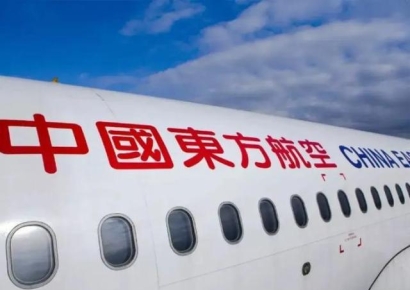 Flight Attendant Kneeled to Apologize... China Eastern Airlines Bans Passenger Who Continued to Complain
- An Apartment Once Worth 400 Million Won Nears 1 Billion... "Still Worth It" as 1990s-Born Pangyo Workers Flock to Gyeonggi Gwangju [Report]
- "Didn't Want to Buy a Home"... Seoul Apartment Buyers Flocked to Mid- to Low-Priced Segment After Tax Reform Plan [Real Estate AtoZ]
- "Huge Sum in Pension Account He Never Knew About... What Happened to Chinese Man in His 70s Who Collected Scrap for 21 Years?"
- Musk's Partner Reveals Sudden Breakup Just a Week After Saying "I Love You"
On this day as well, President Lee stated, "Debate fiercely, but I ask that wasteful political struggles that incite regional conflict and regionalism for political purposes now come to an end." He added, "For the national survival goals of easing concentration in the capital and achieving balanced regional development, it is time for everyone to cooperate and pool their wisdom on a grand scale."
© The Asia Business Daily. All rights reserved. Unauthorized AI training and use prohibited.