"Jackpot"... The Company Once Backed by SK hynix, 600 Employees Hit the 10 Billion Won Windfall
Consortium Including SK hynix Acquired Kioxia
Stock Options Soar Amid AI Boom
AI Memory Surge Drives Stock Option Values Up
A New Example of "Shared Rewards" in the AI Era
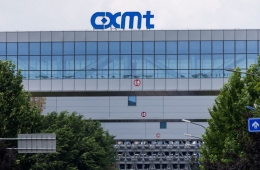
Thanks to the boom in the artificial intelligence (AI) semiconductor market, around 600 employees of the Japanese memory semiconductor company Kioxia Holdings have each come to hold assets exceeding 10 billion won. Employees of Toshiba’s former semiconductor division, once sold off due to management difficulties, are now drawing attention as they share the benefits of the company’s soaring valuation.
On June 28, the Nihon Keizai Shimbun (Nikkei) reported that approximately 600 Kioxia employees now hold an average of over 1 billion yen (about 10 billion won) in assessed assets as a result of the appreciation of their stock options. It is known that such large-scale accumulation of assets through stock options by ordinary employees is rare in Japan.
Kioxia originated from Toshiba’s memory semiconductor business unit. Toshiba, facing management difficulties due to a struggling nuclear power business and accounting issues, sold its semiconductor business in 2018 to a Korea-U.S.-Japan consortium led by U.S. investment firm Bain Capital. SK hynix also participated in the consortium at the time.

After the acquisition, Bain Capital granted large-scale stock options not only to executives but also to regular employees, including department heads and managers. Typically, when a private equity fund acquires a company, stock options are concentrated among management, but Bain Capital provided compensation opportunities for on-site operational managers as well.
Subsequently, as demand for memory for AI applications surged, the company’s value rose sharply, and following its public listing at the end of 2024, its stock price soared. The assessed value of the initially granted stock options is estimated at around 790 billion yen. Based on this, each of the 600 employees now holds, on average, more than 1 billion yen in assessed assets.
Nikkei introduced this as a new case of performance-based compensation in the age of AI. The article also mentioned that employees in the semiconductor divisions of Samsung Electronics and SK hynix in Korea are expected to receive around 600 million won per person this year through performance-based and special bonuses. It also cited SpaceX as an example, where thousands of employees became millionaires through stock compensation tied to the company’s rising value.
Hot Picks Today
 Despite "Insufficient Balance" Notices, They Board Anyway... Reports of Foreign Fare Evasion Mounting
- [Exclusive] "We Came for a KRW 140,000 Trip": Following Chinese Tourists in Korea Uncovers a 'Suspicious' Tour
- Huang Jensen: "The More Memory, the Better"... Dismisses 2029 Oversupply Concerns
- U.S. to Require Arriving Passengers to Prove They Didn't Visit the 'Ebola Epicenter' Starting Nov. 3
- "Baek Jongwon Had Been Quiet, Then Hit It Big"... Waits in the 100s in U.S. Despite KRW 46,000 Pork Belly
Nikkei assessed, “The AI revolution is not only creating new industries but is also transforming existing compensation systems, changing how and with whom companies share the fruits of their growth.”
© The Asia Business Daily. All rights reserved. Unauthorized AI training and use prohibited.