Daegu Major Companies by Sales: IM Bank Ranks First, SL Second, L&F Third ... Daegu Chamber Announces Top 100 Companies Survey
The Daegu Chamber of Commerce and Industry announced on June 28 that, based on individual sales in 2025, it had conducted an investigation and analysis of the “Top 100 Companies in Daegu,” all of which have their headquarters in the region. According to the results, the total sales of Daegu’s top 100 companies in 2025 reached 39.9 trillion won, an increase of 2.8% compared to the previous year. Operating profit rose by 51.5% and net income by 15.8%, reflecting a significant improvement in profitability compared to the growth in sales.
By industry, manufacturing accounted for 54.9% of total sales, maintaining its position as the core sector of the local economy. This was followed by wholesale and retail trade at 13.9%, financial and insurance at 12.1%, construction at 6.1%, real estate at 4.8%, transportation and warehousing at 4.5%, electricity and gas supply at 3.2%, and facility management services at 0.6%.

Ranking of Sales Revenue, Operating Profit, and Net Income of Major Corporations in Daegu Region
View original imageDriven by improved performance among major companies in the automotive parts, secondary battery materials, and electronic components sectors, operating profit in manufacturing increased by 150.3% year-on-year. The recovery of core manufacturing companies—which have a large share of sales within the sector (with L&F Co., Ltd. reducing its deficit by 404.4 billion won compared to the previous year, ISU Petasys Co., Ltd. increasing by 73.6 billion won, THN Co., Ltd. by 30 billion won, and SL Corporation by 27.2 billion won)—was found to be the main factor improving overall profitability.
In the financial and insurance sector, operating profit and net income both increased significantly—by 37.9% and 35.9% respectively—due to the stable performance of major regional financial institutions. In real estate, both sales and profitability improved sharply, driven by performance in residential building development and supply, with the impact of the newly entered Pioneer Sangin Co., Ltd. being particularly notable.
Despite a decrease in sales, the construction sector turned a profit thanks to the recovery in profitability and deficit reduction among major companies. In contrast, the transportation and warehousing sector continued to record losses despite an increase in sales, while the wholesale and retail sector maintained sales growth but saw a slight decline in profitability.
The number of companies posting a deficit increased by five year-on-year to a total of 24, while the number of companies with sales exceeding 1 trillion won increased by only one. Meanwhile, the number of companies with sales of over 300 billion won decreased.
By company, IM Bank Co., Ltd. ranked first in sales, operating profit, and net income, while IM Financial Holdings Co., Ltd. and SL Corporation took top positions in their respective categories.
A total of 15 companies newly entered the top 100, consisting of 5 real estate companies, 4 manufacturing firms, 3 wholesale and retail companies, 2 facility management service providers, and 1 construction company.
Lee Sanggil, Executive Vice President of the Daegu Chamber of Commerce and Industry, stated, “The increase in profitability among the top 100 companies in Daegu last year was the result of improved performance in manufacturing and financial and insurance sectors, as well as the reflection of results from the region’s key companies and certain housing development projects including Pioneer Sangin Co., Ltd. On the other hand, the rise in the number of loss-making companies and the decrease in large-scale companies at the top sales tiers indicate a weakening foundation for regional business growth. Therefore, it is essential to support the growth capacity of mid-sized and small businesses and strengthen overall industry competitiveness through AI and digital transformation, as well as business restructuring assistance.”
Hot Picks Today
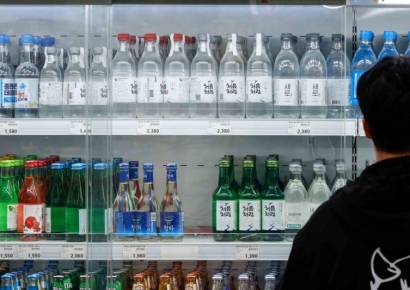 "Shall We Grab a Drink?" KRW 30,000 a Round... Young Adults: "Prices Make My Hands Shake; I Can't Drink Out"
- "Vacation Benefits Alone: 10 Million Won per Person"... 'This Organization' Cut Employee Allowances and Raised the Executive Director's Salary by 50 Million Won
- "Even New York Taxi Drivers Are Talking About the KOSPI; South Korean Market to Top 9,000 Again Within a Year"... 'Wall Street's Stock-Picking Ace' Names His Picks
- "Suddenly Sat Up"... 15-Year-Old Girl Wakes Up in Coffin During Funeral
- "No Need to Hire a Model"... The 25-Year-Old Woman Who Entered Social Media with a Face That Cost Just 1,500 Won [AI Content: The Bright and Dark Sides] 1
This survey targeted the top 100 companies headquartered in Daegu by individual sales. Public enterprises, public institutions, and companies for which sales information could not be obtained due to the lack of disclosure requirements were excluded. The analysis was carried out based on data from the Financial Supervisory Service’s electronic disclosure system and credit rating agencies for 2024 and 2025.
© The Asia Business Daily. All rights reserved. Unauthorized AI training and use prohibited.