Former Swedish Envoy for the Korean Peninsula: "North Korea Has Changed Its Calculus... Proposes Establishing Ministry of Neighborly Relations Instead of Ministry of Unification"
Kent Härstedt, former Swedish Special Envoy for the Korean Peninsula who previously supported North Korea–U.S. dialogue, suggested establishing a new "Ministry of Neighborly Relations" in place of the current Ministry of Unification, stating, "North Korea has changed its calculus and now regards unification as a non-issue." This implies that, since North Korea has excluded unification from its agenda, the South Korean government should also pursue a structural transformation.

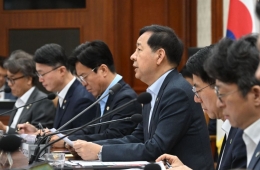
Officials speaking at the Jeju Forum session titled "Ways to Engage North Korea: Lessons and Challenges from the 2018-2019 Dialogue Phase," held on the 26th at the Jeju Haevichi Hotel. Jeju Forum
View original imageOn June 26 at the Jeju Haevichi Hotel, during the Jeju Forum session titled "Approaches for Engagement with North Korea: Lessons and Challenges from the 2018-2019 Dialogue Phase," former Special Envoy Härstedt said, "If the other party has shifted its posture, we cannot maintain an institutional structure that runs counter to this change."
He further argued, "Rather than pursuing unification, which no longer aligns with the current reality, it may be more constructive to focus on managing relations as two neighboring countries with different systems." He then posed the question, "What role is there for the Ministry of Unification in a situation where the other party does not want dialogue at all?"
Härstedt clarified, "This does not mean South Korea should conform to North Korea, but that institutions need to be modernized to reflect changed realities." He proposed, "What if we create an entity like a 'Ministry of Neighborly Relations' to strengthen communication between the two countries, reduce the risk of conflict, and build security and trust?"
Drawing on the example of East and West Germany, he added, "Nothing is impossible in the long term, but we need to reconsider whether the current institutional framework is suitable for facilitating dialogue in today's reality."
Hot Picks Today
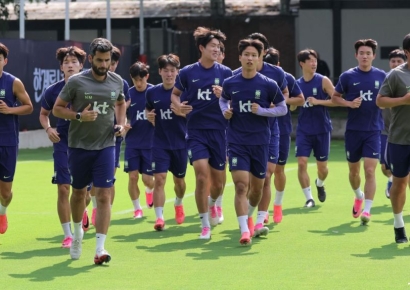 "Was This Planned?" Is Losing Actually Better? Overseas Fans Suspicious Over Korea's Projected Round of 32 Draw
- "Losing Jobs and Selling Bean Sprouts: Why They Left a Job Earning 6.76 Million Won per Month"
- Cardiac Arrests Surge in 40-Degree Heatwave, Hospitals Overwhelmed... Paris Issues Emergency "No Drinking" Ban
- National Assembly Leadership Talks Stall Again... Ruling Party: "Complete by June," Opposition: "Fight"
- "‘Hong Myungbo Banned from Entry’ Posted on Convenience Store Door... Headquarters Investigating Store Location"
Meanwhile, the 21st Jeju Forum for Peace and Prosperity, held under the theme "Redesigning Cooperation in an Age of Division," concluded its three-day run on June 26. This year's Jeju Forum brought together over 6,000 experts and global leaders from 85 countries to discuss cooperation in fields such as climate, health, tourism, education, and the economy.
© The Asia Business Daily. All rights reserved. Unauthorized AI training and use prohibited.