10 Million Tourists Drawn by K-pop... Their Wallets Head to Department Stores
Surpassing 10 Million Tourists a Month Earlier Than Last Year
Overseas Fans Flock to Korea for BTS Concerts and K-Content Craze
Shopping Consumption Accounts for 36.9% at Duty-Free Shops, Department Stores, and Outlets
This year, the number of foreign tourists visiting Korea has surpassed 10 million. This milestone was reached about a month earlier than last year. Analysts attribute this trend to the popularity of Korean Wave (Hallyu) content such as K-pop, dramas, and cuisine, as well as large-scale concerts by groups like BTS, which have drawn international fans to Korea.
According to the Ministry of Culture, Sports and Tourism on June 26, the number of foreign tourists who visited Korea this year through the third weekend of this month has provisionally exceeded 10 million. This is about a month earlier than last year, when the 10 million mark was passed in mid-July. In May alone, 1.95 million foreign visitors came to Korea, a 19.4% increase from the same month last year (1.63 million). The cumulative number of foreign visitors from January to May was 8.72 million, a 21.0% increase compared to the same period last year (7.21 million).

By country, China and Japan led the growth. From January to May this year, Chinese tourists surpassed 2.56 million, ranking first among all visitors, while Japanese tourists exceeded 1.6 million, coming in second. Taiwanese visitors topped 920,000, a 33% increase from last year, and Hong Kong also recorded a double-digit growth rate. Long-haul markets also rebounded, with more than 800,000 visitors from the Americas and over 600,000 from Europe during the same period, maintaining a steady upward trend.
The recovery of the Japanese market was particularly notable. In March, when the cherry blossom season coincided with a holiday, Japanese tourists numbered over 480,000, marking the highest monthly figure to date. The industry attributes this to both the expansion of flight routes and heightened interest in Korean Wave content.
The tourism industry also points to large-scale K-pop events as a factor boosting demand for travel to Korea this year. To celebrate BTS’s return to activity, a major fan event was held around Gwanghwamun in Seoul, and overseas fans flocked to concerts in Busan. These events expanded "stay-type" consumption that combines concert attendance with shopping, dining, and sightseeing.
As the number of tourists increased, so did their spending. Last month, the amount of domestic credit card usage by foreigners (including online spending) surpassed 2 trillion won for the first time. Card spending rose from 1.1306 trillion won in January, to 1.7115 trillion won in March, 1.9924 trillion won in April, and reached 2.1222 trillion won in May. This is the first time that the monthly figure has exceeded 2 trillion won since related statistics began in 2018.
The cumulative card spending from January to May this year totaled 7.9845 trillion won, a 47.3% increase compared to the same period last year. This far outpaces the growth rate of inbound tourists (21.0%).

Spending related to the Korean Wave is also growing rapidly. According to the Korea Tourism Organization, foreign tourists’ Hallyu-related spending reached 1.413 trillion won last month. Compared to the total domestic card spending by foreigners that month (2.1222 trillion won), this accounts for 66.6%. Hallyu-related spending steadily increased from 783.4 billion won in June last year, to 896.3 billion won in October and 962 billion won in November. While it remained around 950 billion won at the end of the year, it dropped to 711.9 billion won and 645 billion won in January and February this year due to seasonal off-peak effects. In March, it surpassed 1 trillion won for the first time, reaching 1.0917 trillion won, then set new records for two consecutive months at 1.3287 trillion won in April and 1.413 trillion won in May. Compared to June last year, the scale of spending has grown by about 80% in just one year.
Spending was concentrated in shopping and beauty. Shopping, including duty-free shops, department stores, and outlets, accounted for 36.9% of total Hallyu-related spending, making up the largest share. This was followed by beauty and wellness—including cosmetics, drugstores, dermatology clinics, hair salons, and makeup services—at 22.0%, with fashion (13.6%), lifestyle food (13.1%), and Korean cuisine (10.5%) trailing behind.
Hot Picks Today
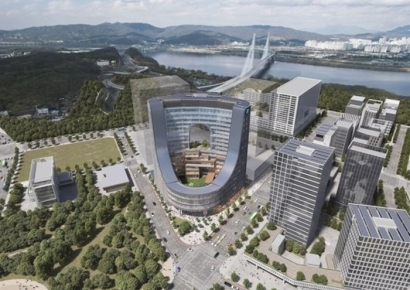 JYP Bought a 75.5 Billion Won Site, Only to Face an 18-Story Building Right in Front? ... SH's "Surprise Rezoning" Makes JYP Pull Out
- "What Becomes of the Geniuses Who Devoted Their Lives?"... 722 Papers Released in Just 3 Hours Spark 'Shock and Awe' [Reading Science]
- "If It's This Good, It Rivals the Santa Fe"... New Tucson Grows Bigger, Adds 8-Speed Transmission [Test Drive]
- "'Assassin(s)' Actors: Is This Why They Won't Apologize?" Joo Jinwoo Reveals Incentive Deal
- "I Want to Look Like Glowing Koreans" ... The Trend Is Taking the World by Storm, but Experts Warn Against It
In terms of the number of transactions, lifestyle food—including everyday items such as convenience stores, cafes, chicken, and hamburgers—accounted for the largest share at 45.0% of the total. Shopping and Korean cuisine followed. An industry insider explained, “As foreign visitors seek out concert and drama filming locations, as well as popup stores, their consumption patterns are expanding to include duty-free shops, cosmetics stores, and popular restaurants. This shows that the Korean Wave is becoming a driving force not only for tourism but also for domestic consumption.”
© The Asia Business Daily. All rights reserved. Unauthorized AI training and use prohibited.