What Will Happen to Retail Investors... Was the "Become a Building Owner for 1,000 Won" Boom Just an Illusion?
A Wave of Real Estate Fractional Investment Firms Shutting Down
Kasa Korea, the First Real Estate Fractional Investment Platform in Korea,
to Sell Its Last Remaining Asset
"Focus Should Shift from Real Estate to Intangible Assets like IP"
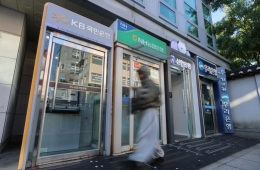
Real estate fractional investment companies are undergoing consecutive business wind-downs. The primary reason is the delayed institutionalization of security token offerings (STO), but there is also growing consensus that the fractional investment business model, which relies on single assets such as real estate, has reached its limits. Both the regulatory framework and the market are shifting their focus toward the tokenization of non-traditional assets.

Real estate fractional investment companies are undergoing successive business closures. Getty Images
View original imageKasa Korea, a real estate fractional investment platform, announced that the sale process for the Sangam 235 Building is scheduled to begin. From June 18 to 22, a vote was held on the proposal to sell the building to a buyer for at least 980 million won, and the motion was approved. Kasa Korea has recently halted new offerings and is sequentially liquidating its existing investment assets. Between March and April of this year, it already disposed of the Bukchon Wolhajae and Gray Inboundary buildings. The Sangam 235 Building is the last remaining asset owned by Kasa Korea. Kasa Korea was Korea's first real estate fractional investment platform. In 2023, Daishin Securities acquired the company but was unable to absorb the losses. Last year, Daishin Securities participated in a 7 billion won capital increase for Kasa Korea through its affiliate Daishin Property, and at the beginning of this year, it extended a 5.5 billion won short-term loan for operating funds by one year as the maturity approached. Nevertheless, Kasa Korea posted an operating loss of 1.4 billion won in the first quarter of this year. This continued a streak of losses, with deficits of 5.8 billion won in 2024 and 6.1 billion won last year.
Fundble, which operates in the same business sector, also shut down its operations in May. After the service ends, liquidation procedures for existing investment assets are being carried out. As of last year, Fundble's assets stood at 1.4 billion won, but it posted a net loss of 1.9 billion won. In other words, even if the company were sold in its entirety, it would not cover the deficit recorded last year. Lucent Block, meanwhile, has managed to survive thanks to a cumulative investment of about 34 billion won up to Series B, but it is still facing significant financial difficulties. Last year, Lucent Block's assets totaled 14.3 billion won, while its net loss reached 6.1 billion won.

The delay in institutionalization is cited as a major reason why real estate fractional investment firms are facing difficulties. All these companies operated as designated innovative finance service providers, utilizing profit securities from non-monetary trusts (real estate management and disposal trusts). These profit securities were issued via electronic registration and traded using blockchain technology. After the period of innovative finance designation ended, a new profit securities investment brokerage license was created through institutionalization, but delays in obtaining licenses have hindered business operations. To secure a license, companies must meet the same capital requirement as fund investment brokers, which is 1 billion won, among other regulatory hurdles.
Experts also point out that it is difficult to secure profitability solely by issuing real estate token securities, which tokenize fractional ownership stakes using blockchain. Real estate token securities are similar to REITs (Real Estate Investment Trusts) in that they liquidate real estate income, but they fall behind in competition. Listed REITs benefit from a separate taxation privilege (9.9%), whereas token securities are subject to a dividend income tax (15.4%), so even if the same asset yields the same return, REITs offer higher post-tax profits. The market size is also much smaller. The market capitalization of listed REITs in Korea reaches 8 trillion won, but the cumulative public offering amount by the three leading real estate fractional investment companies does not exceed 100 billion won. Furthermore, since these products are structured around individual buildings, specific projects, or single profit rights, investors bear the risk if there is a vacancy or a decline in rent or asset value.
The overall trend in security tokens is also changing, which is having an impact. Rather than simply tokenizing single real estate assets, there is a growing trend of tokenizing non-traditional assets. In particular, intellectual property (IP) is gaining traction because patent royalties generate income based on contracts, allowing for predictable cash flows. Moreover, securitizing a portfolio of patents with stable royalty structures allows the creation of investment products with stable income streams. In fact, the Financial Services Commission last month expressed support for issuing fractional investment securities by bundling the same type of underlying assets within a certain range. In line with this, BuySellStandard, which operates the 'Piece' token securities platform, has begun collaborating with Intellectual Discovery to jointly commercialize patent token securities.
Hot Picks Today
 Chey Tae-won's One Remark Sends Stocks Soaring to 'Limit-Up'... This Stock Jumps Despite SK hynix's 3% Drop
- "Only healthy seniors welcome - get sick and leave?"... Senior welfare housing, this eligibility rule is changing
- "Now We're in Our 30s and 40s, and My Husband's the Only One Still Going Strong?" ... Women Tire First While Shopping: What's Happening in Japan?
- "I Thought Only Koreans Were Crazy About It"... This Dish Ranks No. 1 in the World
- "'100% Cat Fur' - It Seemed Unbelievable, but It Was Real... Chinese Shopping Mall Rocked by Shocking Revelation"

An industry insider commented, "Rather than simply splitting assets, the key is who can better design a structure of cash flow and rights that investors can understand," adding, "The market will be led by operators who have the capability to handle assets that traditional finance has not been able to cover."
© The Asia Business Daily. All rights reserved. Unauthorized AI training and use prohibited.