"U.S. Considers Relocating Some Middle East Bases to Israel as Iran Airstrikes Cause Severe Damage"
"Fifth Fleet Headquarters in Bahrain Severely Damaged"

The Wall Street Journal (WSJ) reported on June 25 (local time) that the U.S. government is considering relocating some of its military bases in the Middle East, which suffered heavy damage during the war with Iran, to Israel. It has been revealed that the damage to U.S. military bases located in Gulf countries, including the base in Bahrain that was subjected to concentrated attacks by Iranian drones, was far greater than expected.
Citing U.S. officials, the WSJ stated, "In this war, the U.S. Navy base in Bahrain, which is the only U.S. naval base in the Middle East, suffered severe damage, and more than 20 bases and diplomatic facilities were also attacked." The article added, "The United States is reviewing its overall deployment strategy in the Middle East and is considering relocating bases to western regions such as Israel, which are farther from the range of Iranian drone attacks."
The WSJ particularly pointed out that the damage to the Bahrain naval base, which was a primary target since the outbreak of the conflict in late February, is much more extensive than previously anticipated. The WSJ reported, "The Bahrain naval base was repeatedly attacked, resulting in significant damage to the Fifth Fleet headquarters, at least 12 buildings, and two satellite communication terminals." The article emphasized that "based on satellite imagery, various videos, and testimonies from current and former military officials, these findings have been confirmed, although the U.S. Department of Defense has not acknowledged them to date."
According to the WSJ, the Fifth Fleet headquarters building located within the Bahrain naval base was damaged to the extent that it cannot be reused. In addition, the security guard training building, emergency equipment storage warehouse, dining facilities, and barracks also suffered significant damage. The total cost to rebuild the base is estimated to be at least 400 million dollars (approximately 617 billion won).
Previously, during its first term, the Trump Administration also discussed a large-scale relocation of U.S. military bases in the Middle East to western regions outside the range of Iranian drones, following concerns that these bases were excessively vulnerable to Iranian attacks. However, these plans were not realized at that time.
Hot Picks Today
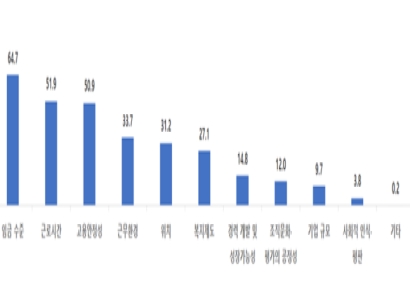 "Please Pay Me at Least 3 Million Won a Month": More Than Half of Young People Today Prioritize "Working Conditions" Over Company Size
- Selling Like Crazy Every Year... 30-Year-Old Hetbahn Takes on a New Challenge: Tastes Better Than "Mom's Home Cooking" [On-Site Report]
- He Left It in the Car and Forgot... "I Nearly Collapsed with Joy": Man Wins $1.48 Million Lottery
- Ran 18 km With 9-Year-Old Tied to Him at the Waist... "Man Banned From Competing for 3 Years"
- Beachgoer Finds 'Plastic' That Turns Out to Be Perfume Ingredient Worth More Than Twice as Much as Gold
However, the WSJ noted that even after the signing of a Memorandum of Understanding (MOU) for a ceasefire agreement with Iran, issues remain regarding the monitoring of follow-up negotiations, and there continue to be localized clashes over control of the Strait of Hormuz. For these reasons, it would be difficult to immediately withdraw from key U.S. bases in the Gulf. The WSJ added, "The choices the United States makes regarding which facilities to restore, which to abandon, and how far to retreat will define America's military strategy in the Middle East for decades to come."
© The Asia Business Daily. All rights reserved. Unauthorized AI training and use prohibited.