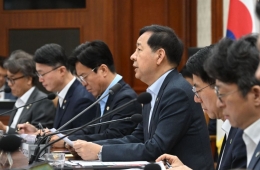
Kioxia’s Soaring Stock That Toshiba Missed... Both an Opportunity and a Challenge for Its Comeback
Reports have emerged that while Toshiba has gained substantial extraordinary profits from the surge in the stock price of Kioxia, a company it previously spun off and sold, it must present a concrete growth vision if it wants to use this as a springboard for re-listing.

On June 26, Nihon Keizai Shimbun (Nikkei) reported in an article titled "The 50 Trillion Yen Kioxia That Toshiba Missed... The Paradox 10 Years After the Revival of Nuclear Power," that the rise in Kioxia’s equity value has become both an opportunity and a challenge for Toshiba’s comeback.
Nikkei mentioned that Toshiba had once targeted semiconductors and nuclear power as its future growth engines. Atsutoshi Nishida, who served as Toshiba’s president and chairman from 2005 to 2014, had set forth a management policy to "grow with nuclear power and semiconductors as the two main pillars." However, as internal divisions competed and unrealistic performance targets were set, accounting fraud issues arose, and the company suffered significant losses in its U.S. nuclear business. To cover these losses, Toshiba successively spun off and sold its medical devices, home appliance, TV, and PC businesses.
Kioxia was formerly Toshiba's memory semiconductor division. After facing a management crisis in 2016, Toshiba decided to sell its memory semiconductor business. The business was separated from Toshiba and renamed Kioxia in 2019. At the time of its IPO in December 2024, Kioxia’s share price soared to 71 times its IPO price of 1,455 yen. As of the previous day's closing, its market capitalization stood at 56 trillion yen, surpassing Toyota Motor Corporation’s 42 trillion yen to become the largest by market cap on the Japanese stock market. Toshiba currently owns a 16% stake in Kioxia.
A similar trend is occurring in the nuclear power business. Westinghouse Electric Company (WEC) was sold by Toshiba to Brookfield in 2018 and was incorporated under Brookfield Renewable and Canadian uranium mining company Cameco in 2023. Currently, the U.S. government is promoting a nuclear expansion project worth about 13 trillion yen to supply power to data centers, leading to large orders flowing to WEC.
In the end, the semiconductor and nuclear power businesses that Toshiba divested are being spotlighted again in the AI era.
Currently, Toshiba is seeking a turnaround under Japan Industrial Partners (JIP). The company is generating profits from turbines and other power generation equipment, power transmission and distribution systems, elevators, and hard disk drives (HDD), while also working to expand new growth drivers such as defense equipment, quantum computing technology, and physical AI. An executive vice president dispatched by JIP is leading management reforms, thoroughly reviewing underperforming businesses and reducing fixed costs. AI-driven demand is also providing tailwinds for transmission and distribution systems and the HDD business. For the fiscal year ending March 2026, the operating profit margin reached 8%, an all-time high for the company.
Hot Picks Today
 "Was This Planned?" Is Losing Actually Better? Overseas Fans Suspicious Over Korea's Projected Round of 32 Draw
- "Losing Jobs and Selling Bean Sprouts: Why They Left a Job Earning 6.76 Million Won per Month"
- Cardiac Arrests Surge in 40-Degree Heatwave, Hospitals Overwhelmed... Paris Issues Emergency "No Drinking" Ban
- Mistakenly Listed 3,170,000-Won Item for 317,000 Won in Secondhand Sale... Court Rules Error Not Grounds for Cancellation
- "‘Hong Myungbo Banned from Entry’ Posted on Convenience Store Door... Headquarters Investigating Store Location"
However, in the previous fiscal year, the extraordinary profit from the surge in Kioxia’s stock price was so large that it overshadowed the positive effects of management reforms. This amounted to 2.27 trillion yen, equivalent to 60% of Toshiba’s sales. Nikkei pointed out that whether Toshiba can present a concrete future vision based on the unexpectedly secured funds from its Kioxia stake remains a significant challenge on its path to re-listing.
© The Asia Business Daily. All rights reserved. Unauthorized AI training and use prohibited.