"If You Miss It Now, It's Another Year’s Wait": Soaring Prices as MZ Flock to Seasonal Core Hotspots [How We Shop Now]
After Spring Cabbage, Garlic Scapes Take the Spotlight
Social Media Fuels Bibimbap Craze and Soaring Demand
Poor Harvest Drives Prices Up by 20 Percent
"Seasonal Core" Consumption Trend Spreads Among Millennials and Gen Z

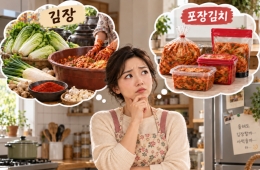
Image generated by artificial intelligence (AI) to aid understanding of the article. Gemini
View original image"This spring it was spring cabbage, and now it’s garlic scapes."
Yoon, a 30-year-old office worker, says that whenever she logs onto social media after work these days, her screen is filled with shades of green. It’s because videos of "Garlic Scape Bibimbap"—made by tossing chopped garlic scapes with red pepper flakes, soy sauce, sesame oil, and a fried egg—have taken over the algorithm. Yoon said, "I was surprised by how much the price had increased when I went to buy some at my local supermarket," but added, "They say you can’t get it again until next year once the season is over, so I picked up a bag anyway."
Garlic scapes, long relegated to a supporting role on the table as ingredients for pickles or stir-fries, have recently shot to stardom as the main act. Following in the footsteps of "Spring Cabbage Bibimbap," which trended online this spring, garlic scapes have emerged as the latest food fad among Millennials & Gen Z.
Garlic Scape Bibimbap Craze on Social Media...Surge in Searches and Sales
The garlic scape craze started on social media. Recipes for "Garlic Scape Bibimbap" spread rapidly on Instagram, TikTok, and YouTube, quickly becoming a viral sensation. Related content has now racked up millions of views.

The increase in search volume supports this trend. According to Naver Data Lab, the search index for "Garlic Scape Bibimbap" rose from zero on May 15 to 32 on May 28, then to 64 on June 1, and reached 100 by June 9. This interest translated into real-world sales. According to Lotte Mart, garlic scape sales in May increased by 89% compared to the previous month (March 31–April 30).
Soaring Demand, Shrinking Supply...Upward Pressure on Prices
While demand has surged, supply has actually declined. This year, in Namhae, Gyeongnam—the main production area—the rainy season during planting delayed crop growth by two to three weeks compared to a typical year, and the harvest was about a week later than last year. As a result, the total harvest volume decreased by about 15% year-on-year.
With supplies down and demand up, price pressures have mounted. According to Lotte Mart, as of this month, garlic scape prices are up about 20% compared to last year. Currently, domestically grown garlic scapes are selling for around 1,600 won per 100 grams, up 270 won from about 1,330 won per 100 grams during the same period last year. A 300-gram pack now costs around 4,800 won, a substantial jump from about 4,000 won last year.

The upward price trend is also clear online. According to the real-time price tracking app "Pulsent" on Coupang, a 500-gram pack of domestic garlic scapes jumped from 4,950 won at the end of last month to 8,000 won. The price of a 1kg pack of fresh garlic scapes, which was around 6,900 won in mid-May, soared by about 81.2% to 12,500 won.
Ingredients Become Experiences...The Rise of the 'Seasonal Core' Trend
Industry insiders see this phenomenon as a representative example of the "Seasonal Core" trend. "Seasonal Core" refers to a lifestyle where people actively seek out ingredients or experiences that can only be enjoyed at certain times of the year. In the past, seasonal food consumption focused on freshness and health, but recently it has evolved into "experience consumption," where rarity and content value—"an experience only possible right now"—are key features.
This trend was reflected in a survey conducted by market research firm Embrain Trend Monitor last October. "Eating seasonal fruits, vegetables, or foods" was among the top preferred activities for all four seasons. In the summer, "eating seasonal foods" (75.0%) and "eating seasonal fruits and vegetables" (69.0%) ranked first and second, respectively; in winter, "eating seasonal fruits and vegetables" (61.2%) and "eating seasonal foods" (56.3%) also ranked high.

Image generated by artificial intelligence (AI) to assist in understanding the article. ChatGPT
View original imageThe top reason for eating seasonal foods was "to gain new enjoyment and vitality in a repetitive daily routine," cited by 55.3% of respondents (multiple answers allowed), followed by "because it’s a special experience you can’t have in other seasons" at 52.0%, and "because it’s a rare experience only possible at that time" at 48.9%. Notably, 56.0% of respondents in their 20s and 51.5% in their 30s said they actively seek out season-limited experiences, indicating that younger generations are driving the trend.
Hot Picks Today
 “Washing Dishes and Folding Clothes 200 Times a Day”... China’s “Robot Trainers” Earn Up to 1.2 Million Won a Month
- "Even New York Taxi Drivers Are Talking About the KOSPI; South Korean Market to Top 9,000 Again Within a Year"... 'Wall Street's Stock-Picking Ace' Names His Picks
- “Made 2 Billion Won in One Year in Prison,” PPP Lawmaker Retorts: “If You’re Jealous, Go There Yourself”
- After Boasting of 'Luxury Shopping' Online... Gambling Site Operators Living Lavishly on the Run for 10 Years Caught
- 220 cm-Tall 26-Year-Old Woman Dies Less Than a Year After Giving Birth... Deadly Complications Hidden Behind 'Gigantism'
Experts believe that the consumption of seasonal ingredients is evolving beyond a simple fad into a structural shift. Along with their nutritional value, the exclusivity of "experiences only possible now" is also stimulating consumer demand.
© The Asia Business Daily. All rights reserved. Unauthorized AI training and use prohibited.