Balanced Regional Development with 'Semiconductors Heading to Honam'... Ruling Party: "National Strategy," Opposition: "Government Intervention"
Democratic Party Optimistic About Cluster Establishment
Regional Strategy Gains Support Beyond Honam and Chungcheong
People Power Party Questions Site Selection
Opposition Grows Among Lawmakers from TK and Capital Regions
President Lee Jaemyung on the 25th discussed investment issues related to semiconductor plants in non-capital regions such as Honam with Samsung Electronics Chairman Lee Jae-yong at the Blue House, signaling that announcements regarding investments to establish semiconductor clusters are becoming more concrete. Especially following a private meeting with SK Group Chairman Chey Tae-won on the 19th, the one-on-one with Chairman Lee has given further momentum to the 'semiconductor initiative' as the Lee administration enters its second year. Some observers suggest this could serve as a catalyst for balanced regional development, moving away from a capital region-centered growth strategy. The Blue House is refining its regional development strategy, planning investment blueprints centered on the southeastern region for physical and artificial intelligence (AI) industries, and expanding beyond Honam and Chungcheong.

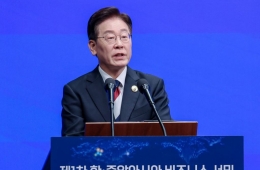
The Democratic Party of Korea holding an Executive Committee meeting at the National Assembly on the 26th. Photo by Yonhap News
View original imagePark Ji-won, Supreme Council member of the Democratic Party of Korea, stated at the Supreme Council meeting held at the National Assembly on the 26th, "Semiconductor competition in the AI era is a race for speed, and the key is how quickly and stably we can secure electricity, water, land, and talent." Park emphasized, "As the capital region is already saturated, semiconductor clusters in Honam and Chungcheong could be a practical solution for the survival of our industry." In particular, Park expressed high expectations for the semiconductor cluster, calling it "a national strategy that encompasses future growth engines, balanced regional development, and youth employment."
Moon Geumjoo, a Democratic Party lawmaker, said, "We can no longer delay expanding the strategic industry base nationwide," adding that "the discussion of semiconductor clusters in Honam and Chungcheong is an issue being reviewed at the level of national industrial strategy."
With the announcement of large-scale investments in the semiconductor industry—a pillar of the Korean economy—imminent, both the ruling and opposition parties are paying increasing attention. There is also significant interest in the semiconductor cluster initiative, given that Honam is considered a region that has historically been left behind industrially. Expectations are rising for this to become another axis of development connecting the capital region, Chungcheong, and Honam.
The People Power Party is openly raising questions about the site selection process, expressing suspicions that the government may be intervening in corporate management. The party held a policy meeting at the National Assembly this morning under the theme "Fourth-Rate Politics Hold Back First-Rate Companies." Floor leader Jeong Jeom-sik stated, "The location and investment decisions for semiconductors should be made based on companies' strategic and autonomous judgment," warning that "if the political sphere intervenes excessively, it will undermine the competitiveness of our semiconductor industry itself."

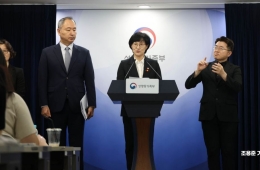
The People Power Party held a policy meeting with private sector semiconductor experts at the National Assembly on the 26th. Photo by Yonhap News Agency
View original imageKo Dongjin, a lawmaker and former Samsung Electronics executive, commented, "It is right for the government to support and assist corporate activities, but applying pressure or appearing to do so publicly is never desirable," adding, "It takes at least five to seven years to select a site for a semiconductor plant, and the process is conducted in utmost secrecy." He pointed out that, since such large-scale projects require vast land, if the project plan becomes public, it can cause land prices to rise, making site acquisition more difficult.
Within the People Power Party, opposition voices are growing in regions such as Daegu-Gyeongbuk (TK) and the capital area. The previous day, TK lawmakers including Lee Inseon and Kim Seungsoo argued, "The moment the government uses national strategic industries as a political tool, industrial competitiveness will be shaken."
Hot Picks Today
 "Additional 25% Mobile Bill Discount From Today" Causes Stir Online... The Truth Revealed
- "The Clothes My Dad Used to Wear"... Ralph Lauren, Beanpole, and Hazzys See Sales Surge as MZ Generation Embraces the Trend
- Missing Elementary Student from Hantan River Found in Cardiac Arrest
- "Please Take Off Your Shoes"—From Crawling onto the Bed to Changing Habits, Young Americans Lead the Shift
- "Famous Actress on KBS Is Perpetrator's Sister"... KBS Responds to 'Busan Fall Death' Family's Plea
However, some believe it is unlikely for the People Power Party to elevate the semiconductor cluster issue to an official party platform. A senior party member based in Yeongnam predicted, "It would be difficult to adopt it as a party platform, as advantages and disadvantages may vary by region."
© The Asia Business Daily. All rights reserved. Unauthorized AI training and use prohibited.