Government to Release 200 Million More Eggs... 1 Trillion Won Injected for Price Stabilization in Second Half
Special Task Force on Public Livelihood Price Management
Full Freeze on Electricity and Gas Rates
Monthly Issuance of 20 Billion Won in Agricultural Product Discount Vouchers
The government will inject 1 trillion won in fiscal resources in the second half of the year to keep the consumer price inflation rate under 3%. Major public utility fees, including electricity and gas rates, will be frozen. The volume of imported fresh eggs will be expanded by more than six times compared to the current level, with an additional supply of 200 million eggs. For all agricultural, livestock, and fishery products, the maximum weekly discount limit per person will be increased from the current 10,000 won to 30,000 won.
On June 26, Deputy Prime Minister and Minister of Economy and Finance Koo Yoon Cheol held a special task force meeting for public livelihood price management at the Government Complex Seoul and finalized measures to ease the burden on ordinary citizens. Deputy Prime Minister Koo stated, "Even as uncertainties remain in the follow-up negotiations after the end of the Middle East war, the cost of living burden continues," adding, "We will closely monitor the economic situation and gradually adjust the emergency response measures currently in place."

Electricity and Gas Rates Frozen... Extension of Fuel Tax Cuts Also Under Review
First, to stabilize petroleum prices, the government has implemented the "7th Maximum Price Reduction" measure. Reflecting the recent downward trend in international oil prices, prices will be lowered below the current maximum price level and maintained until full stabilization of consumer prices is achieved. To reduce the fuel cost burden for households, the 25% fuel tax cut on liquefied petroleum gas (LPG) butane will be extended until July, and the sales surcharge of 623 won per kilogram will be temporarily exempted until December. Fuel tax cuts for gasoline (15% cut) and diesel (25% cut) will also be considered for additional extension if necessary.
Central public utility fees, including electricity and gas, will be fully frozen throughout the second half of the year. The tariff rate for liquefied natural gas (LNG) and LPG will be lowered to 0% in the second half, and the individual consumption tax on LNG for power generation will be reduced by 15% on a temporary basis. Local governments that contribute to price stabilization will be given special grant tax incentives totaling 13 billion won.
The oil price-linked subsidy for freight and passenger vehicles as well as farmers and fishers will be maintained until September, and an extension until the end of the year will be considered if high oil prices persist. The subsidy rate will be raised from the current 50% to 70%, and the maximum support limit has been increased by 52.8%. Toll reductions for people with disabilities and national merit recipients (50-100%) will be expanded to include not only personally owned vehicles but also long-term rental and leased vehicles. For families with multiple children, a new toll discount of 20% for families with three children and 10% for families with two children will be introduced on weekends and holidays. The "Card for All" public transportation cashback program will continue through September, and may be extended until the end of the year if high oil prices persist.

Due to strong remarks by U.S. President Donald Trump, international oil prices are soaring, and a price notice for gasoline and diesel is displayed at a gas station in Yongsan-gu, Seoul, on April 3, 2026. Photo by Dongjoo Yoon
View original imageAdditional Supply of 200 Million Eggs... Triple Expansion of Agricultural, Livestock, and Fishery Product Discounts
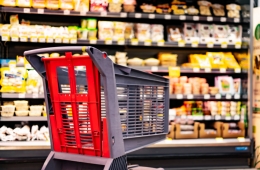
The government will inject an additional 350 billion won in fiscal resources—an all-time high—to alleviate grocery price pressures. In July and August, regardless of product category, the largest-ever discounts will be offered on all agricultural, livestock, and fishery products at each supermarket, and the per-person weekly discount limit will be increased from the current 10,000 won to up to 30,000 won. For eggs, which pose a significant price burden, a 20% discount will be applied to all types. An additional 200 million fresh eggs will be imported. Traditional market agricultural discount vouchers will be issued regularly at a scale of 20 billion won per month from next month through November.
Measures to reduce production and distribution costs will also be implemented. For 13 egg distribution centers, the government will support the costs of logistics equipment such as pallets to induce price reductions, and support for feed ingredient purchase funds for pork producers will be increased by 1.62 billion won. For online wholesale market users in July and August, the voucher support rate will be sharply raised from 50% to 80%. Discounts of up to 60% will be offered on products such as mackerel and dried seaweed, and a continuous discount system will be maintained through the end of the year. In July, a special investigation team will be dispatched to directly import 2,000 tons of Norwegian mackerel for low-cost supply, while domestic mackerel export volumes will be redirected to the domestic market, with the government purchasing them directly and supplying them at half price.
To support small businesses facing management challenges, the scale of the "Hope Dream Loan" program will be doubled from 1.5 trillion won to 3 trillion won. Cashback benefits for using local love gift certificates at "Good Price Stores" will be expanded to 13% in the Seoul metropolitan area, 15% in non-metropolitan areas, and 17% in regions with declining populations. For households receiving energy vouchers using kerosene or LPG, an additional voucher of 147,000 won will be provided.
Hot Picks Today
 "Booked a Cheap Flight, Only to Get Blindsided"... Travelers' Complaints "Explode" Over Extra Fees
- "I Ate It Often Because It Tasted Good"... This Eating Habit Linked to 40% Higher Odds of Asymptomatic Cerebrovascular Damage
- "A College Degree Isn't Really Necessary"... Choi Taewon's Advice to Young People
- “Dad Just Gave It to Us as a Gift”... Scratched a Lottery Ticket at a Family Gathering and Hit a 1 Billion Won Jackpot
- "We've gone this far to save on lunch"... Where office workers are flocking instead of restaurants
In addition, the government will push to amend the Price Stabilization Act in the second half of the year, introducing a new penalty for illegal acts such as hoarding, imposing a fine of up to twice the illegal gains, and levying enforcement fines. Deputy Prime Minister Koo emphasized, "We will mobilize all available means to keep the consumer price inflation rate within 3% in the second half of the year."
![Egg prices have risen by 11.5% compared to last year, with the average price of a carton of eggs exceeding 7,000 won, sparking concerns over 'meal table prices.' The photo shows the egg display at a large supermarket in Seoul on June 10, 2025. Photo by [Photographer Name]](http://www.asiae.co.kr/news/img_view.htm?img=2025061015363192678_1749537391.jpg)
Egg prices have risen by 11.5% compared to last year, with the average price of a carton of eggs exceeding 7,000 won, sparking concerns over 'meal table prices.' The photo shows the egg display at a large supermarket in Seoul on June 10, 2025. Photo by [Photographer Name]
View original image© The Asia Business Daily. All rights reserved. Unauthorized AI training and use prohibited.

!["Please Take Them Off!" They Made It All the Way to the Bed... Then "80% of Fecal Bacteria" Struck [Deep Scroll]](https://cwcontent.asiae.co.kr/asiaresize/307/2026101610053063338_1792112730.png)