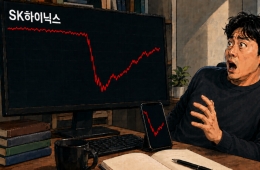
[Good Morning Market] Mixed U.S. Market and Profit-Taking Pressure... KOSPI Expected to Open Lower
There are projections that the KOSPI will start lower, influenced by the mixed performance of the U.S. stock market and pressure for profit-taking. However, due to the concentration on leading stocks and bargain-hunting in neglected stocks, the KOSPI is not expected to experience significant fluctuations.

On the 23rd, the KOSPI index opened at 9,083.54, down 31.01 points from the previous trading day, with the domestic stock market status displayed on the electronic board in the dealing room at Hana Bank headquarters in Jung-gu, Seoul. June 23, 2026 Photo by Kang Jinhyung
View original imageThe U.S. stock market closed mixed. On the New York Stock Exchange (NYSE) on June 25 (local time), the Dow Jones Industrial Average finished at 51,920.62, up 71.72 points (0.14%) from the previous day. Over the same period, the S&P 500 index declined by 0.73 points (0.01%) to 7,357.49, and the tech-heavy Nasdaq index fell by 118.03 points (0.46%) to 25,358.60.
Although there were expectations for AI semiconductor demand, large-cap tech stocks continued to weaken. On this day, Micron shares soared by 15.74%, while Apple shares plunged by 6.12%.
Micron's stock price rose thanks to an earnings surprise the previous day. For the third quarter of fiscal year 2026 (March to May), Micron posted record results, with revenue of $41.456 billion and an operating margin of 81.2%. This has increased expectations for semiconductor stocks such as SanDisk. In contrast, companies dealing in end-consumer products like Apple are facing margin pressure. Apple has decided to raise prices for major products, such as MacBook and iPad, by 15–20%.
This situation could eventually lead to a decline in memory prices. The sharp increase in memory prices due to strong demand puts margin pressure on end-consumer product companies like Apple. The higher product prices may dampen consumer demand, which could result in lower memory prices. However, the probability of such a negative scenario occurring is low, as AI investment demand from hyperscalers such as Meta and Alphabet remains robust.
On this day, the domestic stock market is expected to open lower due to the mixed performance of the U.S. stock market and short-term profit-taking pressure following the previous day's sharp gains. During the session, volatility in supply and demand is likely to increase due to the concentration on leading stocks and bargain-hunting in neglected stocks, resulting in a limited movement of the index.
Currently, the KOSPI is being led by the dominance of semiconductors. On June 24–25, the KOSPI rebounded by 8.9%, recovering from a 9.99% plunge on June 23. In the previous two trading days, only the semiconductor sector (14.2%) and the energy sector (10.8%) outperformed the KOSPI, while the recovery in other industries was lower.
This concentration phenomenon has exposed the KOSPI to high volatility. While it is typical for the volatility index, VKOSPI, to surge during market crashes, this year—including the previous day—VKOSPI increases have become the norm. On the previous day, VKOSPI hit an all-time high of 95.
Hot Picks Today
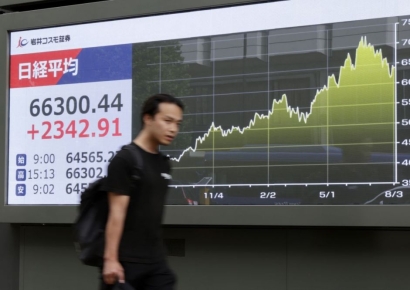 "Ruined Because of Korea" Even with a Sharp Rally, No One Buys... Japanese Market Sways with KOSPI
- '1,670,000 Won to 1,170,000 Won': SK hynix Hits Lower Limit Shock, Pre-market Opening Price Controversy
- Trump Signs Executive Orders Banning "Birth Tourism"... Expands Scope of Birthright Citizenship Restrictions
- "Don't Be Sad, Mom Was Very Happy"... Son Battling Illness for Life Saves Four Before Passing Away
- "Experts Issue Warning on Crocs: Comfort Alone May Spell Trouble if Overworn"
Han Ji-young, a researcher at Kiwoom Securities, said, "Since the resiliency of semiconductor stock prices has been proven repeatedly, the concentration on semiconductors is unlikely to dissipate easily, at least until the second quarter earnings season this year."
© The Asia Business Daily. All rights reserved. Unauthorized AI training and use prohibited.