"With a Bonus, You Can Snag a House"... How TSMC Turned a Rural Town Into Taiwan's Wealthiest Paradise
From Rice Fields to Wealth: Hsinchu’s Household Income Now Five Times Taiwan’s Average
Real Estate Soars as TSMC Incentives Are Paid Out
A Birth Rate Rebound—and the Rise of “Zhuke Mamas”
Just a little over a decade ago, a small town in northern Taiwan that was once surrounded by rice paddies has now transformed into the country’s wealthiest neighborhood. This change has been driven by the boom in artificial intelligence (AI) semiconductors.

According to Yonhap News, on the 24th (local time), the New York Times (NYT) highlighted Hsinchu, a city that has emerged as “Taiwan’s Silicon Valley,” where the world’s largest foundry company, TSMC, along with other semiconductor companies and research institutes, are concentrated.
TSMC, headquartered in the Hsinchu Science Park, accounts for more than 40% of the Taiwan Stock Exchange Capitalization Weighted Stock Index (TAIEX) market capitalization. Household income in this area has held the top spot in Taiwan for over six years. In one Hsinchu neighborhood, the average household income in 2023 reached 146,000 dollars (approximately 220 million won), about five times the Taiwanese average. The proportion of children aged 0 to 14 is 29%, roughly three times the national average of 11.9%, and the median age is 30, far below the national median of 45.
Housing prices have also soared sharply. In Zhubei, the residential hub of northern Hsinchu, home prices have doubled over the past 10 years. As department stores and luxury buildings have sprung up, real estate prices in the area have skyrocketed, and it now takes years to secure a spot in a new apartment. Local farmers, unable to withstand the higher cost of living and housing, have been pushed out to the outskirts, replaced by high-income engineer families.
The surge in home prices is most evident during the periods when TSMC engineers receive their incentives. One real estate agent in Hsinchu stated, “Customers often say they don’t know how to spend their bonus,” adding, “Most end up buying a new car or putting it toward a down payment on a house.”
The NYT also introduced the neologism “Zhuke Mama,” referring to wives who live comfortably thanks to husbands working in the semiconductor sector. “Zhuke” refers to the Hsinchu Science Park, and “Mama” means mother. Their days are spent attending Pilates classes, planning trips to Thailand, and taking care of their children’s education.
While many parts of Taiwan are struggling with population decline due to low birth rates, Hsinchu’s birthrate has increased in recent years. Taiwan’s total fertility rate (the average number of children a woman bears in her lifetime) has dropped nationwide to below 0.8, the lowest in the world, yet Hsinchu has maintained a rate around 1.0 for several years, defying the trend. With more children, education has become the top priority for “Zhuke Mama” families. As public schools exceed their enrollment capacity and select students based on exam scores, children who do not make the cut must endure long commutes to distant schools.

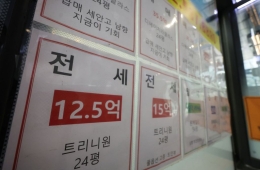
The image shows some old residential houses in Taiwan and is not related to the specific content of the article. Photo by Reuters Yonhap News.
View original imageHowever, the benefits of the AI-driven boom have rarely extended beyond the semiconductor sector. The Taiwan Research Institute (TRI) projected a growth rate of 9.33% this year, and the Directorate General of Budget, Accounting and Statistics (DGBAS) raised its forecast to 9.64% in May. Nevertheless, companies in other industries, challenged by high tariffs and sluggish demand, have been left out of the growth. According to DGBAS data, as of the end of 2021, the wealth held by the top 20% of households was 66.9 times that of the bottom 20%. Compared to the last time this statistic was published in 1991 (16.8 times), this gap has widened fourfold over 30 years.
In another article, the NYT pointed out that Taiwan’s rapid economic gains are accumulating among wealthy groups such as TSMC shareholders, while ordinary workers’ wages have stagnated. The report also included South Korea, another Asian semiconductor powerhouse. While Samsung Electronics and SK hynix are recording all-time high earnings, other sectors of the economy are collapsing, deepening a “K-shaped polarization.” The NYT argued, “This unexpected boom is obscuring the much bleaker reality facing a large portion of the rest of the economy,” citing rising household debt, surging real estate prices, and weak currencies (the won and the Taiwan dollar) despite government intervention.
Hot Picks Today
![South Korea's Hopes for Round of 32 Diminish... Sweden Becomes First Third-Place Team to Advance After Draw with Japan [2026 World Cup]](https://cwcontent.asiae.co.kr/asiaresize/93/2026062610054924490_1782435949.jpg) South Korea's Hopes for Round of 32 Diminish... Sweden Becomes First Third-Place Team to Advance After Draw with Japan [2026 World Cup]
South Korea's Hopes for Round of 32 Diminish... Sweden Becomes First Third-Place Team to Advance After Draw with Japan [2026 World Cup]
- After Two Days of Gains, Another 'Black Friday'... KOSPI Plunges Over 6% as Sell-Sidecar Is Triggered
- "MacBook Price Rises from 990,000 Won to 1,190,000 Won" Chipflation Becomes Reality... Apple and Microsoft Signal Further Hikes
- "Who Would Leave?"... SK hynix's Voluntary Turnover Rate at Just 0.5% with Starting Salary of 4.5 Million Won for New Hires
- "‘Hong Myungbo Banned from Entry’ Posted on Convenience Store Door... Headquarters Investigating Store Location"
The article concluded, “In both regions, rapid growth is occurring only in highly specialized fields that employ just a very small fraction of the population. The rest are struggling to find a way in.”
© The Asia Business Daily. All rights reserved. Unauthorized AI training and use prohibited.



!["Women Were Excluded from Promotion"... A Bombshell Aide Under a Bombshell President [World Photo]](https://cwcontent.asiae.co.kr/asiaresize/307/2026062512310523344_1782358266.png)