Samsung and SK Semiconductor Heading to Gwangju and Jeonnam... North Jeolla Politicians on High Alert, Criticized for Slow Response
"Saemangeum Is the Optimal Site, Boasting Vast Land, Stable Power Grid, and Ample Water Supply"
Provincial Council, Transition Committee, Progressive Party, and People Power Party Unite in Calls for 'Decentralized Distribution'
Regional Political Leaders Criticized for Their "Belated Response"
With reports that Samsung Electronics and SK hynix are considering building a semiconductor front-end fabrication plant in the Gwangju and Jeonnam regions, the political community in North Jeolla Province is on high alert. As concerns mount that Saemangeum may be excluded as an investment destination, calls for decentralized distribution are being raised across party lines.

According to local political sources on June 25, Samsung Electronics and SK hynix are reviewing plans to build both memory semiconductor manufacturing plants (front-end process) and packaging plants (back-end process) in the semiconductor clusters to be established in the Gwangju·Jeonnam and Chungcheong regions. Some estimates suggest that the investment scale could reach several hundred trillion won. It is reported that the two companies will announce large-scale regional investment plans at a government-private joint meeting scheduled at the Blue House at the end of this month.
Initially, given infrastructure factors such as electricity, water, and employment, it was expected that investments would focus on packaging and other back-end facilities. However, with reports emerging that the companies are leaning towards establishing front-end fabs—which are core to semiconductor production—there is now a sense of disappointment in North Jeolla Province, along with growing criticism of the political leadership. Critics point out that despite all local lawmakers in the province being members of the Democratic Party, they have failed to achieve even a distribution of facilities within the Honam region.
The North Jeolla Special Self-Governing Provincial Council released a statement that day, saying, "Any investment review that excludes North Jeolla undermines the value of balanced national development, which this government has declared its top priority," and argued, "For genuine balanced development, the massive investment—estimated at 300 trillion won—should not be concentrated solely in Gwangju and Jeonnam, but rather be planned for decentralized distribution including North Jeolla."
The council emphasized, "Saemangeum is the optimal location, perfectly meeting the three key criteria: vast land, a stable power grid, and ample water supply," and urged the government to "immediately reconsider the semiconductor cluster investment plan."
The transition committee for Lee Wantak, the incoming governor of North Jeolla Special Self-Governing Province, also issued a statement that day, saying, "If this semiconductor investment plan is pushed forward centered on Gwangju and Jeonnam while excluding North Jeolla, there are increasing concerns about repeated concentration and marginalization within the Honam region." The committee demanded that semiconductor investments in the Honam region be distributed to include North Jeolla.
They added, "Saemangeum has all the requirements global companies demand: a world-class scale of renewable energy (RE100) infrastructure, the possibility of securing sufficient water, vast land, and a tri-port system," and strongly appealed for "decentralized distribution that includes North Jeolla in the semiconductor investment plans of Samsung Electronics and SK hynix."
Criticism first emerged from the opposition parties rather than the ruling party.
The Progressive Party's North Jeolla branch issued an emergency commentary that day, stating, "While we welcome the government and large corporations reviewing the creation of a large-scale new semiconductor cluster in the Honam region, concerns are becoming reality that Saemangeum—which offers the optimum site in terms of vast electricity and water supply—may be excluded, with investments concentrated only in specific areas."
In particular, the branch criticized the visits of Democratic Party figures such as Jung Chungrae and Kim Minseok to North Jeolla that day as mere party leadership contests, saying, "At a critical moment for North Jeolla's survival and future, Democratic Party leadership candidates are focused only on party primaries and organizational elections for votes, remaining silent about the crisis of regional balanced development and the risk of exclusion from the semiconductor cluster."
The People Power Party urged that corporate autonomy and the creation of a favorable investment environment in the region should take precedence over political motives.
The People Power Party's North Jeolla branch asserted, "Investment decisions in national strategic industries should be made based on corporate management judgment and industrial competitiveness, not political interests," and pointed out, "Discussion on the promotion of a unified special city for Gwangju and Jeonnam could be perceived as a populist announcement ahead of the Democratic Party's national convention."
The branch emphasized, "Companies invest in competitive locations, not in places designated by politicians," adding, "We will foster North Jeolla into a region so attractive that companies choose it of their own accord."
Local civic groups also called for decentralized distribution.
The Jeonbuk Love Movement Headquarters issued a press release on the same day, stating, "We strongly urge the government to consider the policy of decentralized distribution of the semiconductor cluster between Saemangeum in North Jeolla and Gwangju·Jeonnam," adding, "Concentrated investment goes against the government's policy of balanced development and the global trend of decentralized distribution to prepare for emergencies. Excluding the optimal site and concentrating investment elsewhere undermines the value of balanced development."
Despite the rising voices from all sectors, there are also comments within and outside the local political scene that North Jeolla's political community is falling behind in the actual competition to attract the investment. The current investment attraction in Gwangju and Jeonnam is seen as the result of the two regions declaring unification before the last elections and the political community moving swiftly as a 'one team.'
Hot Picks Today
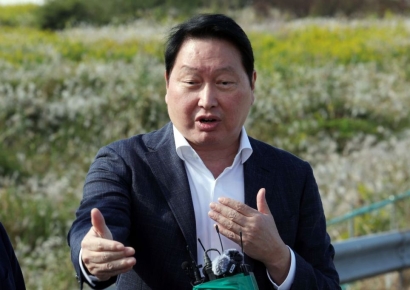 Chey Tae-won's One Remark Sends Stocks Soaring to 'Limit-Up'... This Stock Jumps Despite SK hynix's 3% Drop
- "Only healthy seniors welcome - get sick and leave?"... Senior welfare housing, this eligibility rule is changing
- "Now We're in Our 30s and 40s, and My Husband's the Only One Still Going Strong?" ... Women Tire First While Shopping: What's Happening in Japan?
- "I Thought Only Koreans Were Crazy About It"... This Dish Ranks No. 1 in the World
- "'100% Cat Fur' - It Seemed Unbelievable, but It Was Real... Chinese Shopping Mall Rocked by Shocking Revelation"
In contrast, North Jeolla is seen as having taken a different approach. During the campaign, Governor-elect Lee Wantak pledged to attract a semiconductor plant worth 200 trillion won to Saemangeum. However, it was only at the budget policy council on June 24—attended by Lee, Yoon Junbyung (Democratic Party North Jeolla Provincial Committee Chair), Lee Seongyun, Chung Dongyoung, Kim Eui-kyeom, Park Jie-won, Lee Choon-sik, Han Byungdo, Park Heeseung, and Ahn Hoyoung (all National Assembly members)—that discussions on the Honam investment by Samsung Electronics and SK hynix began in earnest. This has been criticized as a belated response.
© The Asia Business Daily. All rights reserved. Unauthorized AI training and use prohibited.