Gumi City’s Bold Semiconductor Fab Move: “1,000 Won per Pyeong”… Korea’s Largest Incentive
Mayor Kim Joungho: "Investment Decisions Should Be Based on Competitiveness, Not Just Capital or Honam Regions"
Unprecedented Offer: 820,000 Pyeong in the 5th National Industrial Complex with Benefits Up to 1.2 Trillion Won
Home to 309 Materials, Parts, and Equipment Companies and No. 1 in National Power Self-Sufficiency—Gumi Emerges as the Prime Semiconductor Hub
Gumi City in North Gyeongsang Province has made a bold move that could shake up the semiconductor industry landscape.
The city has officially entered the race to attract large-scale investments by offering an unprecedented incentive: providing semiconductor fab sites within the 2nd district of the 5th National Industrial Complex at a rate of just 1,000 won per pyeong.
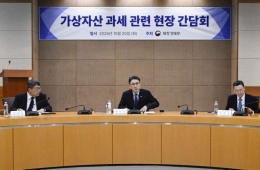
On June 25, Kim Joungho, Mayor of Gumi, held an emergency press conference and declared, "Gumi is the optimal location for Korea's semiconductor production base," announcing a head-on challenge.
![Emergency Press Conference by Kim Joungho, Mayor of Gumi, on Semiconductor Fabrication Plant Attraction<br>[Photo by Kim Ewhan]](http://www.asiae.co.kr/news/img_view.htm?img=2026062517162023832_1782375380.jpg)
Emergency Press Conference by Kim Joungho, Mayor of Gumi, on Semiconductor Fabrication Plant Attraction
[Photo by Kim Ewhan]
◆ The proposal put forth by Gumi City is unprecedented in scale.
If the entire 820,000-pyeong area of the 2nd district in the 5th National Industrial Complex is utilized as a semiconductor site, the total benefits for companies could reach approximately 1.2 trillion won.
As the first phase, the city plans to provide a 400,000-pyeong site—sufficient for building two semiconductor fabs—under conditions that would offer support equivalent to about 600 billion won.
◆ Gumi’s strength lies in its already established industrial ecosystem.
The city is home to 309 companies specializing in semiconductor materials, parts, and equipment, including SK Siltron and LG Innotek, and has formed a semiconductor value chain that even includes an AI data center.
◆ Gumi also boasts overwhelming competitiveness in power and water supply.
Its electricity self-sufficiency rate stands at a nationwide high of 228%, and it has secured an additional daily water intake capacity of 680,000 tons, drawing from the Nakdong River system.
The city is also located less than 10 kilometers from the upcoming Daegu-Gyeongbuk New Airport, which is expected to further enhance its global logistics accessibility.
Gumi is not stopping there; the city is accelerating the expansion of its industrial infrastructure by establishing an advanced semiconductor research complex, building a materials and parts testing center, and operating a testbed for the manufacture and verification of materials and parts for equipment chambers.
The city also plans to strengthen its system for fostering skilled professionals in partnership with local universities.
Mayor Kim Joungho stated, "Semiconductors are a strategic industry that determines national competitiveness and future growth," and emphasized, "Investment locations should be determined based on market competitiveness and the industrial ecosystem."
He added, "Gumi is the optimal site for a semiconductor fab, having the concentration of materials, parts, and equipment companies, as well as the capacity for power and water supply and excellent logistics accessibility. With bold support and regulatory innovation, we will become the core axis of Korea’s semiconductor innovation belt."
Hot Picks Today
 "300,000 Won Grant" Shelved at Chuseok to Go to All Residents After All... This City Says It Will Pay Before Lunar New Year
- "Didn't Save This Money to Leave to Our Kids?"... Retired Couples Spend $10,000 on a Single Trip
- "A Really Beautiful Butt"... How Did Nicki Minaj React to Trump's Unexpected Remark?
- HD Hyundai Marine Solution Posts Weak Q3 on FX, Acquisition Costs; Target Price Cut 12.1% [Click e-Stock]
- "Stockpile 9 Liters of Bottled Water and Three Days' Worth of Food"... UK on Edge as Nationwide Emergency Preparedness Alert Issued
This is not a matter of politics, but of competitiveness—Gumi’s ‘1,000 won per pyeong’ strategy is reshaping the semiconductor investment map.
© The Asia Business Daily. All rights reserved. Unauthorized AI training and use prohibited.