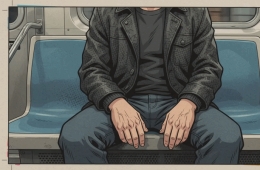
"From Private Institutes to Senior Academies, From Studios to Nursing Homes: Chinese Millennials & Gen Z Embrace Older Generations [China.zip]"
Millennials & Gen Z Flocking to Senior Academies
Taking the Lead as Instructors at Senior Academies
Living Together in Nursing Homes to Slash Housing Costs
In recent years, China has been grappling with severe youth unemployment and an aging population, both major social issues. Amid these challenges, an unexpected trend of intergenerational integration has emerged, drawing attention. Millennials & Gen Z in China are struggling with a tough job market, surging housing costs, and high inflation, leaving them burdened by rent, food expenses, and living costs. Increasingly, they are turning to senior academies—educational and leisure programs offered at local cultural centers, welfare facilities, and universities for seniors—where they can pursue hobbies at affordable prices and find renewed vitality in their lives. Some are even leveraging their academic backgrounds to teach at these senior academies as a way to escape the job market woes. Others choose to live in nursing homes alongside elderly residents, reducing living expenses and finding emotional stability. Meanwhile, middle-aged and elderly participants are learning about trends, photography, and how to use digital devices from younger generations, making life more enjoyable.

Millennials & Gen Z Pursuing Hobbies at Senior Academies Instead of Private Institutes
Recently, topics like "enjoying life 100% subsidized by the state" and "enjoying hobbies on a small budget" have gained popularity on Chinese social media platforms. According to Qianjiang Evening News, it has become trendy for younger generations to enjoy hobbies at senior academies at low cost and share their experiences on social media. Qianjiang Evening News described this phenomenon as "tired youth investing in so-called 'self-care and self-comfort' to heal their wounded hearts and regroup." With little time or resources to invest in themselves due to studies, work, marriage, and childcare, China's young people are now finding new vitality in life at senior academies, even rediscovering dreams previously out of reach due to financial constraints and other circumstances.
Senior academies allow participants to join a wide variety of programs at costs lower than typical private institutes. These include traditional calligraphy, tea ceremonies, traditional Chinese musical instruments, traditional painting, makeup, photography, choir, table tennis, yoga, and more. Once considered spaces reserved for the middle-aged and elderly, these centers are now seeing a significant influx of younger people, fostering greater intergenerational communication.

Millennials and Gen Z are sharing information on Chinese social media about centers where they can take courses affordably. Weibo.
View original imageLiu, who works as an accountant, shared, "I work during the day, and after work, I come here to learn makeup. Pursuing a hobby has brought back my energy. I feel fulfilled—almost like I can do anything now." He Jing, who rediscovered a childhood dream through a calligraphy class, said, "Practicing calligraphy again has restored a sense of peace I had lost. By attending classes, I’ve also made friends, gone shopping, and often have meals together."
Student Xiao noted that the low tuition fees reduce not only financial but also psychological burdens. "At regular private institutes, tuition is at least 3,000 to 4,000 yuan (about 68,000 to 91,000 won), but here it’s only about 100 yuan (20,000 won) per quarter," Xiao said. "With what you’d spend for one class at a private institute, you can attend ten here. The cost-effectiveness is unbeatable." Yang, who lives in Shanghai, said she spent 500 yuan (about 110,000 won) on 12 traditional ink painting classes, as well as horseback riding, diving, and fitness sessions. "The essence of life is experience," she said. "If you can pour your passion into something in your ordinary life, that alone makes it meaningful."
Especially among younger generations, there is high satisfaction with the comfortable and cozy atmosphere found only at cultural centers. As a result, the percentage of senior academy students under 50 in China has recently surpassed 40%. Evening and weekend classes, popular among working adults, are often fully booked within seconds of registration opening, causing a "registration frenzy."
Millennials & Gen Z Breaking Generational Barriers as Instructors

Younger generations are not just attending classes—they are also becoming instructors at senior academies amid the tough job market. Those born in the 1990s are being hired to teach trendy and specialized subjects such as smartphone photography, dance (ballet and classical), speech, piano, and massage. Increasingly, this is seen not merely as a part-time job, but as an opportunity to learn about life and gain emotional comfort.
A dance instructor in her twenties said, "Retired seniors are so passionate about learning that they gather 30 minutes before class to review the material. Their dedication and perseverance inspire self-reflection in me. It is a valuable spiritual asset."
Local experts believe that "senior education specialists" will become a new blue ocean for employment as the population ages. An education sector official commented, "The vitality of young people energizes the lives of seniors, while the rich experiences of the elderly help young people grow. Senior academies are becoming a buffer zone connecting young people worn out by job market challenges and older adults facing loneliness."
A representative from a senior academy shared, "When a senior who never learned to read recites her name, syllable by syllable, in the recitation class, young people are moved to tears. This space is becoming one of mutual healing."
Slashing Rent Burdens: Millennials & Gen Z Living in Nursing Homes


The trend of younger generations moving into nursing homes has continued since last year. One office worker said, "For 4,000 yuan (about 91,000 won) a month, you get meals, lodging, and cleaning services included—it's more economical than renting an apartment and ordering food delivery." For young people exhausted by unaffordable housing costs and relentless competition, nursing homes are becoming a refuge.
Young residents do more than just talk with seniors—they plant vegetables, go fishing, watch movies, enjoy music, and even go camping. Some nursing homes offer rent reductions in exchange for volunteer work. The monthly rent is around 1,000 yuan (about 22,000 won); volunteering for 10 hours a month cuts the rent by 200 yuan (about 45,000 won), and 20 hours reduces it by 500 yuan (about 110,000 won). Volunteering for over 30 hours a month means you don't have to pay rent at all.
In some regions, youth-only nursing homes have also been established, with monthly rents between 1,500 and 2,300 yuan (about 34,000 to 52,000 won).
Professor Mi Hong of Zhejiang University of Public Administration stated, "Young people living with seniors in nursing homes is an extension of mutual support. The younger generation can learn a lot and ease their loneliness by conversing with older adults." Anpeng, a sociologist at Luoyang Normal University, commented that modern society places great stress on youth, but youth nursing homes provide opportunities and spaces for learning. "Reading, writing, and drawing within a nursing home are opportunities for recharging," he said. "This directly contributes to personal growth."
Hot Picks Today
 "End of Samsung and SK Hynix’s Dominance?" CXMT Soars 466% on IPO Debut... Founder’s Wealth Jumps 300%
- [Breaking] 'Stock Market Crash' KOSPI down 10.8%, KOSDAQ down 7.7%
- "Let’s Give Korea a Spending Spree": Over 10 Million Foreign Tourists Flock In, Credit Card Spending Exceeds 10 Trillion Won
- "Spent Over 60,000 Won, Yet Asked to Order More Drinks?"...Online Uproar Over 'One Drink Per Person' Policy
- "It's Even More Beautiful in Person": Visitors Flock to Samsung Gangnam, Many Making Purchases on First Day of Pre-orders [Report]
Recently, Chinese university graduates have faced severe difficulties in finding desired jobs. According to data released last month by China's National Bureau of Statistics, the unemployment rate among urban Chinese aged 16 to 24, excluding students, stood at 15.6%. This is the lowest level in 11 months. After youth unemployment soared to a record 21.3% in June 2023, China abruptly stopped releasing the data, later resuming in December of the same year by excluding students and breaking down the rates by age group. However, due to the increasing number of college graduates and an economic slowdown, youth unemployment has remained stubbornly high, fluctuating between 16% and 17%. The number of students expected to graduate this summer is about 12.7 million, the highest ever, suggesting that the job market could deteriorate further in the coming months.
© The Asia Business Daily. All rights reserved. Unauthorized AI training and use prohibited.