[NC]① Losing Out to OTT, Taken Over by China... K-Game in Dire Straits
Game Usage Rate Falls to 50.2%, Lowest Since Records Began
3 to 4 Out of Top 10 App Market Grossing Games Are Chinese
The domestic gaming industry in South Korea is losing its footing. There is a growing sense of crisis as users migrate to online video services (OTT) and Chinese games claim top spots in sales rankings.

Visitors are demonstrating "Aion2" at the NC booth in Hall 1 of "G-Star 2025". Photo by Kyungjo Noh
View original imageAccording to the "2025 Game User Survey" released by the Korea Creative Content Agency on June 26, the game usage rate in Korea last year was 50.2%, down 9.7 percentage points from the previous year. After peaking at 74.4% in 2022, the rate has declined continuously, reaching its lowest level since the survey began in 2015.
The main reason is the increasing availability of alternative entertainment options such as OTT services. In fact, when asked why they do not play games, 44% of respondents (multiple answers allowed) cited "lack of time," followed by "decreased interest in games" (36%), "discovered alternative leisure activities" (34.9%), and "lack of motivation to play games" (33.1%). Among alternative leisure activities, 96.3% mentioned content viewing, such as OTT, movies, and animation.
While the gaming industry is losing out in the competition for user engagement time, it is Chinese-made games that are making inroads into the Korean market. Looking at the top 10 mobile game sales rankings on Google Play Store and Apple App Store, Chinese games occupy three to four or more slots. "WOS: Whiteout Survival" and "Last War: Survival" are regulars at the top, and titles such as "King Shot" and "Gossip Harbor: Merge & Story Game" have also joined the upper ranks.
These games are not simply relying on volume. Their designs are simple yet addictive, optimized for mobile environments, and feature user interfaces (UI) and user experiences (UX) that attract players. An industry insider commented, "Although they do not boast flashy 3D graphics like the AAA console games produced by companies such as Nexon or NC, they showcase technical prowess that allows smooth gameplay even on low-spec smartphones. In fact, since 'Genshin Impact' in 2000 and 'Black Myth: Wukong' in 2004, China's game development technology and capital have surpassed those of Korea."
![[NC]① Losing Out to OTT, Taken Over by China... K-Game in Dire Straits](http://www.asiae.co.kr/news/img_view.htm?img=2026062515033523565_1782367415.jpg)
Korean game companies continue to knock on the door of the Chinese market to counter this influx, but the requirement to obtain publishing licenses (panhao) remains a structural disadvantage, making market entry difficult. Last year, there were expectations that the increased issuance of foreign game licenses would ease restrictions, but this did not materialize. According to China's National Press and Publication Administration, as of the first quarter of this year, only three Korean games received foreign licenses, half the number from the same period last year (six). The total number of foreign licenses issued also dropped from 21 to 14 during the same period. Meanwhile, domestic licenses surged to 453, indicating that restrictions on foreign games in China remain stringent.
Hot Picks Today
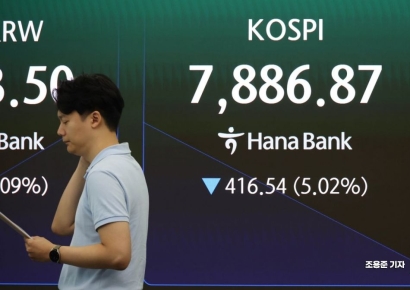 "Semiconductor Peak-Out Theory Resurfaces: Foreign Investors' KRW 3.2 Trillion Net Sell Pushes KOSPI Below 8,000"
- [Exclusive] "Tens of Billions Paid": Unregulated Bonuses for Union Presidents Spark Controversy... Ministry of Land Launches Nationwide Investigation
- Germany Faces Corruption Probe Involving Football Association amid Round of 32 Elimination Shock
- "Why Did You Call Me to the World Cup!" Jens-Hong Myung-bo Assault Video Surpasses 10 Million Views... Revealed as AI
- Suspicious Achievements of Famous 'Beauty' Policewoman Revealed to Be Handed Over by Male Colleagues... Taiwan in Shock
Game companies are now seeking breakthroughs in markets outside China, such as North America, Europe, and Japan. They have also diversified their genres and platforms, moving beyond mobile MMORPGs that once dominated the domestic market. Starting with Neowiz's "Lies of P" and Shift Up's "Stellar Blade," recent successes include Nexon's "Arc Raiders" and Pearl Abyss's "Crimson Desert," signaling a positive shift in the industry's structure.
![[NC]① Losing Out to OTT, Taken Over by China... K-Game in Dire Straits](http://www.asiae.co.kr/news/img_view.htm?img=2026062608434224216_1782431022.png)
An industry official stated, "To fend off China's pursuit and survive on the global stage, diversifying platforms and innovative planning are essential. In addition, an environment that supports allocating more time and manpower is necessary to rapidly produce high-quality games."
© The Asia Business Daily. All rights reserved. Unauthorized AI training and use prohibited.