International Oil Prices Plunge on Hormuz Reopening, Raising Oversupply Concerns
International oil prices have continued to fall, returning to levels seen before the outbreak of war between the United States and Iran, driven by growing expectations for normalization in the Strait of Hormuz.
According to OilPrice.com, as of 10:20 a.m. KST on June 25, Brent crude futures for August delivery on the ICE Futures Exchange were trading at $72.94 per barrel. On the New York Mercantile Exchange, West Texas Intermediate (WTI) crude futures for August delivery were hovering at $69.66 per barrel.

Both Brent and WTI crude prices are now at their lowest since February 27, the day before the Iran war broke out. On that day, Brent crude was at $72.48 per barrel, and WTI was at $67.02 per barrel.
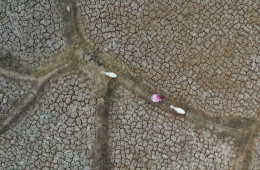
According to ship tracking data from LSEG and MarineTraffic on June 24 (local time), at least 35 small ships—including bulk carriers, cargo ships, and container vessels—as well as 5 tankers and tugboats, are preparing to pass through the Strait of Hormuz. According to Kpler, vessel traffic through the Strait of Hormuz has increased in recent days, with more than 25 ships operating daily on average.
Bloomberg News reported that, following the agreement between the United States and Iran to reopen the Strait of Hormuz, a sudden surge in oil shipments has led to an oversupplied oil market. For example, prices for Angolan crude oil, a preferred choice for China, at one point dropped to nearly $10 per barrel below Brent, marking the largest discount in over a decade.
In a report last week, the International Energy Agency (IEA) predicted that the global crude oil market will experience a significant supply glut by 2027. However, some analysts note that demand to replenish inventories depleted during the process of resolving supply disruptions in the Strait of Hormuz could absorb part of the surplus.
Hot Picks Today
 "Tried leveraged semiconductor stocks, watched 3.5 billion won shrink to 200 million won": Salaried investor in tears
- "Please Let Me Go Home"... Customers Trapped in Department Store Parking Lot for 5 Hours Vent Their Anger
- "I Should Enjoy It After Retirement": Prices Quadruple... Memberships Over 100 Million Won Popular, but Closures Mount
- “The Strong Drink This” Goes Viral on Social Media... What China's Millennials and Gen Z Are Hooked on After Ditching Coffee and Milk Tea
- "Come Live With Me on My Farm": Man Sells Everything and Travels 1,930 km, Trusting a Beautiful Woman
Analysts at Deutsche Bank stated that vessel traffic through the Strait of Hormuz is "gradually increasing," and added, "As oil prices fall, concerns over stagflation have eased considerably. Investors have also stopped pricing in the possibility of sharp interest rate hikes this year."
© The Asia Business Daily. All rights reserved. Unauthorized AI training and use prohibited.