Three Key Defense Policies Awaiting U.S. Congressional Approval [Yang Nakgyu's Defence Club]
Major Policies on Shipbuilding, MRO, Nuclear Submarine Fuel, and OPCON Transfer
Shaped by U.S. Congressional Actions
Lee Doohee, Deputy Minister of National Defense, has visited the United States to advocate for key defense initiatives. This is because major defense policies, such as shipbuilding and MRO (maintenance, repair, and overhaul), securing low-enriched uranium for nuclear-powered submarines, and the transfer of wartime operational control (OPCON), are determined based on the actions of the U.S. Congress.

On the 24th (local time), Lee Doohee, Deputy Minister of National Defense, paid respects at the Korean War Veterans Memorial Park to commemorate the 76th anniversary of the Korean War. Photo by Ministry of National Defense
View original imageAccording to the Ministry of National Defense on June 25, Deputy Minister Lee Doohee met with Emile Michael, Deputy Under Secretary of Defense for Research and Engineering, and U.S. Representatives Ryan Zinke and Pat Harrigan in Washington, D.C. on June 24 (local time). They discussed ways to strengthen bilateral defense and defense industry cooperation and addressed current issues in the South Korea-U.S. alliance. He requested that the U.S. Congress ease regulatory restrictions to expand shipbuilding and MRO cooperation, support efforts to secure low-enriched uranium for nuclear-powered submarines, and back the transfer of wartime operational control (OPCON).
The most urgent issue to address is the transfer of OPCON. The U.S. Senate Armed Services Committee recently passed next year's National Defense Authorization Act (NDAA), which includes a provision requiring the Secretary of Defense to report regularly on the roadmap for OPCON transfer implementation. This could be interpreted as meaning that, even if South Korea and the U.S. proceed with the transfer in accordance with their agreement, the certification and reporting process to Congress is mandatory.
However, last year, the NDAA bill that passed the Senate Armed Services Committee simply stated that funds could not be used for the "completion of OPCON transfer." After adjustments between the Senate and House, the final NDAA was revised to restrict the use of funds only if the transfer was completed "in a manner deviating from the mutually agreed plan."
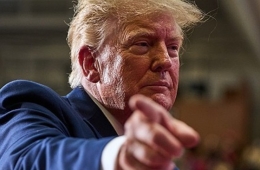
U.S. President Donald Trump previously approved South Korea's construction of a nuclear-powered submarine. This makes South Korea the third non-nuclear-weapon state, after Australia and Brazil, to possess the capability to build such submarines. However, while South Korea will handle hull construction domestically, the plan requires the United States to supply nuclear fuel, making approval from both the U.S. administration and Congress necessary. Accordingly, the Korean delegation is expected to meet with relevant government departments and federal lawmakers to communicate their intentions regarding the project.
Cooperation in shipbuilding and the defense industry is also essential. During the South Korea-U.S. customs negotiations, the Korean government agreed to cooperate on the shipbuilding project "MASGA (Make American Shipbuilding Great Again)." The domestic MRO supply chain ecosystem is also expanding. In May, Hanwha Ocean established a "Naval Vessel MRO Cluster Council" with 15 companies, including Seongdong Shipbuilding, SK Oceanplant, and other shipyards and specialized maintenance and equipment firms in the Busan and Gyeongnam regions, centered around its Geoje plant. The plan is to strengthen the production system for maintenance parts for naval vessels with approximately 1,000 companies in the Busan, Gyeongnam, and Geoje areas. HJ Shipbuilding & Construction, a mid-sized shipbuilder in Busan, also formed an "MRO Cluster Council" last month with about 10 companies and agreed to collaborate on future MRO business bids.
Currently, the overseas construction of U.S. naval vessels is blocked by U.S. regulations, but recently, there have been moves in Congress to revise the law to allow allies such as South Korea to build military ships. It is expected that building a track record in collaborating with the U.S. Navy through MRO projects will provide a long-term advantage in securing naval shipbuilding contracts.
Competition over MRO is expected to intensify with countries such as Japan and Singapore. Japan's strength lies in the U.S. Navy's 7th Fleet, which oversees the Pacific and mainly conducts MRO at the Yokosuka Naval Base near Tokyo. Singapore's advantage comes from its favorable location and the steady development of its shipbuilding MRO cluster.
Hot Picks Today
 "300,000 Won Grant" Shelved at Chuseok to Go to All Residents After All... This City Says It Will Pay Before Lunar New Year
- "Didn't Save This Money to Leave to Our Kids?"... Retired Couples Spend $10,000 on a Single Trip
- "A Really Beautiful Butt"... How Did Nicki Minaj React to Trump's Unexpected Remark?
- HD Hyundai Marine Solution Posts Weak Q3 on FX, Acquisition Costs; Target Price Cut 12.1% [Click e-Stock]
- "Stockpile 9 Liters of Bottled Water and Three Days' Worth of Food"... UK on Edge as Nationwide Emergency Preparedness Alert Issued
Meanwhile, during the meeting with Deputy Under Secretary Michael, Deputy Minister Lee agreed to: establish a director-level defense science and technology council to discuss advanced technologies such as artificial intelligence (AI) and drones; launch a consultative body to build common South Korea-U.S. drone standards and certification systems; and share information in the field of testing and evaluation of advanced weapon systems. The two sides also agreed to accelerate mutually beneficial cooperation across security and industrial sectors, including supply chain stabilization. In addition, Deputy Minister Lee paid respects at the Korean War Veterans Memorial Park on the 76th anniversary of the Korean War.
© The Asia Business Daily. All rights reserved. Unauthorized AI training and use prohibited.