Professor Youngdeuk Choi of Yonsei Cancer Hospital Surpasses 7,000 Robotic Surgeries for Urologic Cancer
Professor Youngdeuk Choi of the Urologic Cancer Center at Yonsei Cancer Hospital recently surpassed 7,000 robotic surgeries for urologic cancers (6,338 for prostate cancer and 662 for other urologic cancers).
According to Yonsei Medical Center on June 25, Professor Choi successfully performed a robotic surgery on Mr. Jeong, a 74-year-old patient diagnosed with prostate cancer, marking his 7,000th robotic surgery for urologic cancers. The patient recovered without any significant side effects and was discharged.
Since performing his first robotic surgery in 2005, Professor Choi reached 1,000 cases in 2012, 3,000 cases in 2017, and 6,000 cases in 2023. He has since performed an additional 1,000 surgeries in approximately three years, reaching the milestone of 7,000 cases.

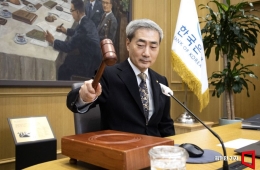
Professor Youngdeuk Choi, Department of Urologic Oncology, Yonsei Cancer Center, Yonsei University Health System
View original imageThe prostate is a male reproductive organ that generates part of the seminal fluid and supports sperm activity. Prostate cancer is a malignant tumor caused by the abnormal proliferation of prostate cells, and the number of domestic cases has been consistently increasing due to factors such as population aging and changes in dietary habits.
Prostate cancer often presents with no distinct symptoms at an early stage. Even as the cancer progresses, symptoms such as a sensation of incomplete bladder emptying, frequent urination, or urinary difficulties may appear, making early detection challenging. Treatment must be precisely tailored according to the stage of cancer and the patient's condition, and, when surgery is required, advanced surgical skills are critical.
Surgery for prostate cancer is a highly complex procedure conducted deep within the narrow pelvic cavity. Nerves and blood vessels responsible for urinary and sexual function are densely concentrated around the prostate. Therefore, it is crucial to remove cancerous tissue accurately while preserving as much healthy tissue as possible. In particular, the ability to minimize bleeding and nerve damage during surgery is a key factor affecting postoperative urinary and sexual function, and ultimately, the patient's quality of life.
This is why robotic surgery is widely used for prostate cancer operations. Robotic surgery offers high-resolution, three-dimensional visualization to magnify the surgical area, and the robotic arms enable precise dissection and suturing even in confined spaces. The smaller incisions reduce pain and bleeding, which also contributes to faster patient recovery.
Professor Choi has especially utilized an extraperitoneal approach, which does not require opening the peritoneum. While conventional robotic prostatectomy involves inserting the robotic arms into the abdominal cavity, this carries the risk of organ injury. The extraperitoneal approach accesses the surgical site above the bladder through the space beneath the navel, thereby avoiding the abdominal cavity, reducing the risk of bowel injury, and facilitating less postoperative pain and faster recovery.
However, the extraperitoneal approach has limited working space for the robotic arms, requiring a high level of proficiency from the surgeon. Drawing on his extensive clinical experience, Professor Choi has stably performed this technique, reducing the burden on patients. Of the 7,000 robotic surgeries he has conducted to date, approximately 92% were prostatectomies, making him a leader in the field of robotic prostatectomy with unparalleled clinical experience.
Professor Choi has also advanced patient-tailored robotic prostatectomy, adjusting surgical techniques according to each patient's cancer stage, tumor location, and characteristics. By accurately removing cancerous tissue while preserving as much urethral tissue, sexual nerves, and blood vessels as possible, he strives to maintain urinary and sexual function.
Hot Picks Today
 "The Transfer Failed, but 'Ding Dong' Money Came In"... 32.5 Billion Won Financial Incident at Toss Bank
- "Those with Money Have Already Moved Their Gold"... Holdings Surge 16-Fold as Wealthy Investors Flock to 'This Country'
- "Baek Jongwon Had Been Quiet, Then Hit It Big"... Waits in the 100s in U.S. Despite KRW 46,000 Pork Belly
- Kim Minseok: "I lean toward Oh Sehoon's conviction being upheld on appeal... I'm preparing for a Seoul mayoral election"
- 'Hangover Legend' Returns After 11 Years... Lee Sunmin Hyung's 'Captain Q' Sells Out
Professor Youngdeuk Choi stated, "Since the location, shape, and stage of cancer vary for each patient, robotic surgery must also be meticulously tailored to each individual’s condition. I am not content with the achievements so far and will continue to do my utmost to advance surgical techniques so that more patients can be treated even more safely in the future."
© The Asia Business Daily. All rights reserved. Unauthorized AI training and use prohibited.