Collective Bargaining Rights for SMEs and Small Business Owners Becoming Tangible... Final Coordination Hinges on Key Issues
Main Discussions of Government Task Force Conclude
Ruling Party Proposes Amendment to Framework Act on Small Enterprises
Momentum Builds for Related Debates... Final Details Under Coordination
Key Issue: Scope of Collusion Exemptions in Fair Trade Act
The introduction of collective bargaining rights, long considered a key demand of small and medium-sized enterprises (SMEs) and small business owners, is becoming more tangible. While the aim is to strengthen the bargaining power of SMEs and small business owners, who have traditionally found themselves at a disadvantage in business transactions, concerns are also being raised within the industry that indiscriminate negotiations could undermine market order. Ultimately, the scope of exemptions to the current Monopoly Regulation and Fair Trade Act's collusion ban is expected to remain a major point of contention until the end.

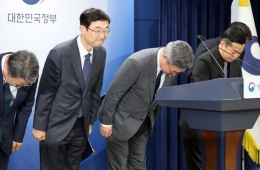
The Incheon Airport Branch of the Public Transport Workers' Union under the Korean Confederation of Trade Unions is holding a general strike rally in front of Terminal 1 of Incheon International Airport. Photo by Yonhap News
View original imageAccording to industry sources on June 26, the "Task Force for Strengthening the Bargaining Power of Economically Vulnerable Groups," launched in February this year by the Korea Fair Trade Commission, the Ministry of SMEs and Startups, and other relevant ministries and experts, has recently wrapped up its main discussions. Each ministry has reportedly reached a broad consensus on amending the Monopoly Regulation and Fair Trade Act to grant collective bargaining rights to SMEs and small business owners, and detailed coordination is now underway.
The current Monopoly Regulation and Fair Trade Act prohibits business operators from engaging in joint actions (collusion) with other operators to fix prices, trading terms, production volumes, and other practices that restrict market competition. Authorities are now considering revising these regulations to allow SMEs and small business owners, who are at a relative disadvantage in business relationships, to negotiate collectively under certain conditions as an exception.
Meanwhile, the legislative debate has gained further momentum with the recent introduction of a bill in the National Assembly to institutionalize collective bargaining rights for small business owners. On June 19, Assemblywoman Oh Sehee of the Democratic Party of Korea sponsored an amendment to the Framework Act on Small Enterprises. The main focus of the bill is to allow organizations of small business owners to demand collective negotiations with counterparties regarding changes to terms of trade for goods or services, and to ensure that the counterparties cannot refuse such negotiations without just cause.

Until now, SMEs and small business owners have found it difficult to make collective demands, such as for higher supply prices, due to the collusion regulations under the Monopoly Regulation and Fair Trade Act, even when faced with disadvantageous trading terms with large corporations. At the end of last year, an amendment to the Franchise Business Act was passed by the National Assembly, granting collective bargaining rights to franchisees. However, expanding these rights across the broader spectrum of SMEs and small business owners—where transaction types and applicable sectors are much broader—has proven contentious. Ongoing concerns have been raised that allowing bargaining rights without clear standards, given the complex web of interests involved, could significantly disrupt market order.
As a result, authorities are expected to continue grappling with the issue of how far to allow exemptions to the collusion ban under the Monopoly Regulation and Fair Trade Act. Alternatives under consideration include limiting the counterparties to large corporations or market-dominant businesses, or permitting negotiations only over trading terms such as supply prices and commissions, while still prohibiting actions that restrict competition, such as price fixing or production controls. Another option, following Australia's example, is to grant bargaining rights only to business entities that form collectives and fall below a certain sales threshold.
Hot Picks Today
 "Even New York Taxi Drivers Are Talking About the KOSPI; South Korean Market to Top 9,000 Again Within a Year"... 'Wall Street's Stock-Picking Ace' Names His Picks
- “Made 2 Billion Won in One Year in Prison,” PPP Lawmaker Retorts: “If You’re Jealous, Go There Yourself”
- "There's No Profit in Selling It"... Gimbap Disappearing from Menus
- “Washing Dishes and Folding Clothes 200 Times a Day”... China’s “Robot Trainers” Earn Up to 1.2 Million Won a Month
- "Shall We Grab a Drink?" KRW 30,000 a Round... Young Adults: "Prices Make My Hands Shake; I Can't Drink Out"
Kim Sunghee, professor at the Graduate School of Labor Studies at Korea University, commented, "Even if they are business operators, when there is significant economic dependence on a particular client, it is becoming a global trend to provide protections equivalent to those for employees." However, he added, "Since SMEs and small business owners are extremely diverse in terms of industry and transaction types, and the scope is broad, failing to clearly define the range of economic dependence could create confusion in the market."
© The Asia Business Daily. All rights reserved. Unauthorized AI training and use prohibited.